Wk38 MacroTechnicals - FOMC Prep (Free)
Tactical trading plans around FOMC

With energy dominating all markets, we'll deviate from the usual format and instead focus more intensely on FOMC - how markets are shaping up into the event, and how to trade it.
INFLATION DATA
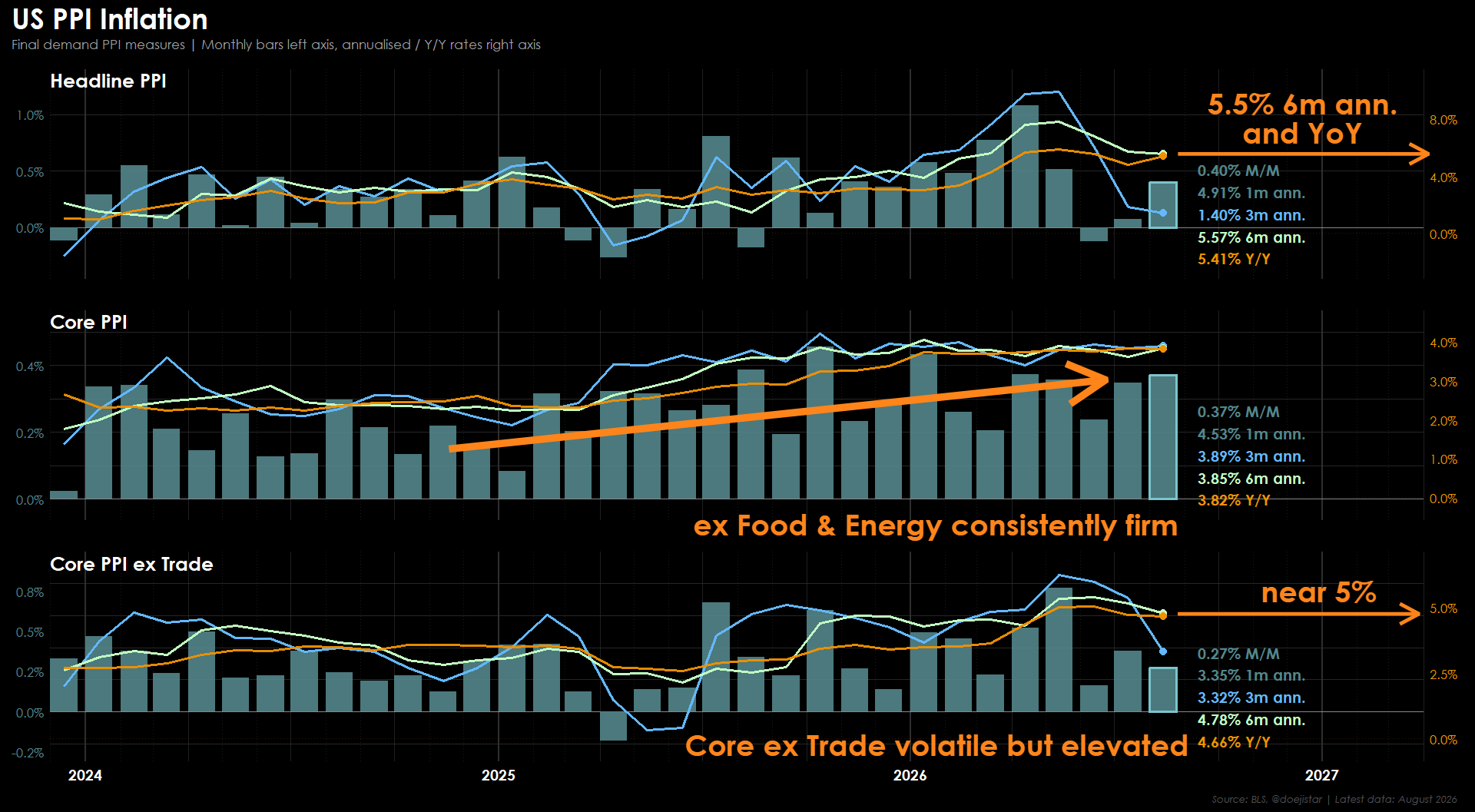
Headline PPI was in line with expectations while Core missed, but upward revisions to prior months keep recent trends firm.
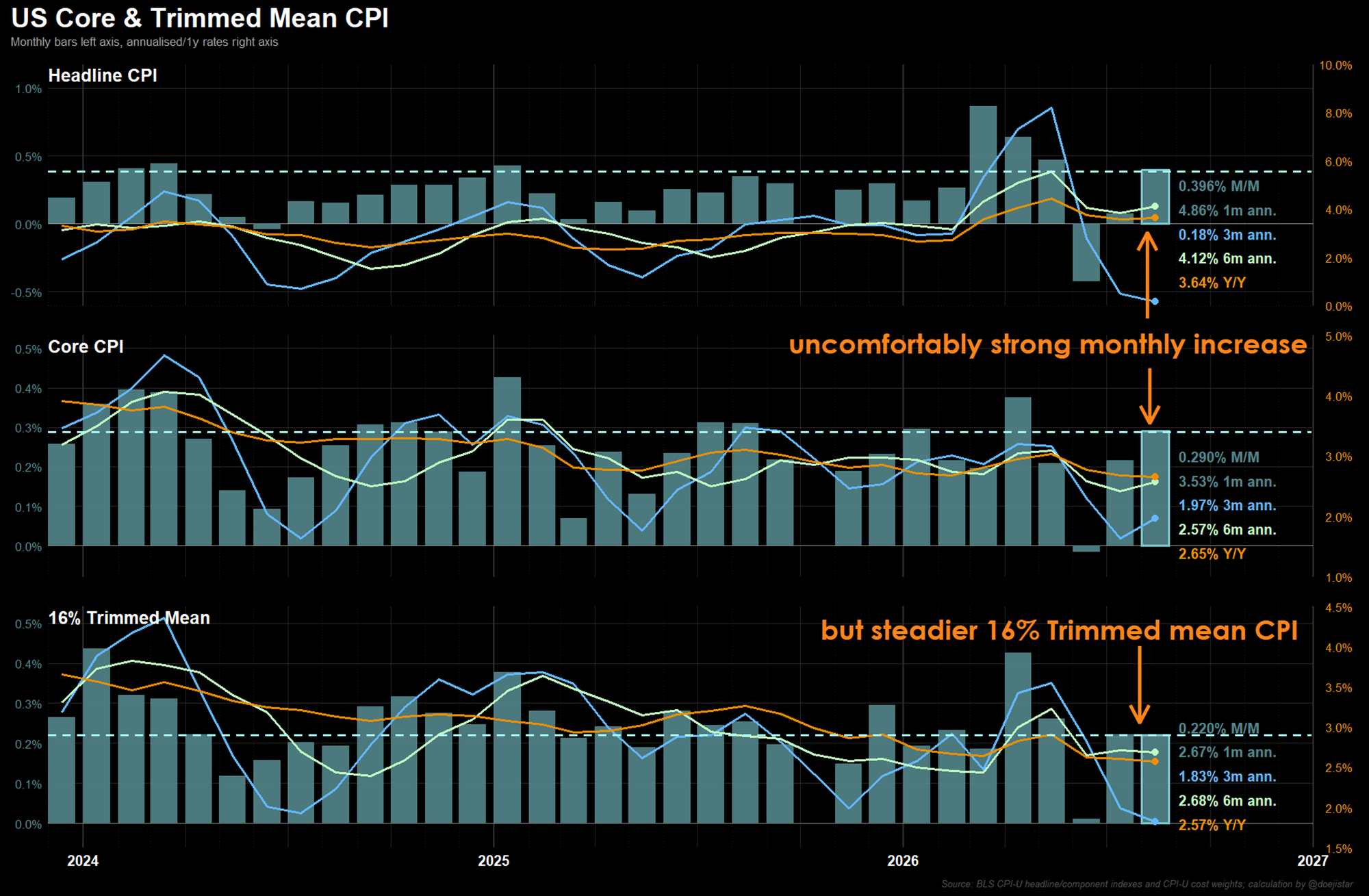
Core CPI was above expectations at 0.29% versus expectations of ~0.23% and Waller-line of 0.25%. That is quite a substantial beat and a very uncomfortable number. To put that into perspective: 0.29% annualises to 4.86%, the 0.23% expected annualises to 2.795%. Trimmed-mean was steadier at 0.22% which, while encouraging, still doesn't help to support Waller's 'disinflation is currently in progress' speech on Sept-4th.
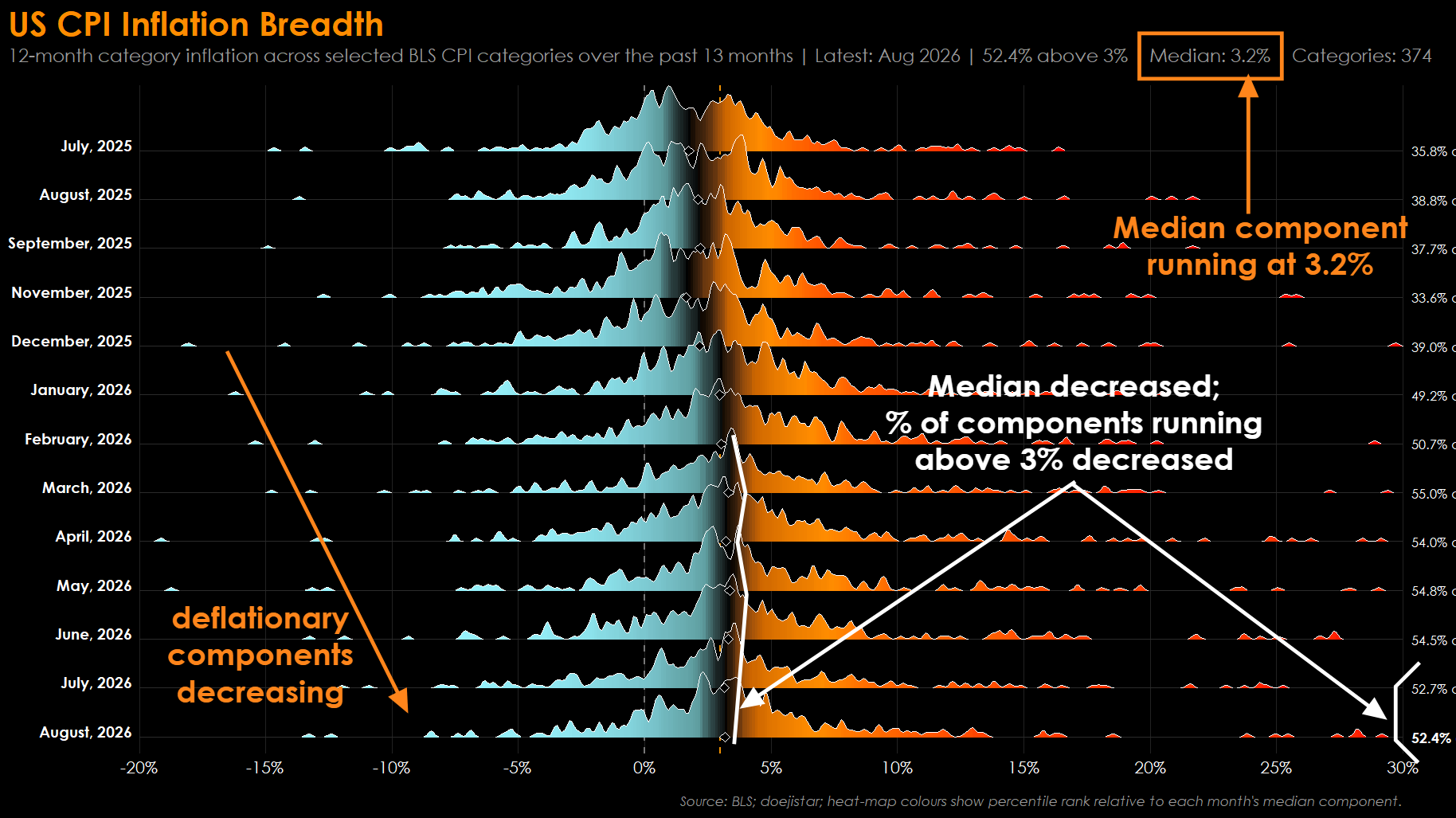
There's also been a lot of commentary on just a few components (e.g. Wireless telephone services +5.9% in August) accounting for a large part of the rise, but the counter argument is that this report offered evidence of higher energy cost pass-through (Airfares +2.7%, Vehicle maintenance/repair +1.1%). Warsh has put a lot of emphasis on inflation breadth of which there has not been any meaningful progress.
MARKET TECHNICALS
Studying correlations is a great tool in attempting to decipher markets and shifts in behaviour of various assets to various narratives. It's been going in and out of whack of late with multiple cross-currents and conflicting narratives, for instance Fed credibility and Fiscal dominance drove US yields higher but the USD lower, and in between those periods, dollar attempts to maintain its positive correlation to Oil.
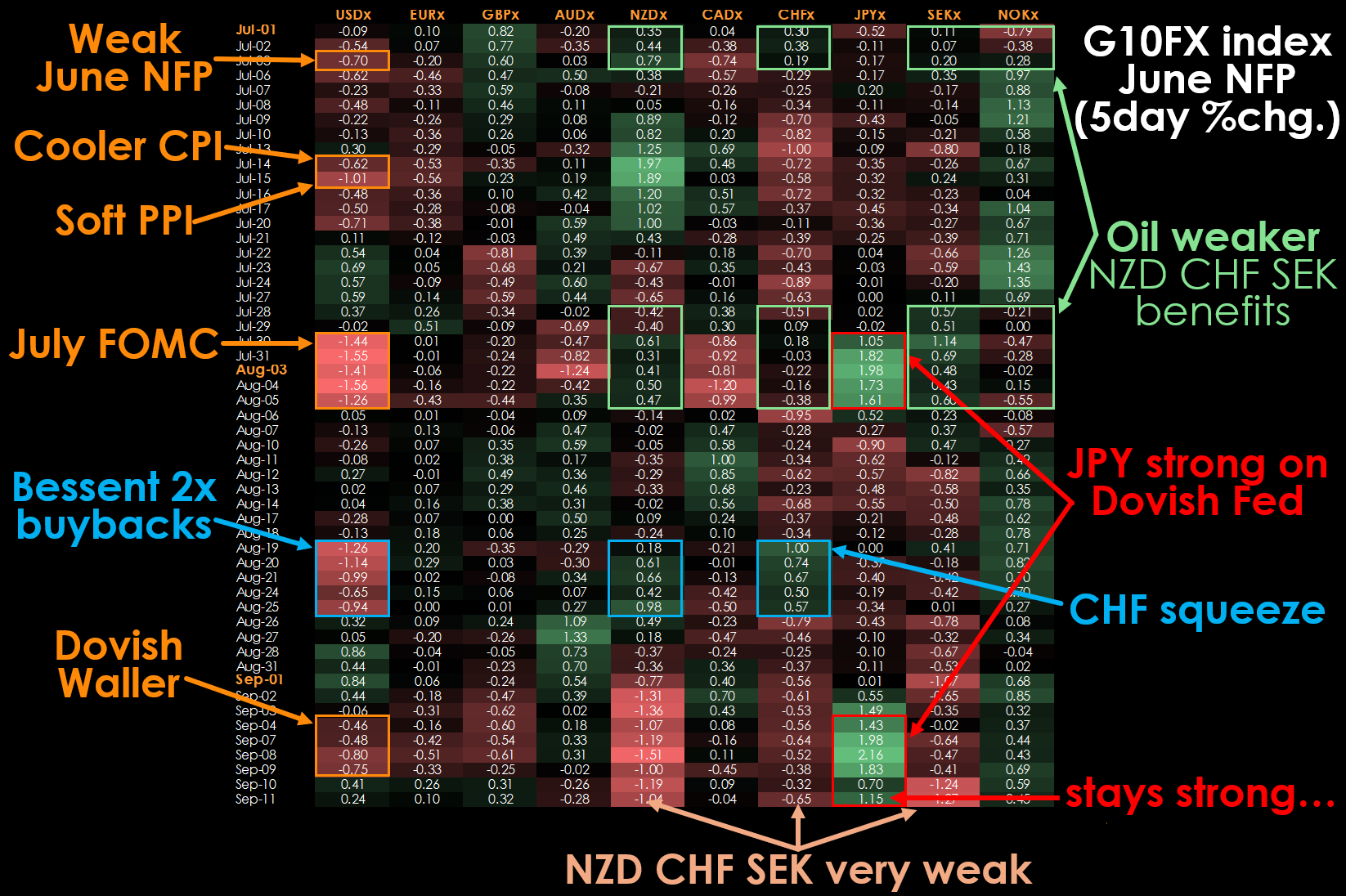
JPY unsurprisingly responded the most to Fed policy repricings, but not so much on fiscal dominance concerns whereas the CHF had thrived. Lower-yield cyclical currencies NZD and SEK saw the most relief when Oil traded weaker, as did CHF also. Interestingly, those 3 have the weakest RSI values among G10 (equal-weighted index basis).

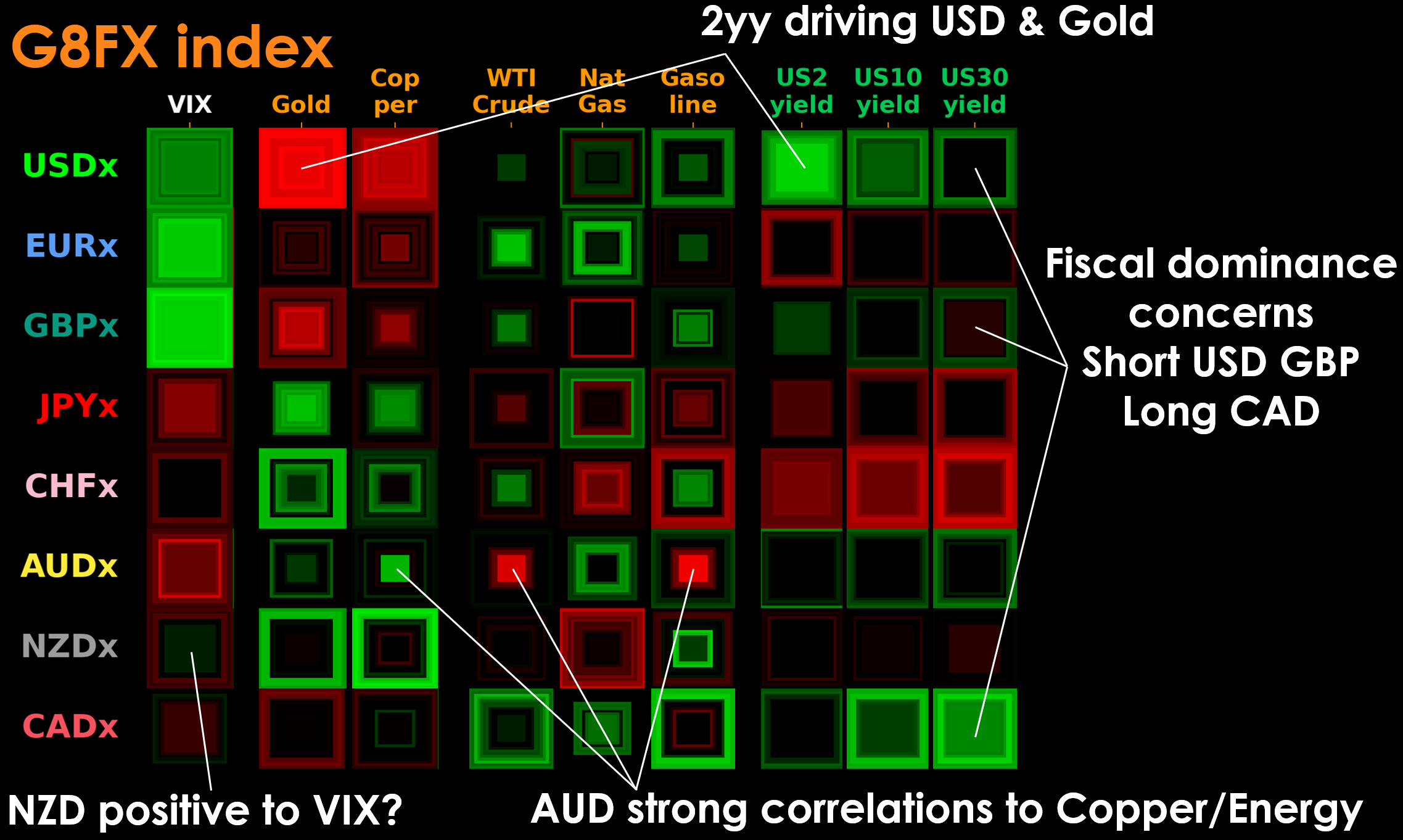
The correlation matrix shows insightful 30yy correlations: GBP the most negative (presumably on sensitivity to GILTS/bond market sell-offs), and CAD the most positive (preference for the "lower-beta dollar").
Comparing price action of Gold and the Swissie, USDCHF responded strongly to both credibility-loss and fiscal-dominance narratives, whereas Gold at times was caught up with tightening moves in rates as well as the potential risk-off conditions those regimes can create.
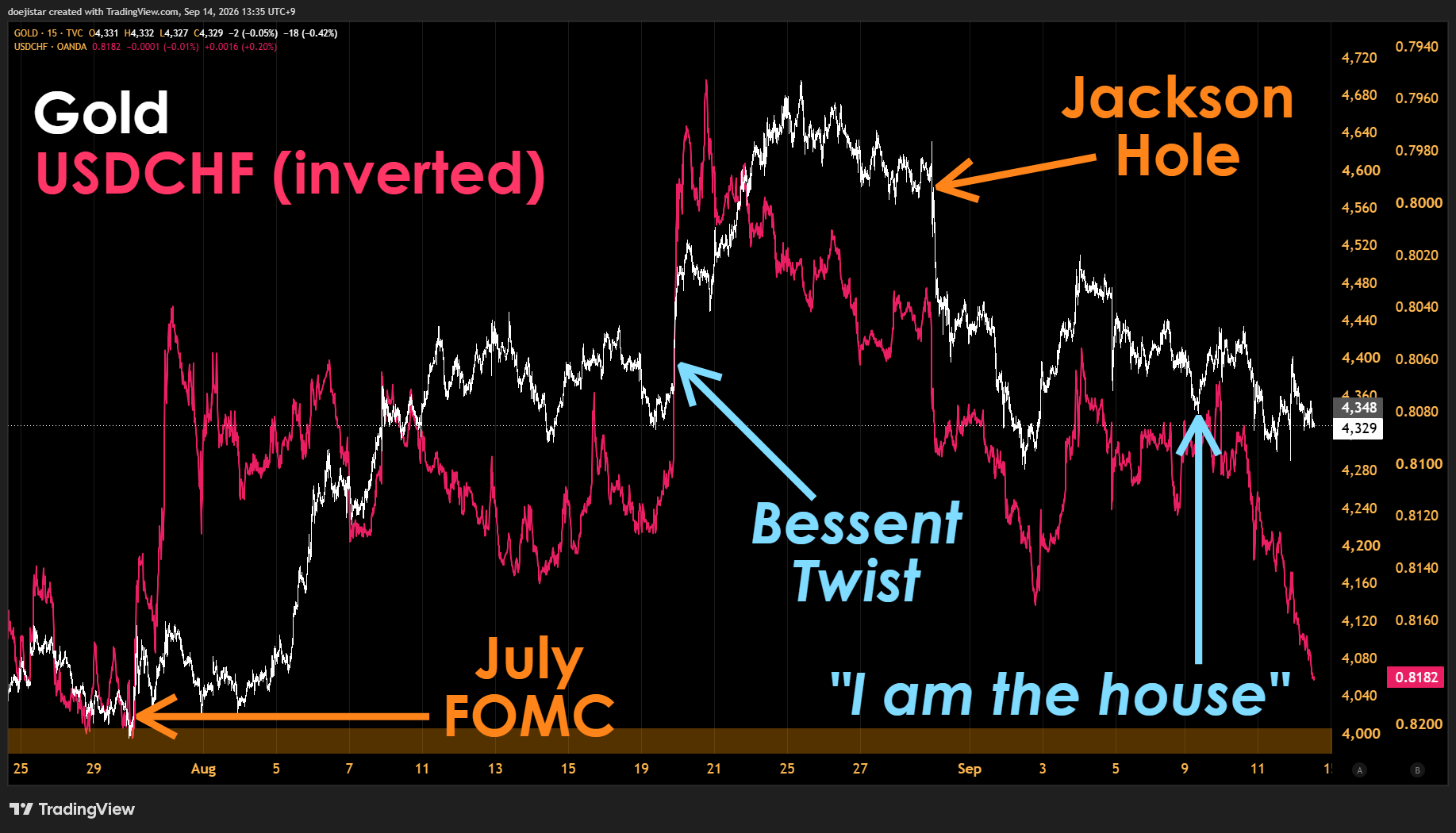
I think both are tradeable around this event but would lean towards short USDCHF as offering more tactical edge given the breakout last week while gold's trading range has been relatively tighter. But if genuine de-dollarisation concerns were to resurface however, long Gold is tactically appealing especially with an obvious head-and-shoulders pattern on the chart waiting to screw the shorts.
POSITIONING RISK
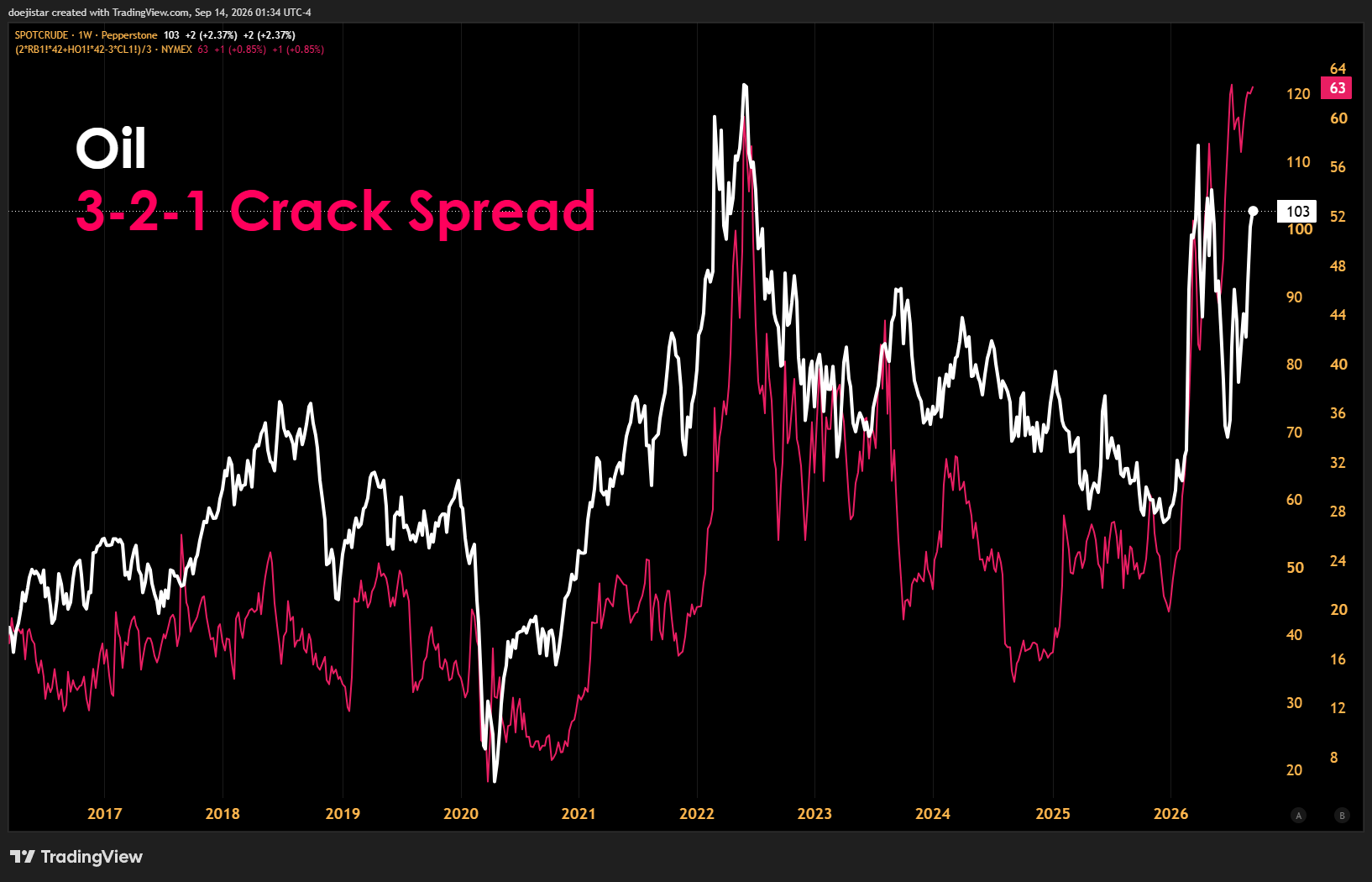
The uncomfortable combination of a hotter than expected CPI and crack spreads pushing at all-time highs has caused the past week's action to make up roughly half of the hawkish repricing of the last 3-months. Not only are expectations for a 25bps hike this week effectively fully priced, but the market also now expects a hiking cycle over the next year.
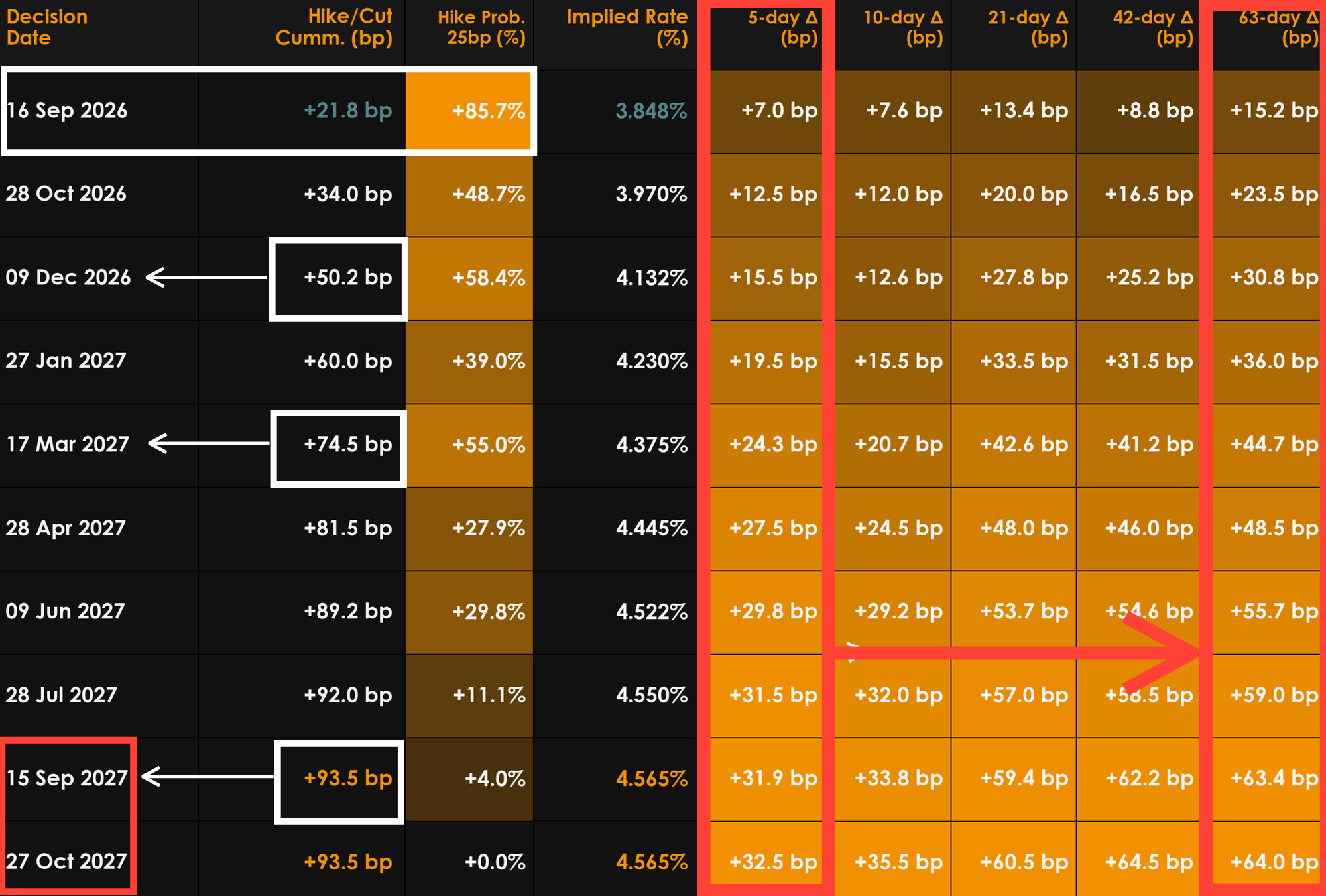
While I wouldn't disagree with those pricings given that energy products relief is looking increasingly further out, there is clearly a lot of tightening priced in. This will be an important consideration particularly if FOMC delivers what may be considered simply a 'dovish/insurance/credibility hike', and not much more.
The other key consideration is Energy. How quickly the dust settles and how durable the market reaction to FOMC is, will depend on how energy markets trade and this needs to be monitored closely. There may be a chance that energy markets will price in lower demand on a hawkish FOMC shift, but I doubt it will be enough to overpower the dominant supply shock narrative.
PRE-FOMC TRADE
I think there is a reasonable chance the Fed may fall short of signalling a meaningful shift into a hiking cycle than the market expects which is almost 4 hikes starting this week and over the course of the next 12-months. If so, this would likely be interpreted as a dovish 'insurance' or 'credibility' hike, and less of one that confirms the start of a long hiking cycle.
This outcome would disappoint the hawks and therefore the risk of positioning unwinds to be quite significant. I could see Gold squeezing shorts in such a scenario to carve out another right-shoulder high, and long Gold to be the trade as a brief tactical position/hedge through the initial decision and release of the dot plots as it not only covers the dovish-hike, but also covers the positioning risk once the hike is realised as well as the no-hike/credibility-tantrum scenario.
POST-FOMC TRADE
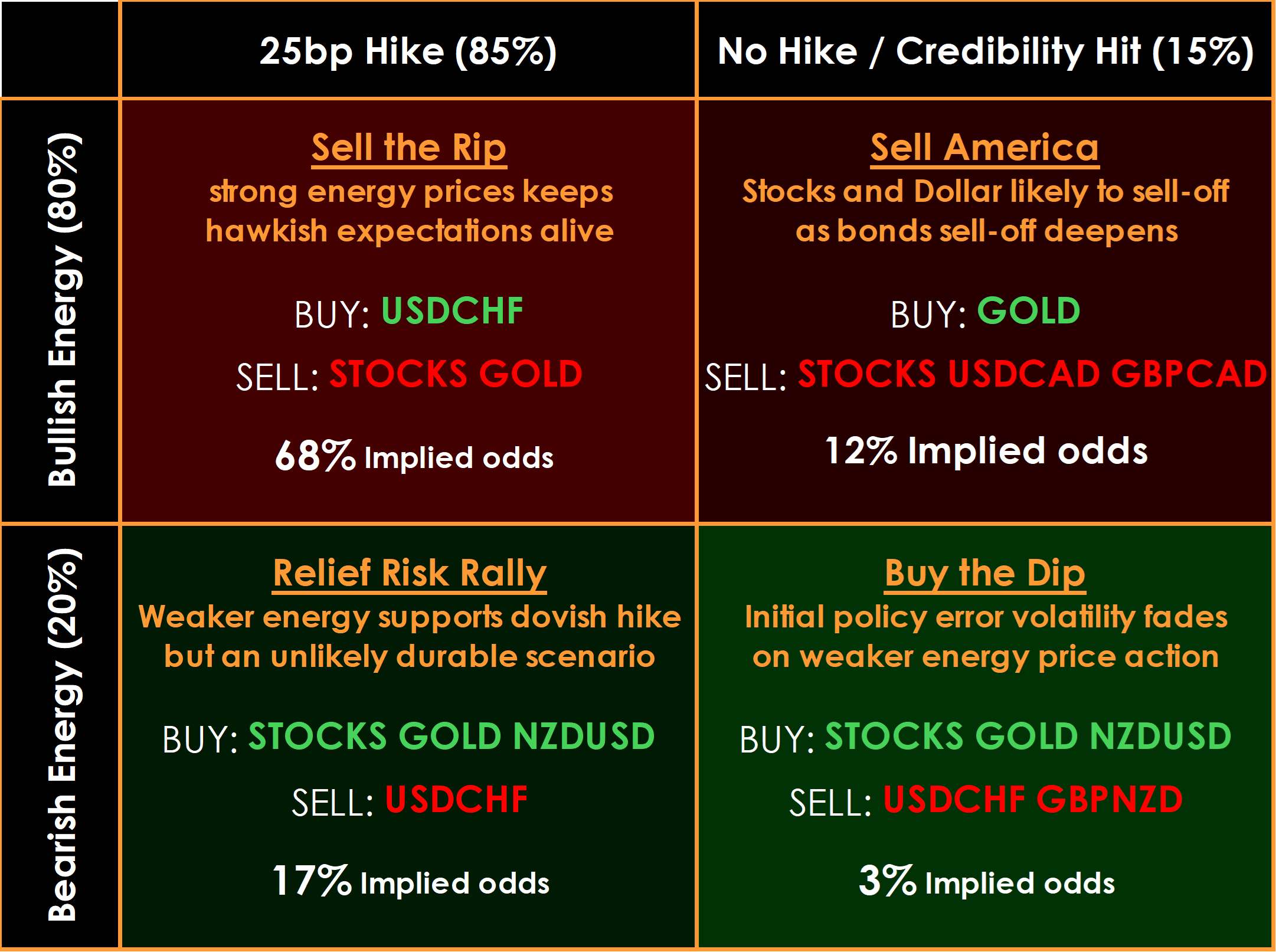
After the initial release, my focus will turn to how energy is trading and whether anything has changed the risk outlook. I assume energy supply relief to be an increasingly later than sooner story and assign bullish/bearish outlook probabilities as 80/20. This is why I've been maintaining a bearish-risk and bullish-dollar risk bias in recent months and continue to do so until there is sign of relief to energy prices. Thus any initial reaction in the opposite direction I would consider to be good tactical opportunities to fade risk rallies and dollar dips.
Combining that energy view with markets pricing in 85% chances of a hike, we have the below implied probabilities with suggested trades based on our earlier analysis.
Should be a busy week - CA CPI, Fed and BOJ. Good luck trading!
While usually reserved for premium subscribers, this note has been made publicly available on this rare occasion. If you found this insightful, consider subscribing and upgrading to premium to get full access to our content and community.