Wk34 MacroTechnicals - VIX Sleeps While Oil Creeps
Messy thematic signals - easing macro regimes and low VIX clashes with rising commodity prices

It's been a somewhat challenging market environment of late, and I think it's set to get even more confusing as the market has to balance a conflicting set of risks.
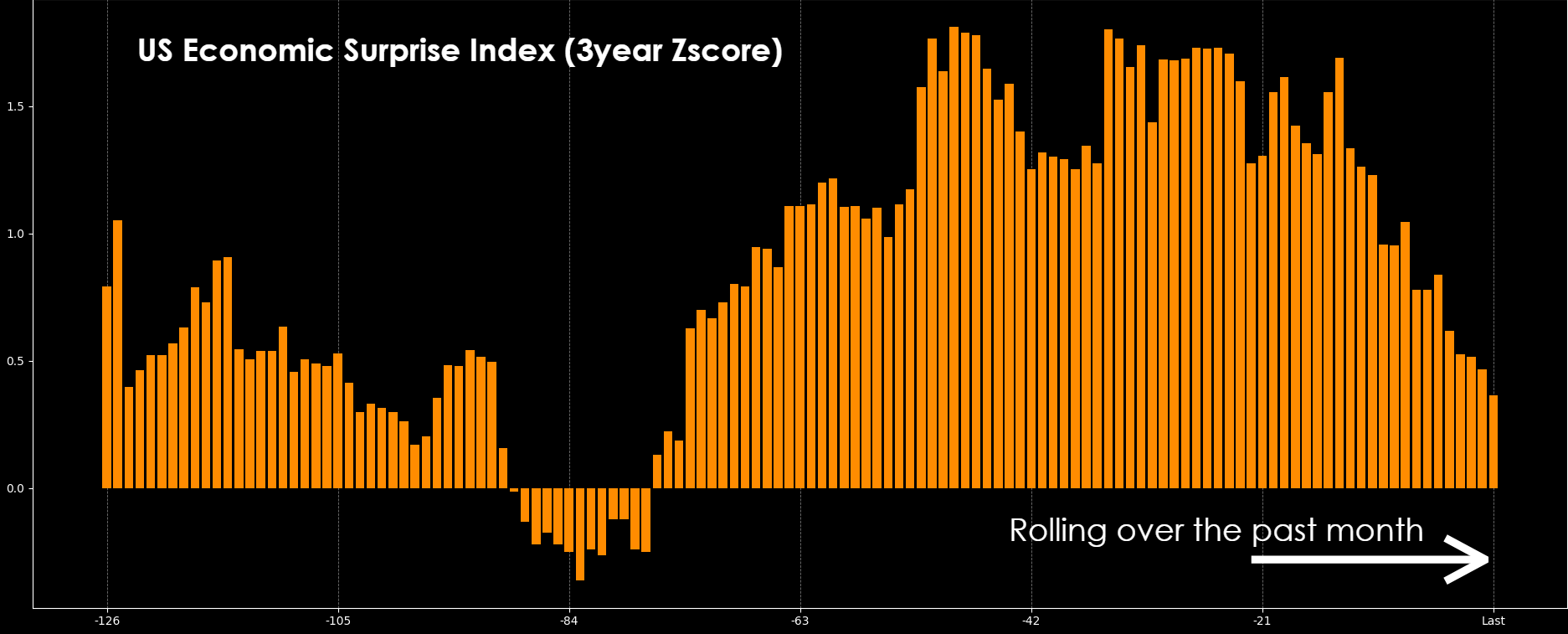
US data continues to move through a soft patch, and markets are responding through a paring back in real rates and a weaker-dollar bias, but the risk-on signal is uneven. AI and semis are supporting equity market sentiment, energy is breaking out, and commodity/geopolitical risks remain elevated, while the VIX is at the lowest level so far this year. With volatility and defensive hedges still suppressed, positioning looks increasingly vulnerable to disruptive headlines.
Strategy-wise, the bias remains tactical rather than outright directional. With rate moves already extended and introduction of more long-end supply while oil prices are elevated, my general leaning is bearish on risk exhaustion rather than chasing.
Macro
US DATA
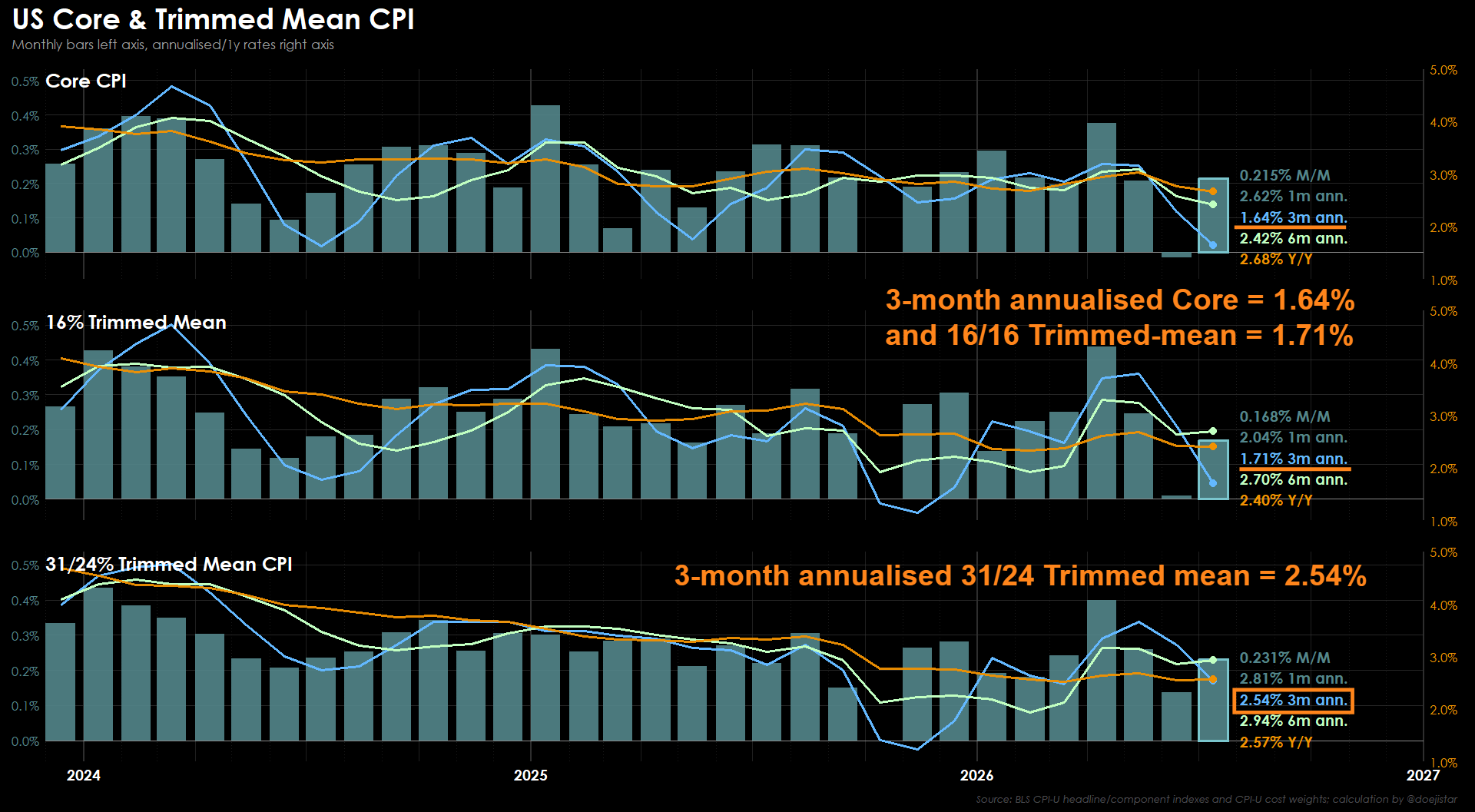
CPI came in as expected with core running at an annualised rate of roughly 2.5%. While the report would have not provided any sense of urgency for the Fed, the inflation outlook remains unclear.
Firstly, the 31/24 Dallas-Fed trimmed-mean methodology is reporting higher rates compared to the other measures. This is interesting as the measure trims out 31% of the hottest CPI components, but less of the 24% of the weakest CPI components. Doing so should, in theory, result in comparatively lower inflation rates if trimming out more high than low inflation components. This may be indicating that underlying inflation is stronger than what the other measures would suggest.
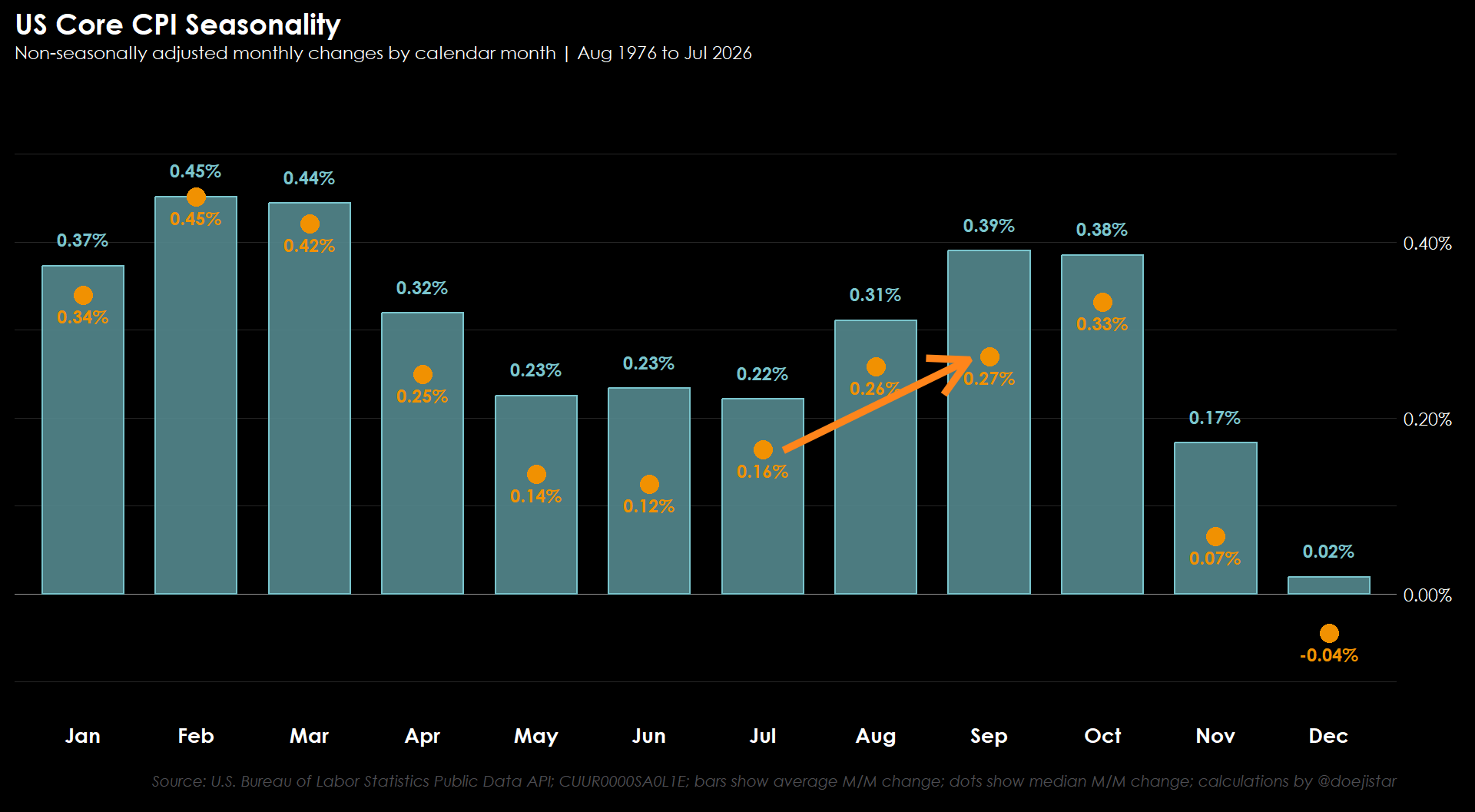
Secondly, summer months is seasonally a weak period of the year for core inflation that ends in July, of which we've just had the CPI report for.
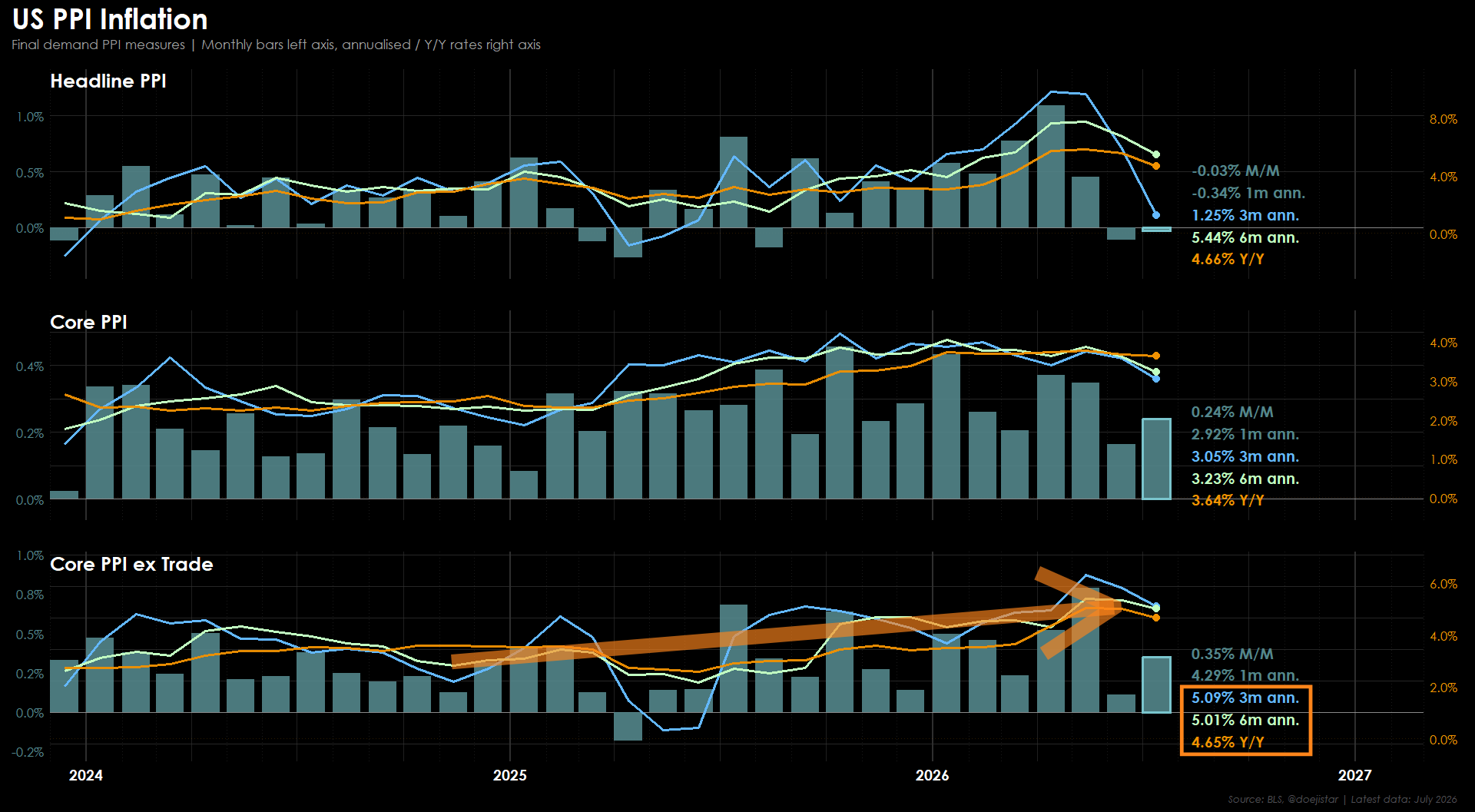
PPI was softer than expected but I think this can be chalked off as being in-line than a miss given prior month prints were revised higher by +0.2ppts to both headline and core PPI. Looking at the bigger picture, wholesale core (ex-trade) inflation is still running very hot at 4.65% y/y and 5% on a short-term basis.
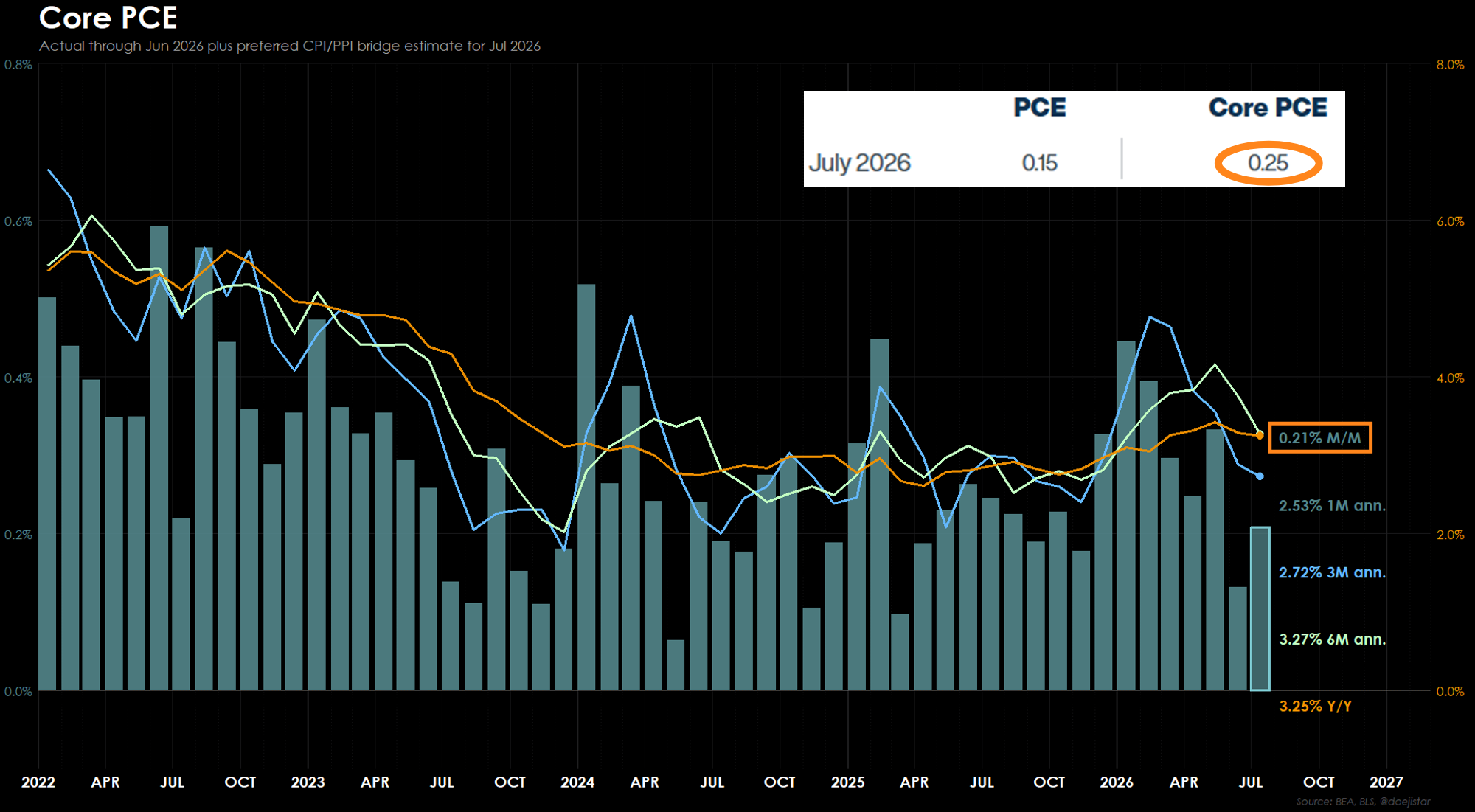
On balance, the July data should probably be adjudged as being marginally dovish. July Core PCE (estimated from CPI and PPI data) is expected to be 0.21% which is below the Cleveland Fed nowcast of 0.25% and would take the YoY Core PCE down from its May peak to 3.25%.
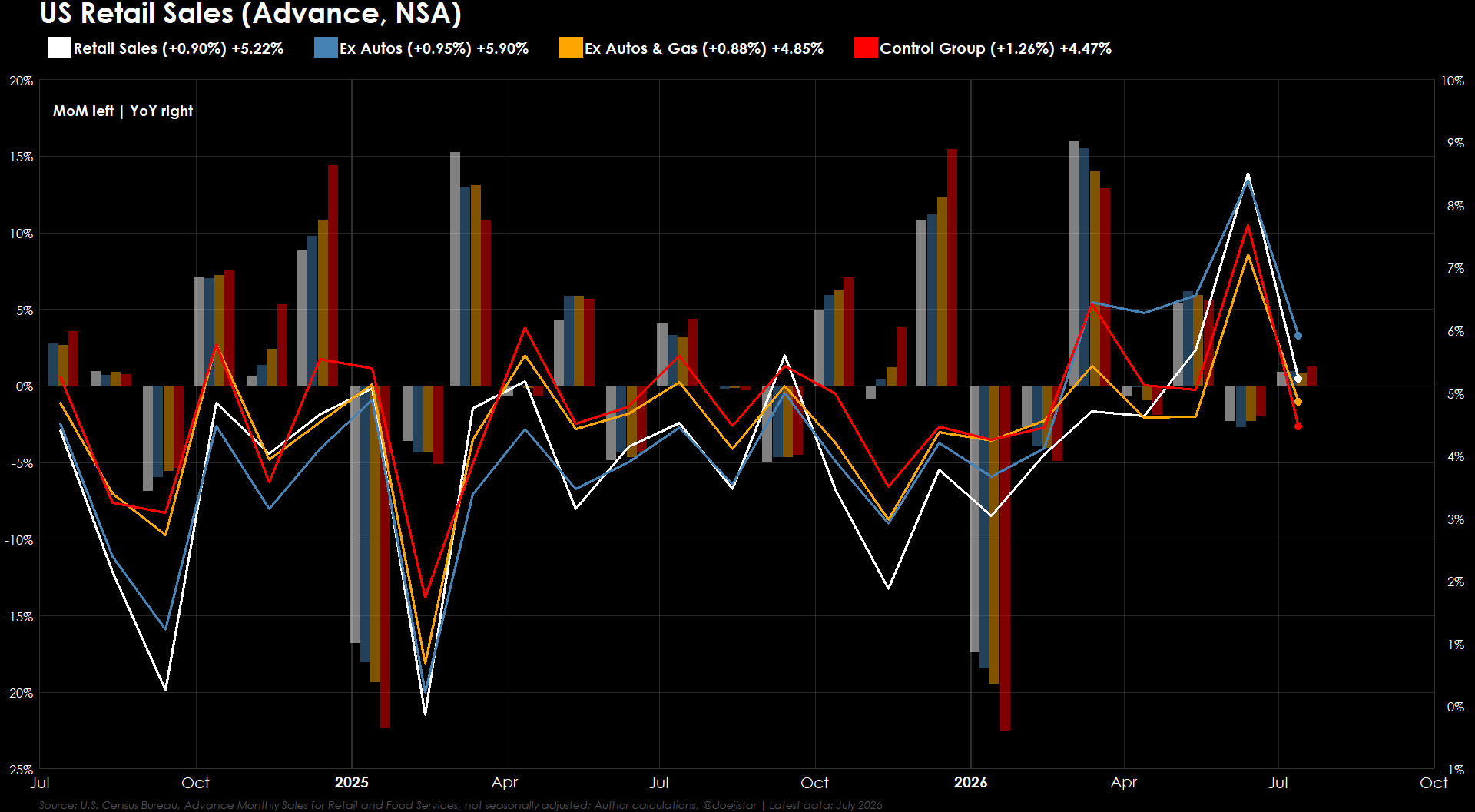
US Retail Sales missed expectations by a large margin, headline was -0.6% versus +0.1% expected while core was -0.3% versus 0.2% expected. Looking at the non-seasonally adjusted data, the monthly change was weaker than the July months of prior years so the big miss looks partially attributable to the seasonal adjustment.
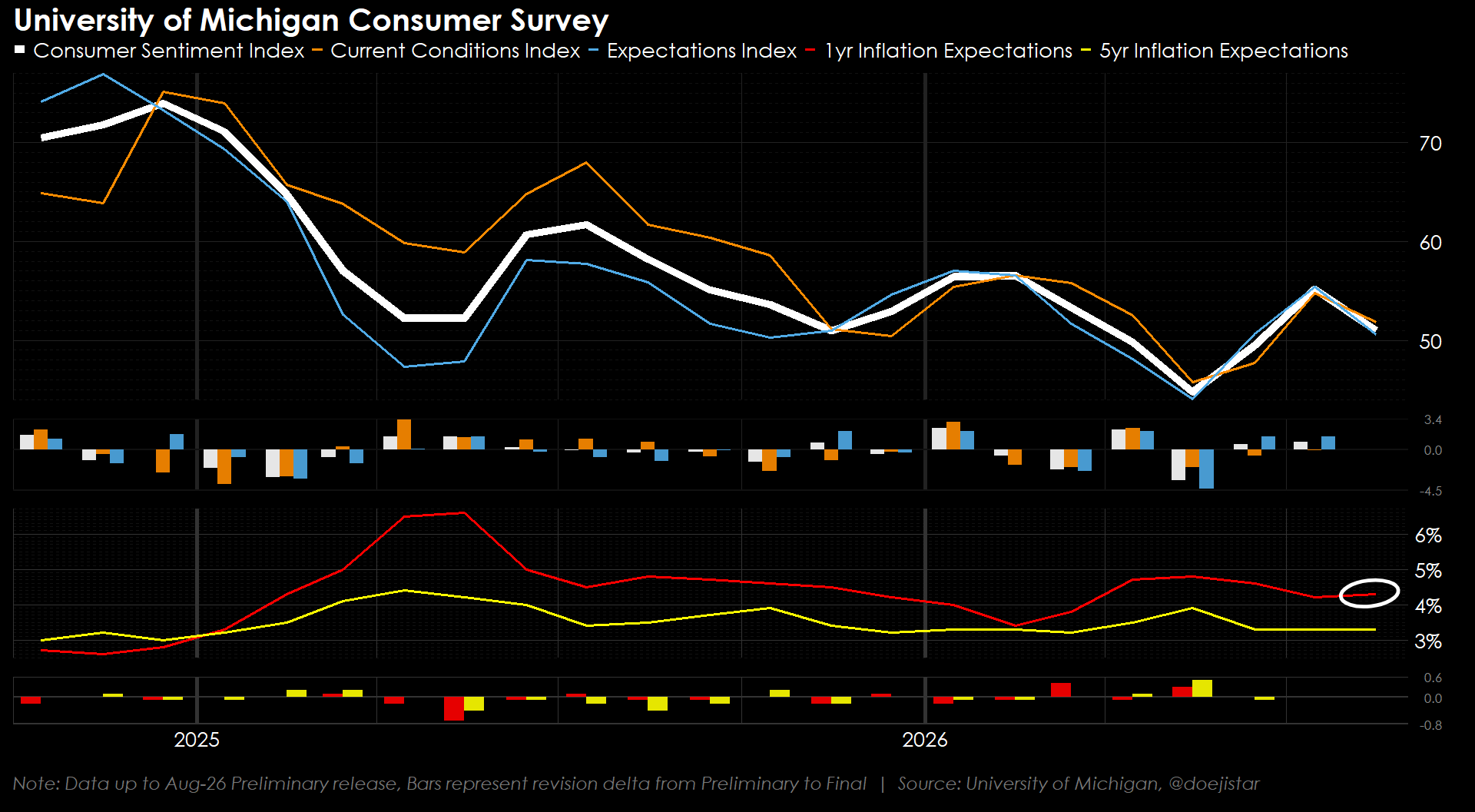
UoM consumer sentiment took a hit on fresh inflation concerns. 1-year expectations printed 4.3%, up from 4.2% the prior month.
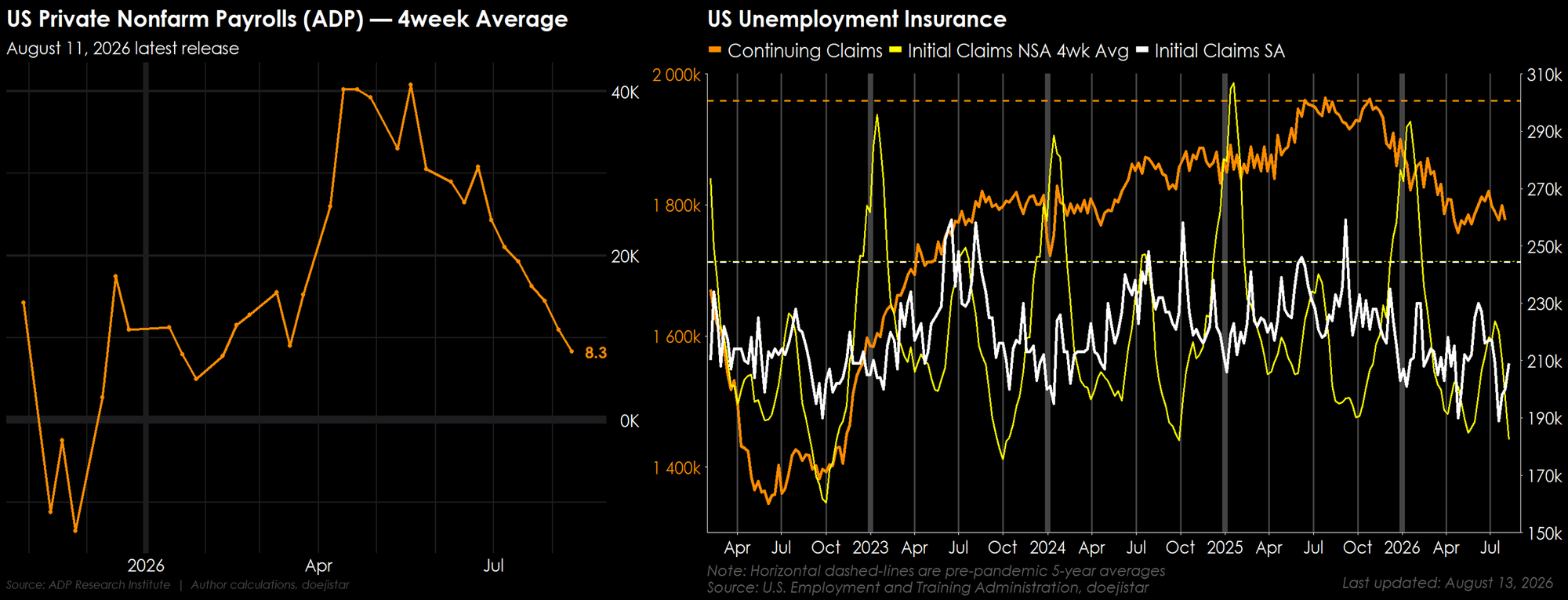
ADP weekly payrolls estimate continues to decline but claims remains low.
Overall, another weak of soft data to extend the soft patch in US data.
UK DATA
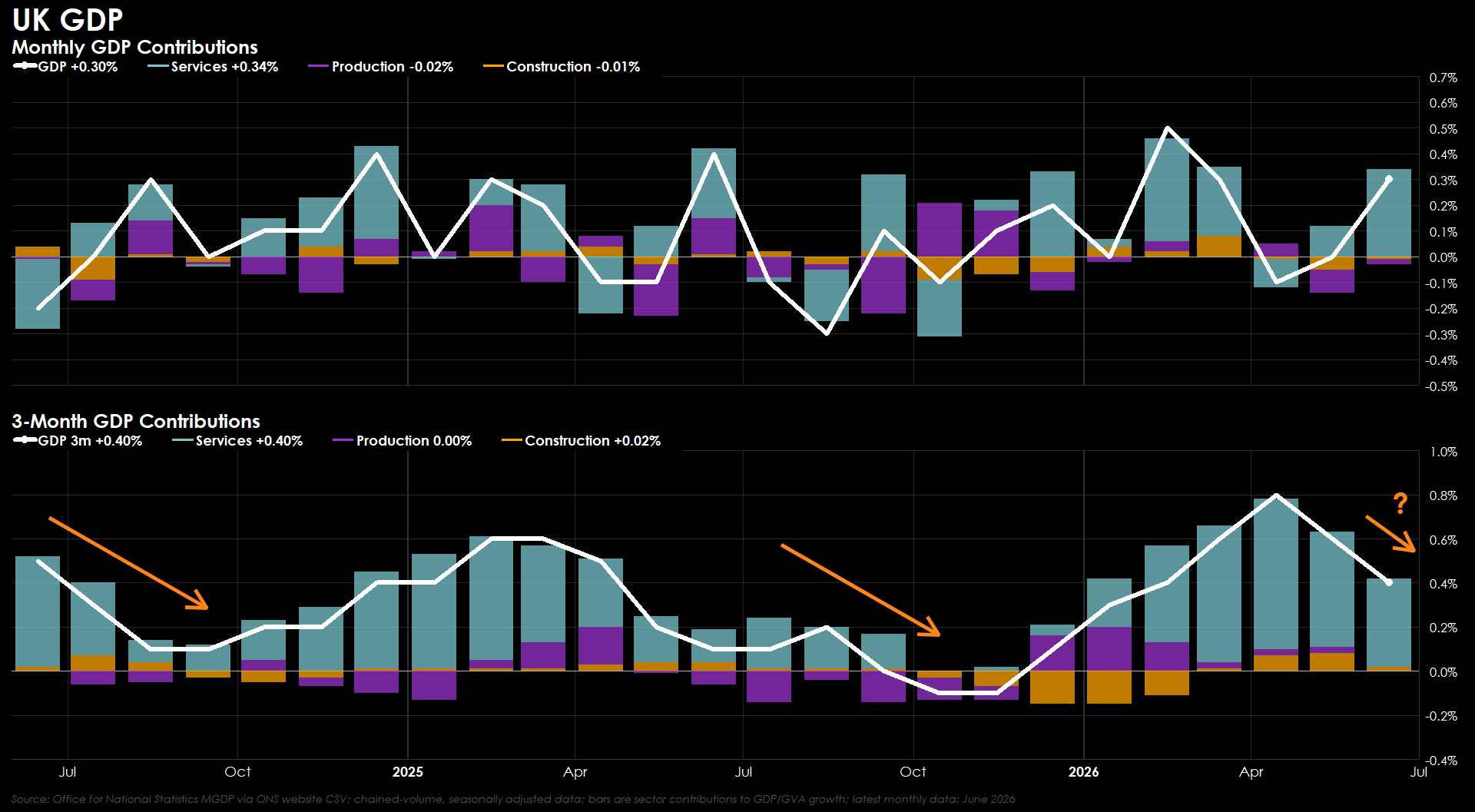
UK GDP for June was stronger than expected driven by services. So far, July data has shown resilience particularly via the Services PMI report, but if we follow a similar pattern to prior years where activity has tended to slow during the 3rd quarter, we may currently be around a seasonal peak. Looking forward to Retail sales on Friday and Flash PMI the week after to assess that Q3 outlook.
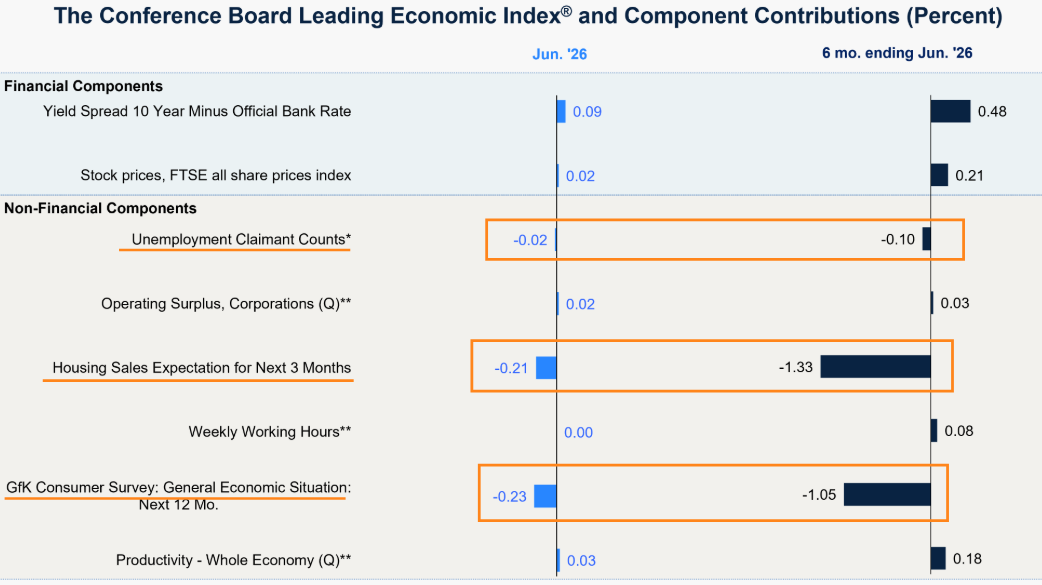
Conference Boards Leading Index for the UK has declined for a 6th consecutive month, being driven by weaker consumer expectations on the economy and housing sales, as well as an increase in unemployment claims.
ANTIPDOEAN DATA
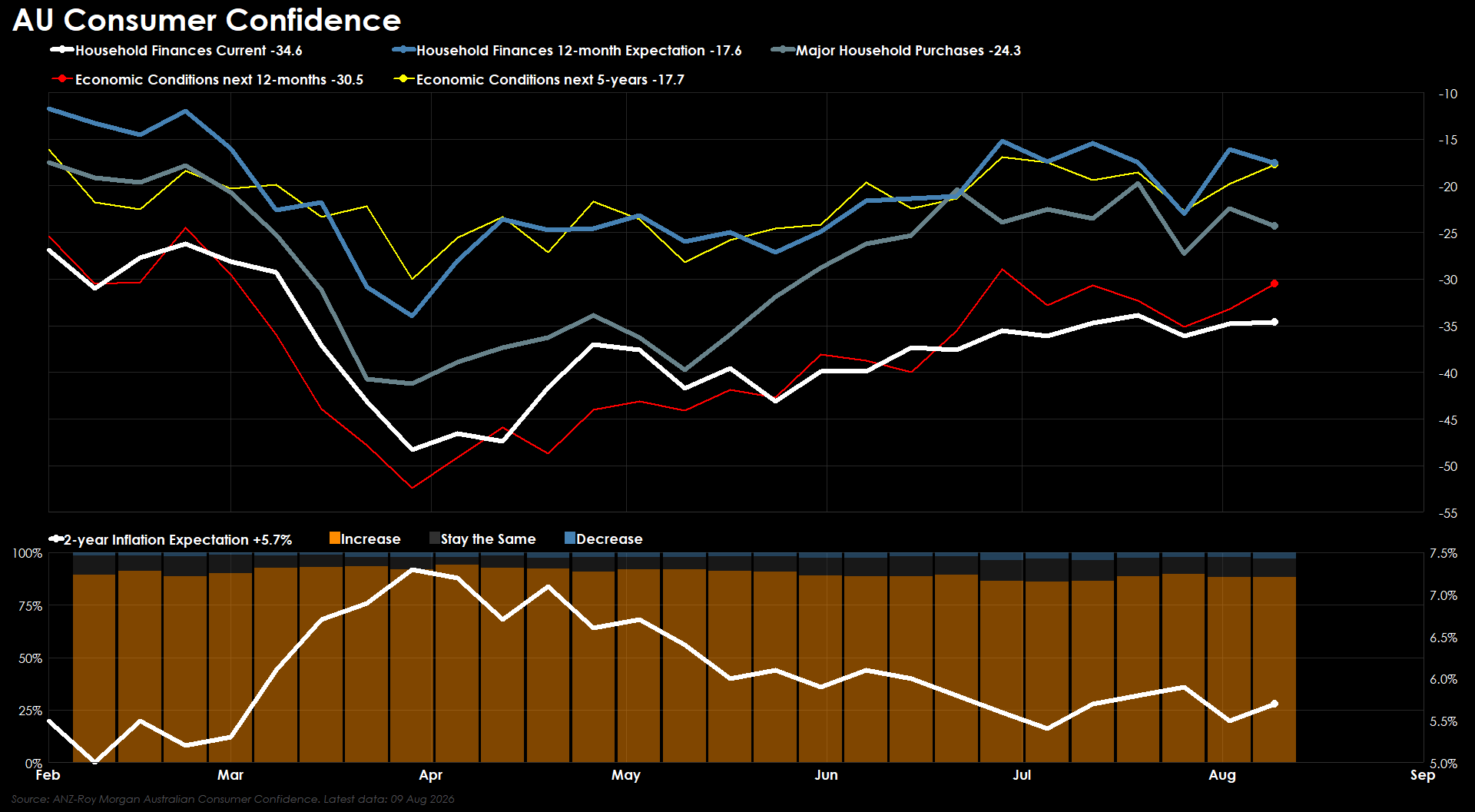
Australian consumer confidence continues to be in stall over the past month with components marginally weaker and inflation expectations beginning to rebound.
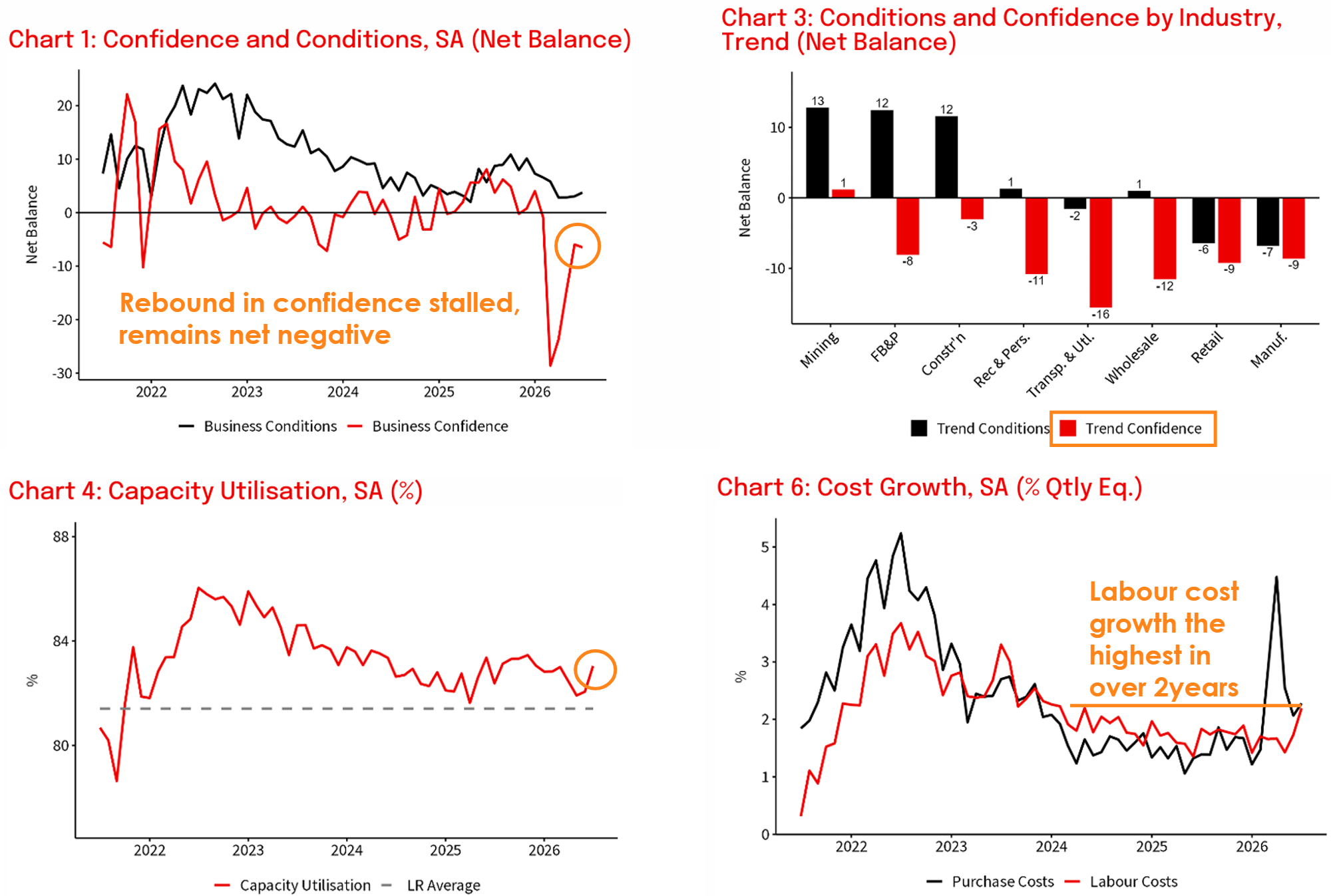
The recovery in Australian business confidence has also stalled in July with oil price volatility and accelerating cost growth continues to weigh on sentiment despite the strong rebound the prior 3months.
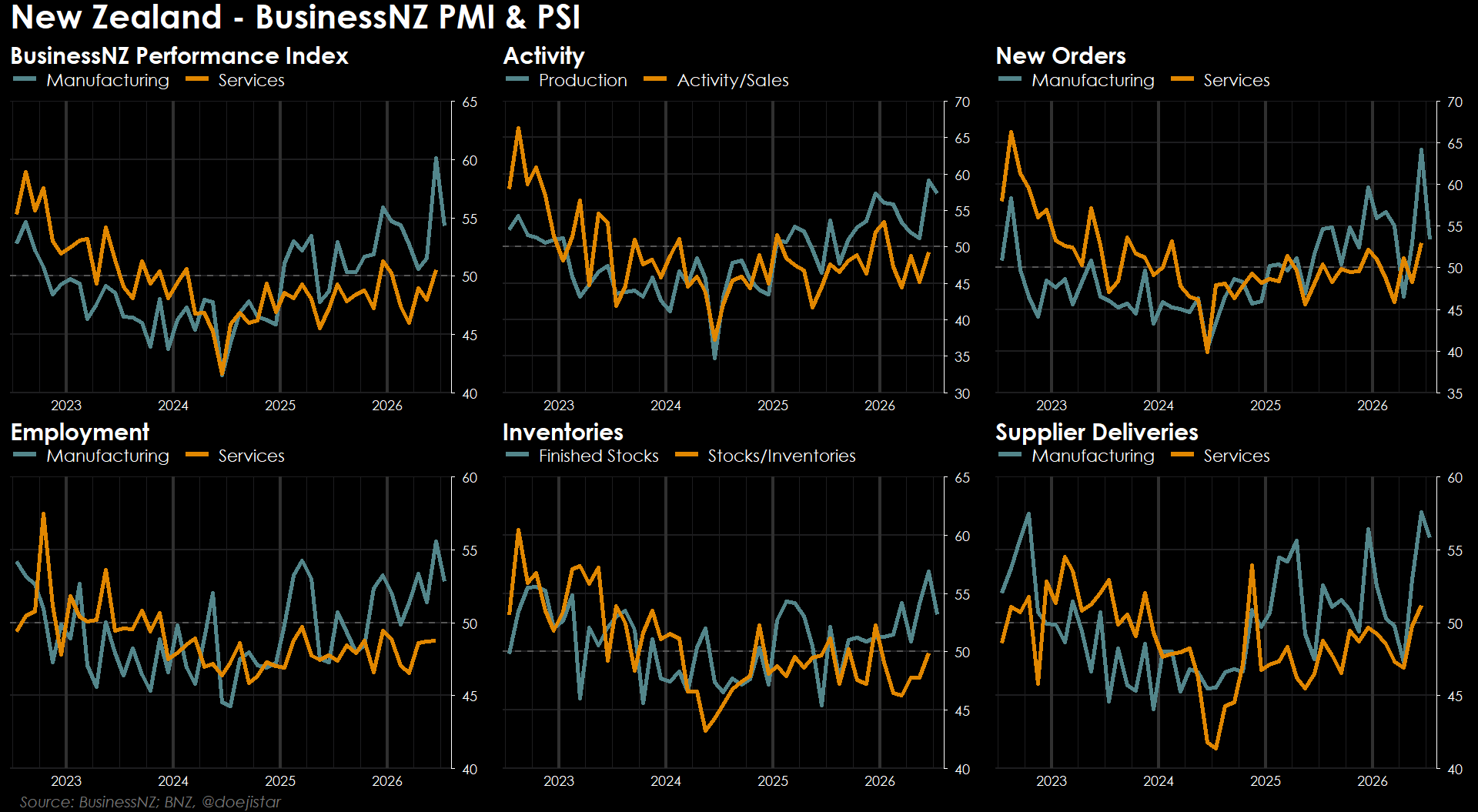
In New Zealand, Manufacturing PMI was lower than the prior month but still print very strong expansion numbers across the board. We start the new week with the Services PMI report where we expect it to confirm all indications that the Kiwi economy is gaining positive momentum.