Wk35 Weekly MacroTechnicals - Oil Slicks the Long End
Failed Bessentvention, ATH crack spreads, Elevated inflation risks, Debasement skepticism

Bessent tried to break the reflexive selling in the long-end but the market faded him in a day. I discuss why and what that means for the debasement chatter gaining traction in recent sessions, as well as the usual macro and technical review, and trading strategy for the week ahead.
Ineffective intervention
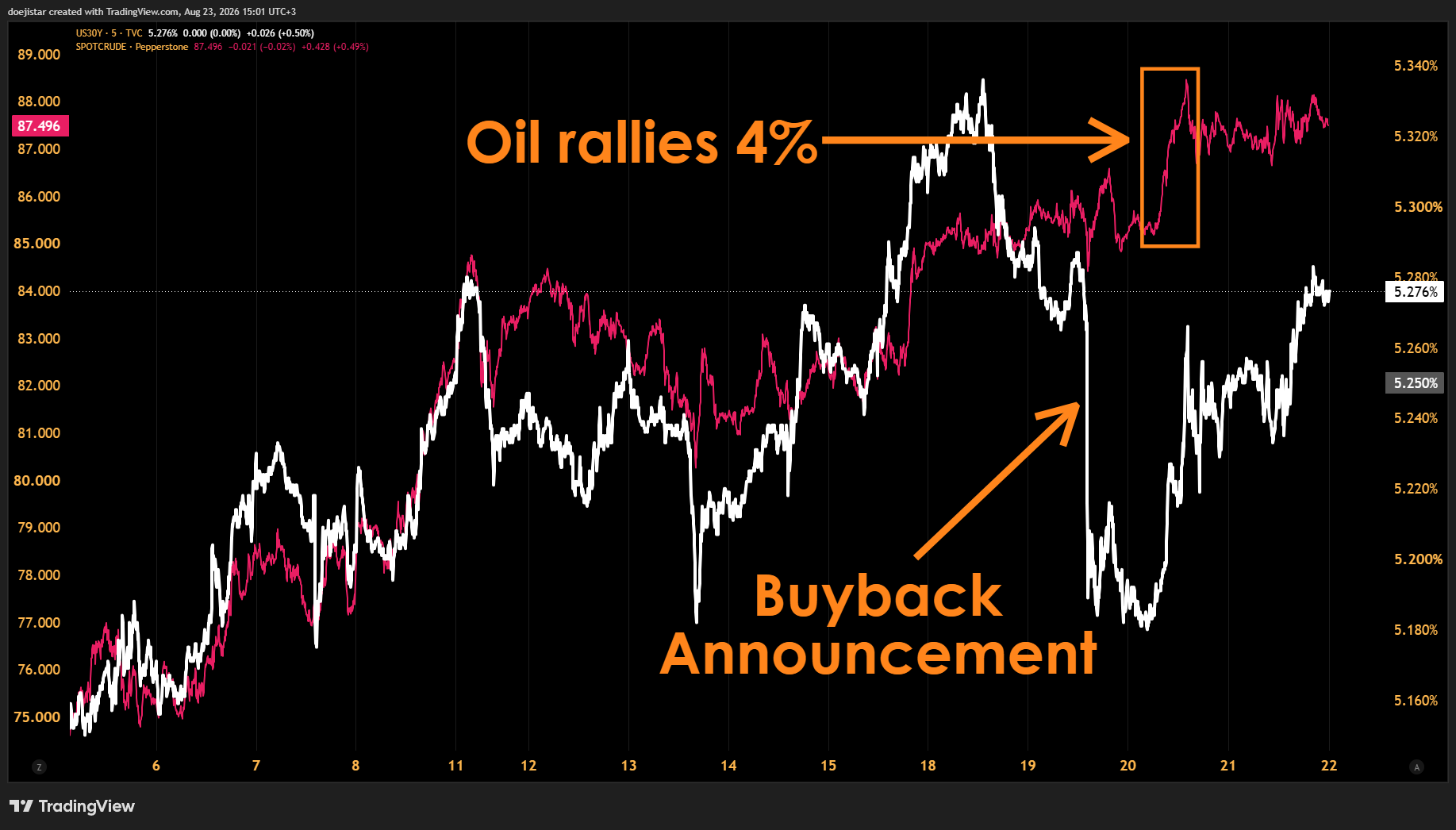
Bessent's intervention in an attempt to break the reflexivity in long-end selling has proved ineffective. The initial downshift in the yield curve was undone within a day. Even the 2 year yield was higher than it was after a soft set of economic data.
Oil is the key driver of yields
Bessent can throw the kitchen sink at the 30 year yield and it will do nothing. Instead, the most important macro input is oil. Overlay it on any yield chart and the impact of oil prices as a primary driver of yields is undeniable, and why the buyback announcement did nothing to keep yields down. So the key question then is how the geopolitical outlook is shaping up for the coming weeks and months, and therefore oil prices and yields.
Oil markets remain structurally tight
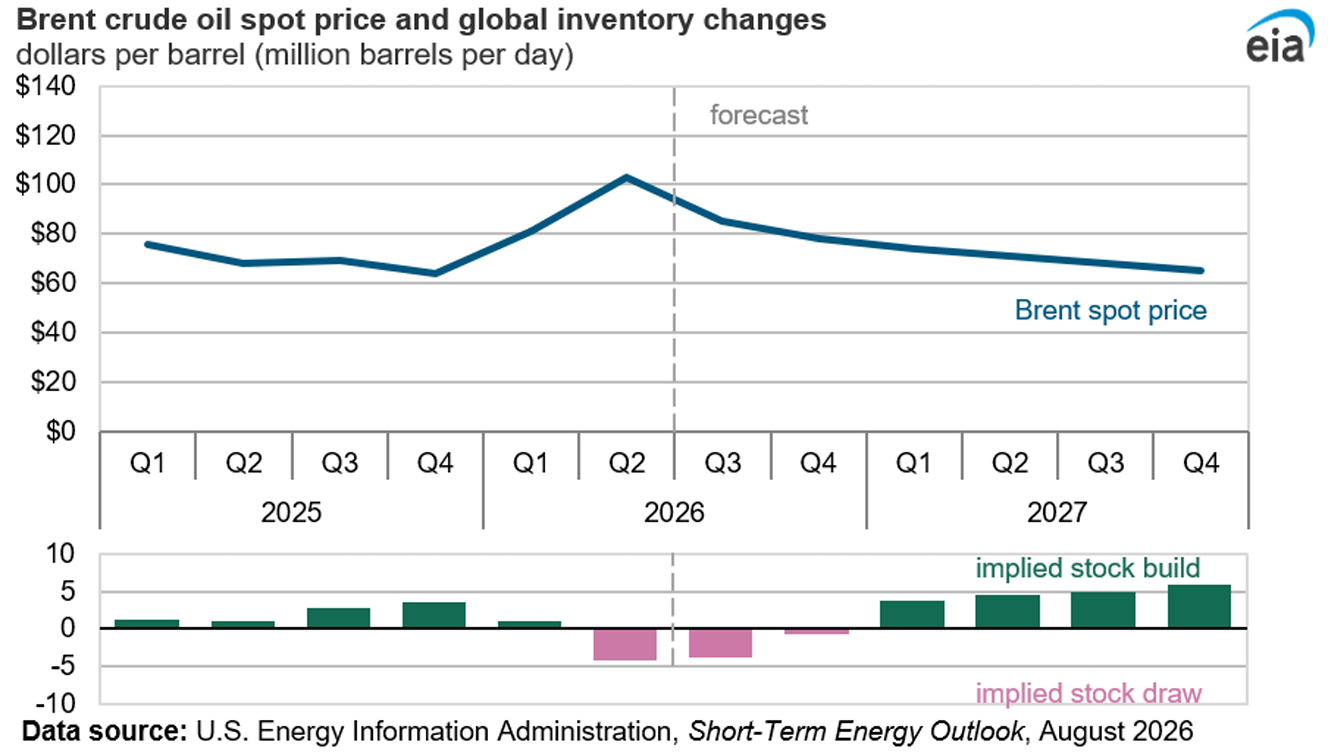
HFI Research notes that global crude inventories remain low and are drawing counterseasonally, and OECD inventories are seeing builds that will soon reverse to draws, while refined product exports remain low. IEA’s August report sees materially tighter 3Q balance: "Although the market is projected to return to surplus towards the end of this year, risks remain substantial and the urgency of reopening the Strait has increased, as previously available inventory buffers are rapidly depleting." EIA's August Outlook raised their shut-in production forecast but is optimistic that flows will gradually normalise next month to see Brent averaging ~$85/bbl for Q3 and ~$78/bbl into Q4.
Extended attrition keeps geopolitical premiums high
Hormuz flows are still heavily impaired but showing signs of partial workarounds; Bab al-Mandeb flows remain open but slower and increasingly fragile because of Houthi escalation. There is still an extremely high level of uncertainty about how the US-Iran conflict can decisively end after the MoU expired (on August 17th) and the US and Iran no longer talking. Without any seemingly good options for Trump, the base case of extended attrition (now in it's 5th month) is unlikely to change over the near-term, especially as more measures to exert further economic pressure on Iran is expected to be announced.
Market particularly vulnerable to price spikes
After their attack on Saudi refineries, the Houthis were escalating attacks via an attempt to push their area of control towards the Bab al-Mandeb Strait. The good news is that they were not wholly successful as Yemen & Arab coalition forces fought back. The bad news is that I doubt the Houthis will be out of ideas on what else they and Iran can do. That, on top of a structurally tight market makes the oil market particularly vulnerable to price spikes.

High crack spreads the bigger problem?
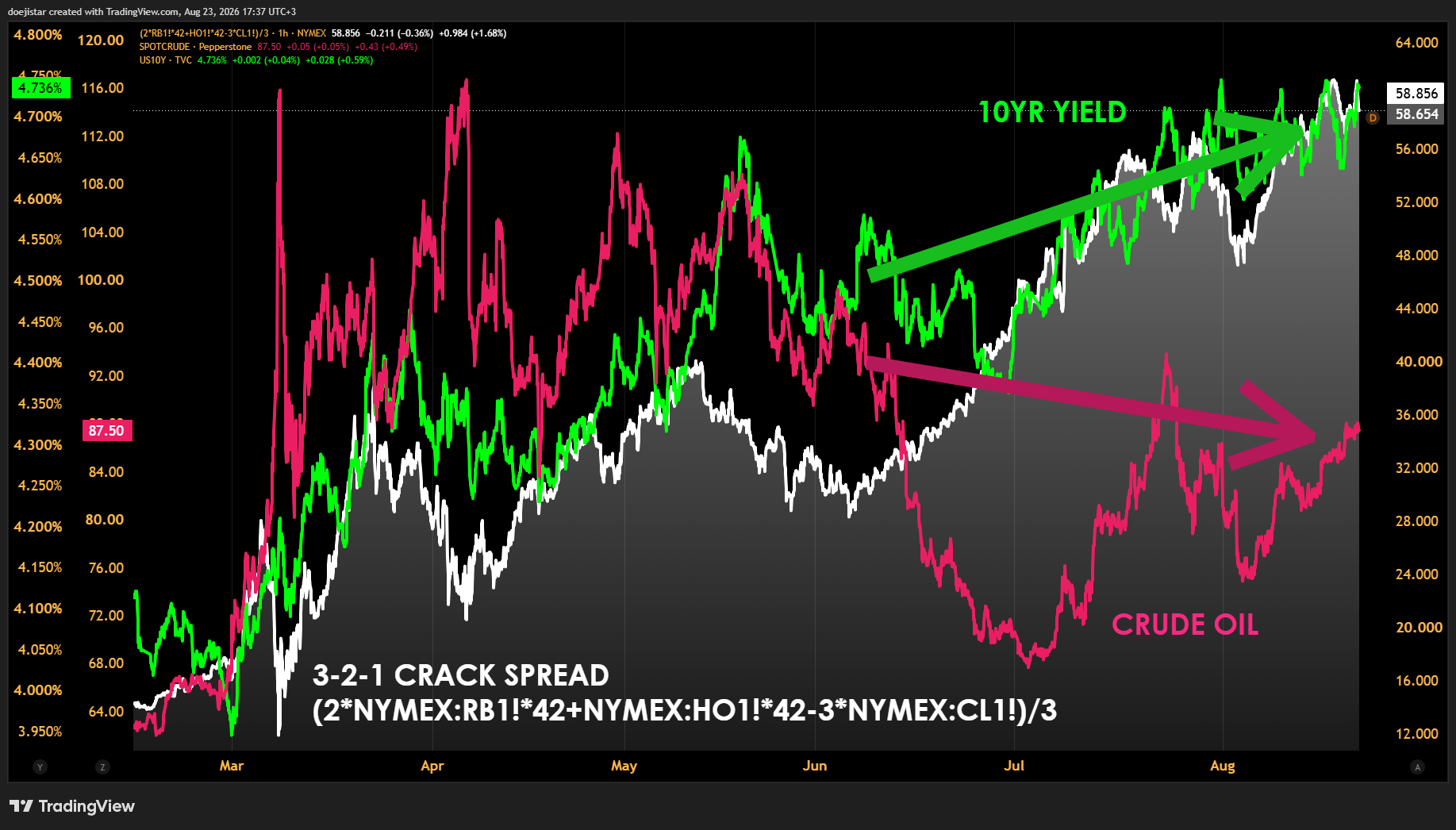
Even as oil trades well below the March-May period, Gasoline futures are trading back at the 3 handle, and Crack spreads continue to push all-time-highs and as a BMO note says, "the world’s consumers and, consequently, central bankers, may already have a bigger problem on their hands" with an "array of pressure points". The implication is that energy prices that more directly impact consumers has rallied back to the highs to increase broader cost-push inflation pressures on the inflation outlook. Unless there is a durable de-escalation in Hormuz/Bab al-Mandeb and a pathway to rebuild global inventories to alleviate pressure on refined products, yields are likely to be supported on elevated inflation risk and tighter financial conditions.
So is the debasement trade back?
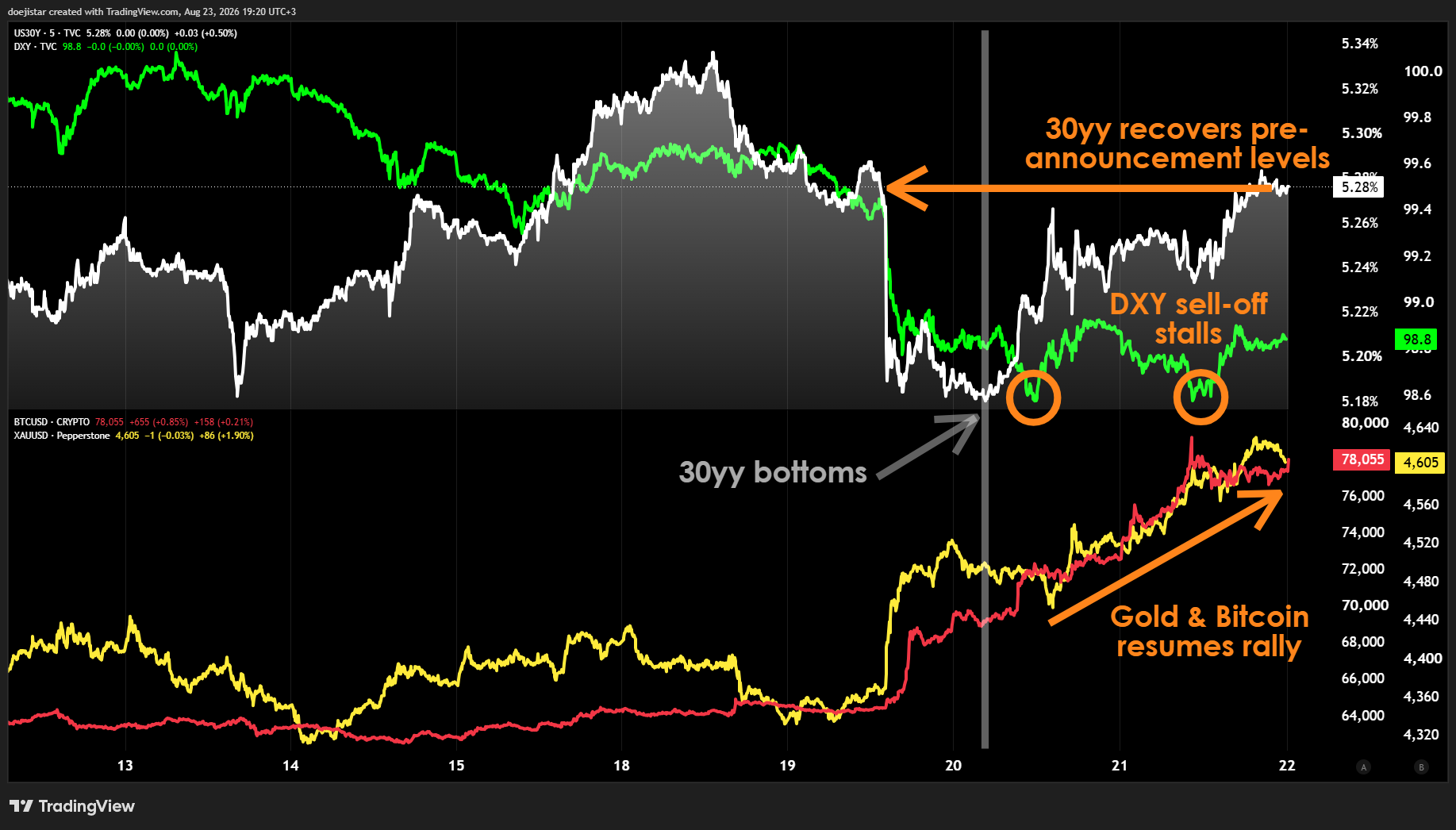
The market certainly traded like it the last 2 sessions of the week as popular debasement assets like Gold and Bitcoin diverged against 30yy and DXY...
And strategists also agree...
"Expressions of debasement fears are a weaker USD and long gold. We do not doubt the ability of the U.S. Treasury to keep yields contained for quite some time. The main price to pay for lowering rates in such a way is a weaker currency." (Citi)
"Budget deficits remain high, this will be a growing issue, which will either force the U.S. to tighten fiscal policy, accept higher borrowing costs, or let the dollar weaken." (Société Générale)
"Markets are primed for dollar debasement to resume. As Japan shows, it can be next to impossible to stabilize a currency once it enters a devaluation spiral. The US is playing with fire with this buyback." (Robin Brooks)
But I'm not so sure...
For the debasement trade (a weakening USD) to be a compelling narrative, I'd need to believe in a few things: 1) US exceptionalism is over, 2) US deficit and policy uncertainty is too great to ignore, and 3) Fed pivots dovish. We've seen all of these themes play out before, so we should have a fairly decent idea on what that means for the Dollar if we look at each of these points.
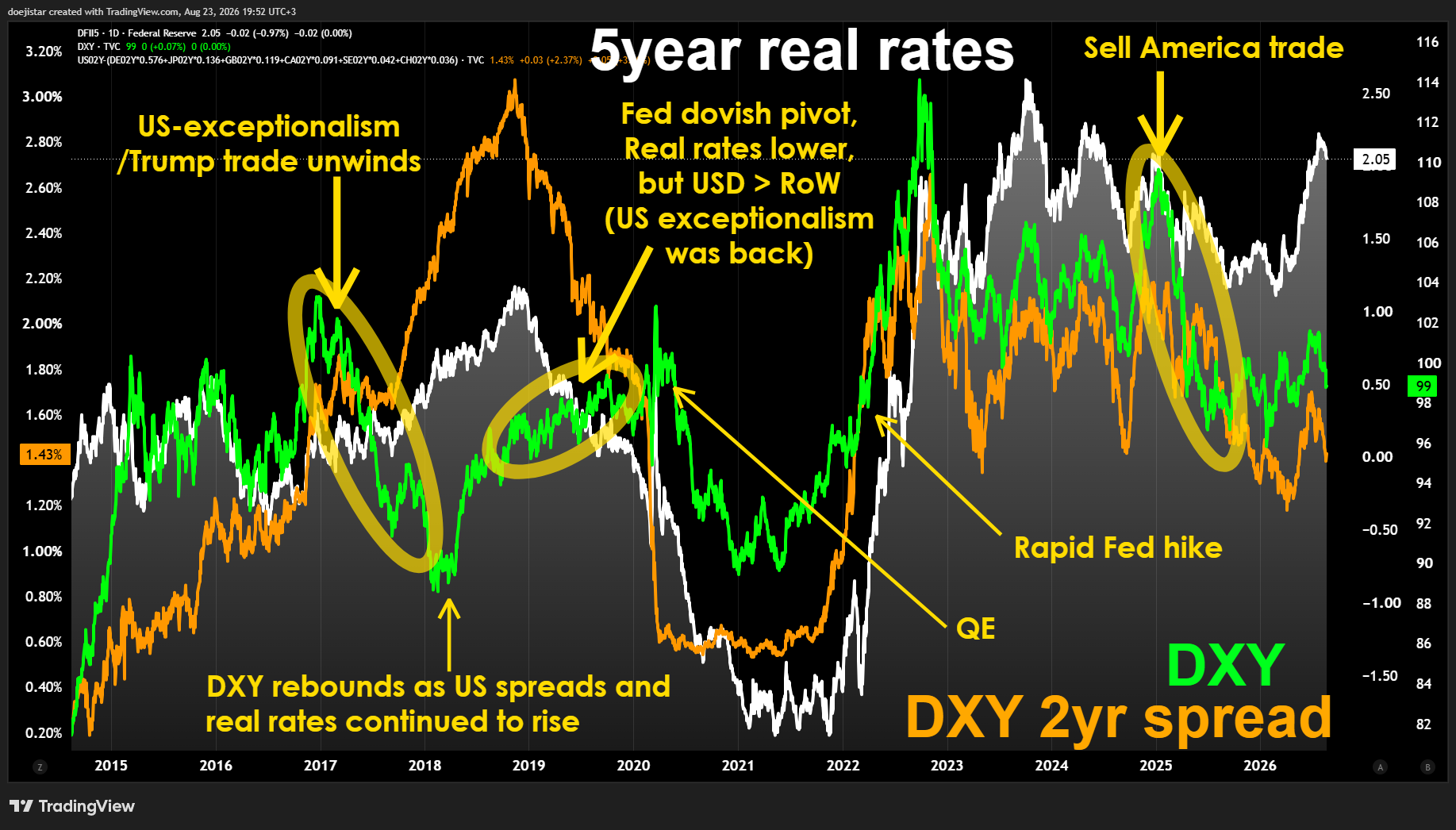
(1) US exceptionalism is over
The FOMC July statement noted that "US activity is expanding at a solid pace and that productivity growth and capital investment are strong". In other words, the degree of US exceptionalism is driven by its AI boom. I'm really not sure when or how it ends as there are genuine concerns about pricing power and margins being eroded away by competition and open-weight models, but that appears to be a slow-moving train-wreck if it were to be one at this current juncture. For now, I'm inclined to think that the AI boom will keep the economy roaring ahead, and the Trump administration to keep supporting it along with all their reglobalisation efforts - all of which is likely to keep bond yields supported, USD capital flowing, and USD yield spreads to be stable at the very least.
(2) US deficit and policy uncertainty is too great to ignore
We've been down the road of 'deficit concerns' many times over many decades and if history has taught us anything about this, it is to take it with skepticism. The USD has always survived that narrative for one main reason - it has not lost its standing as the issuer of the world's reserve currency. For markets however, narratives mixed with positioning elements can create periods of USD instability. On the annotated chart, these periods were seen during 2017 where Trump-led reflation trade turned on 'deficit concerns', and also in 2025's sell-America trade after Trump's Liberation Day tariffs. Both of those episodes were preceded by very bullish USD positioning and ended due to the resilience of real rates. Looking at the current backdrop, I don't think USD positioning is extreme after the wash out of 2025 and a more cautious USD sentiment since, and that US policy uncertainty is any greater than it was in 2025 or even a few months ago - well, maybe a little higher but it's been fairly elevated for some time already. The bottom-line for me on this deficit/uncertainty point is that narrative is an important driver of price, and with that narrative gaining traction, it makes me want to keep an open-mind to the debasement trade, but with skepticism.
(3) Fed pivots dovish
As we've seen in the annotated chart, though the USD hasn't regained a great deal of strength in the aftermath of the 2025 sell-off, real rates is at least lending some support. And what's key to driving real rates and USD rate differentials is of course US monpol expectations which, I think this is crucial to assess whether the dollar debasement trade is compelling enough. Assuming the US maintains a high degree of exceptionalism and are successful on their reglobalisation efforts discussed in point (1) while near-term Energy outlook keeps inflation risks high, a dovish pivot from the Fed is unlikely to be a 2026 story. Meanwhile, Bessent attempting to suppress bond yields is not helping Warsh's case that the market is doing a significant amount of tightening.
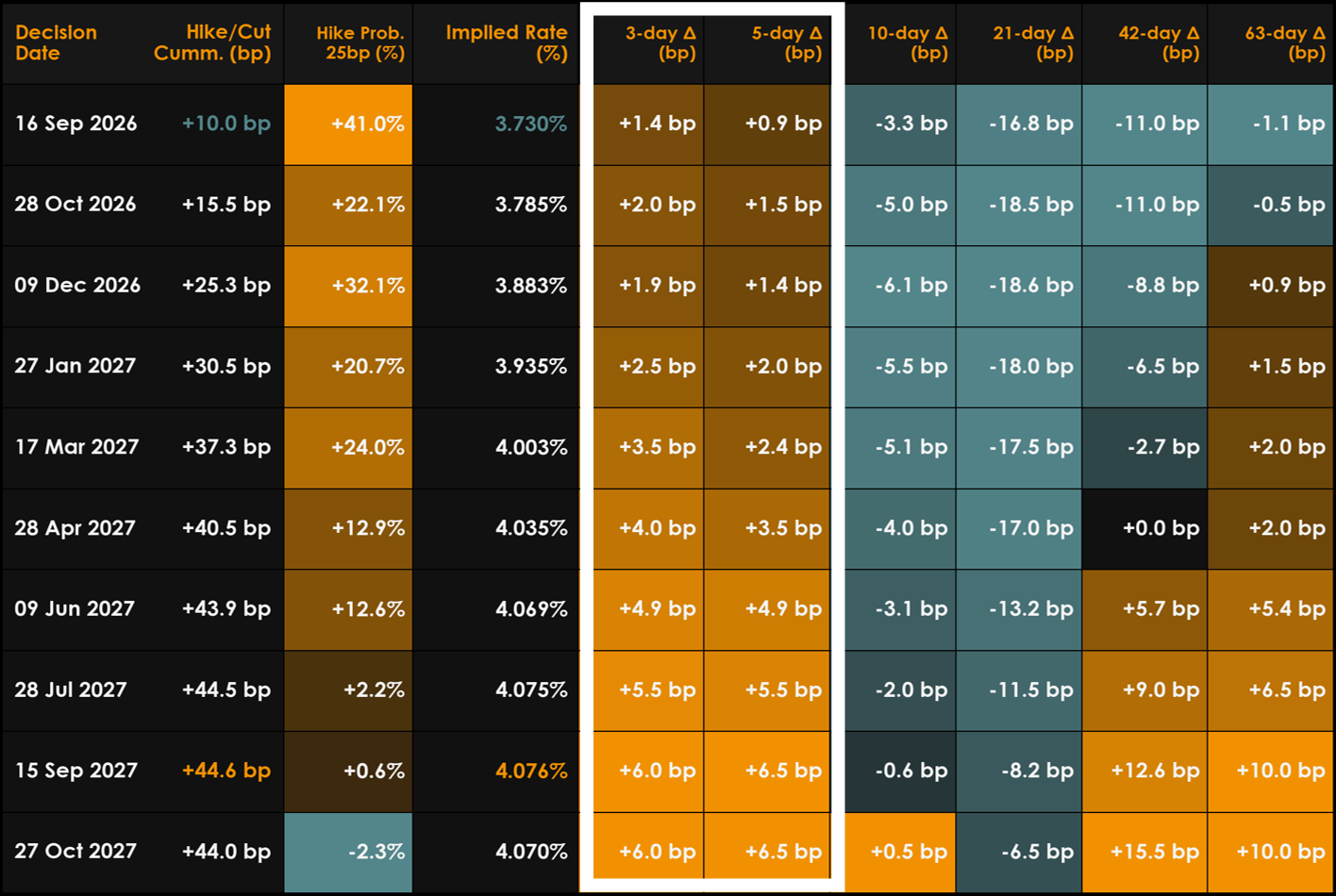
Concluding thoughts on the debasement trade
I’m not ready to fully embrace the dollar-debasement trade as a durable regime shift. I think the narrative needs to be respected while carrying some degree of skepticism due to the inflation outlook keeping dollar yields elevated. I'll discuss this further on the trading angle in the Strategy section later.
Macro
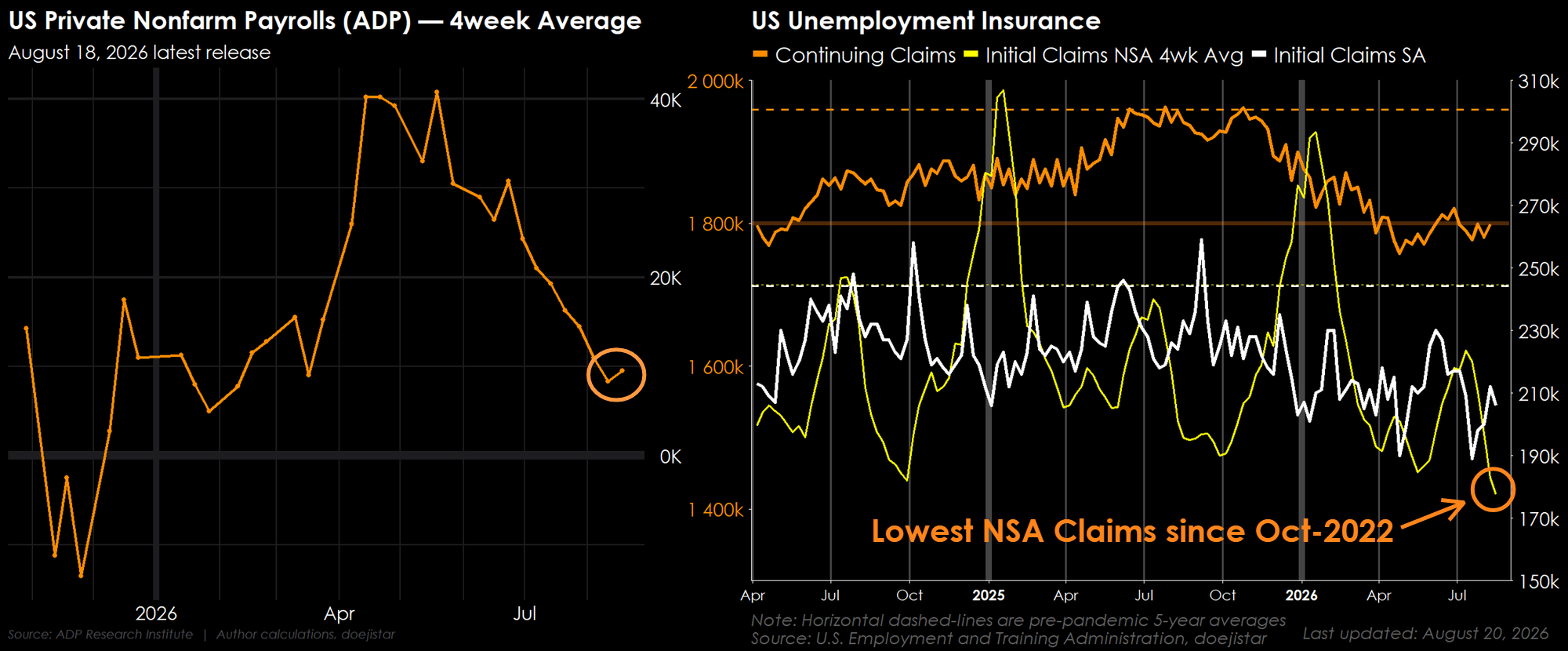
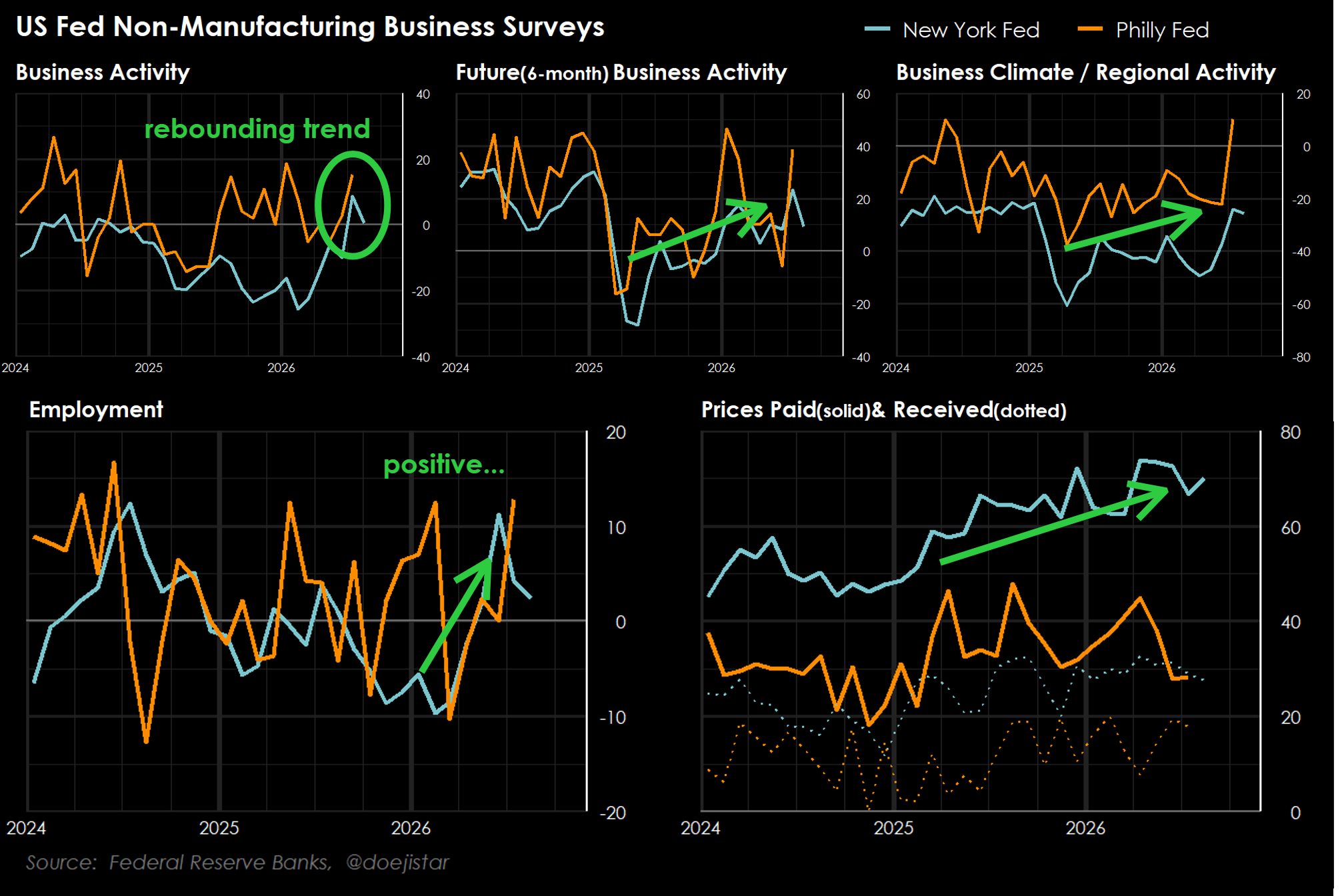
No major US data the past week, but a few encouraging lower tier data points. ADP breaks a 7-week streak of straight declines, initial claims on a non-seasonally adjusted basis is at the lowest level in almost 4 years, and continuing claims is holding steady at low levels.
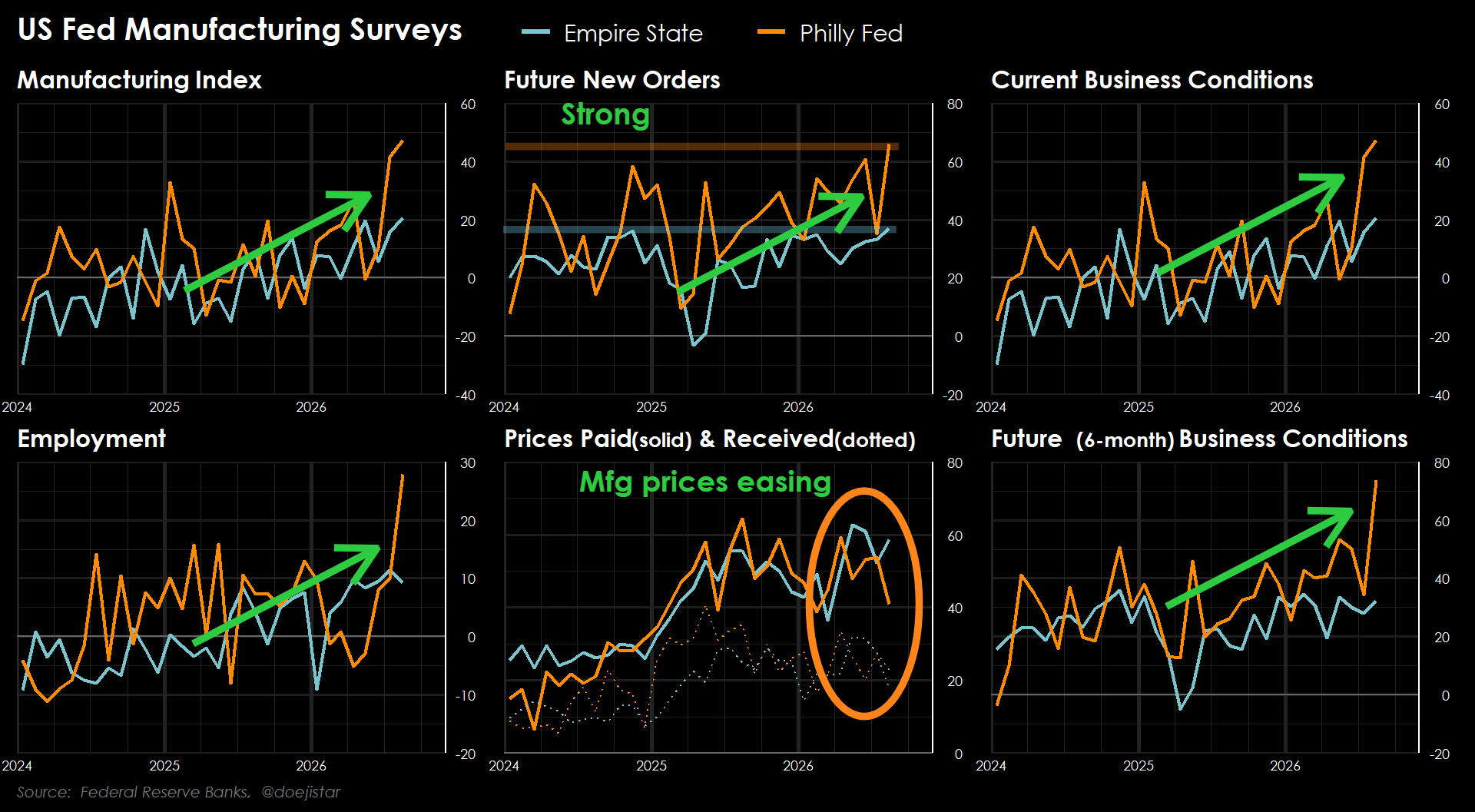
Philly Fed Manufacturing is ripping across, notably in the Employment and Future Business Conditions index while Empire state is looking generally positive.
Looking at Services, although we've yet to have the latest from Philadelphia, we see constructive trends. Philly Fed survey has notably been the stronger of the two, but perhaps the comparatively higher price pressures in the NY Empire state is weighing on general business sentiment.
PMI
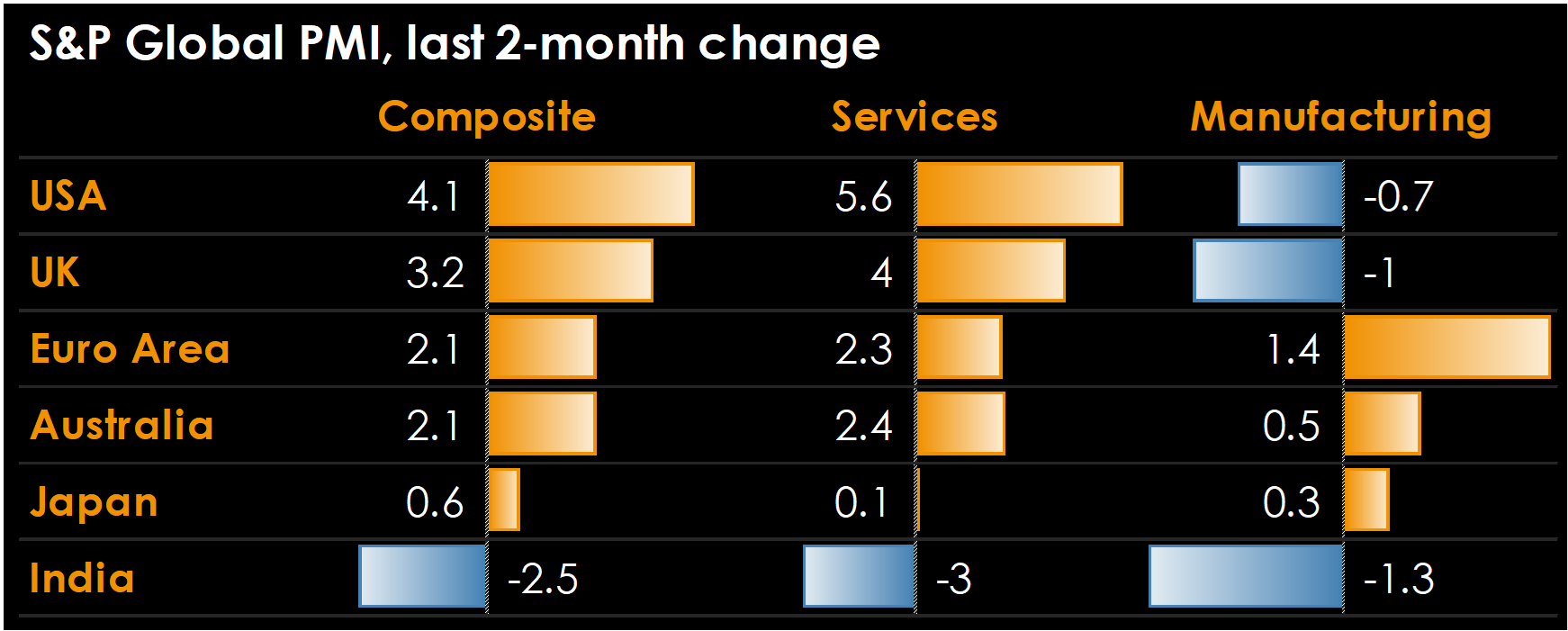
US had the standout PMI report with strong services-led acceleration. Euro Area maintained positive momentum. Australia the weakest MoM with all 3 indexes downshifting but still expansionary and is also after a very strong July report.
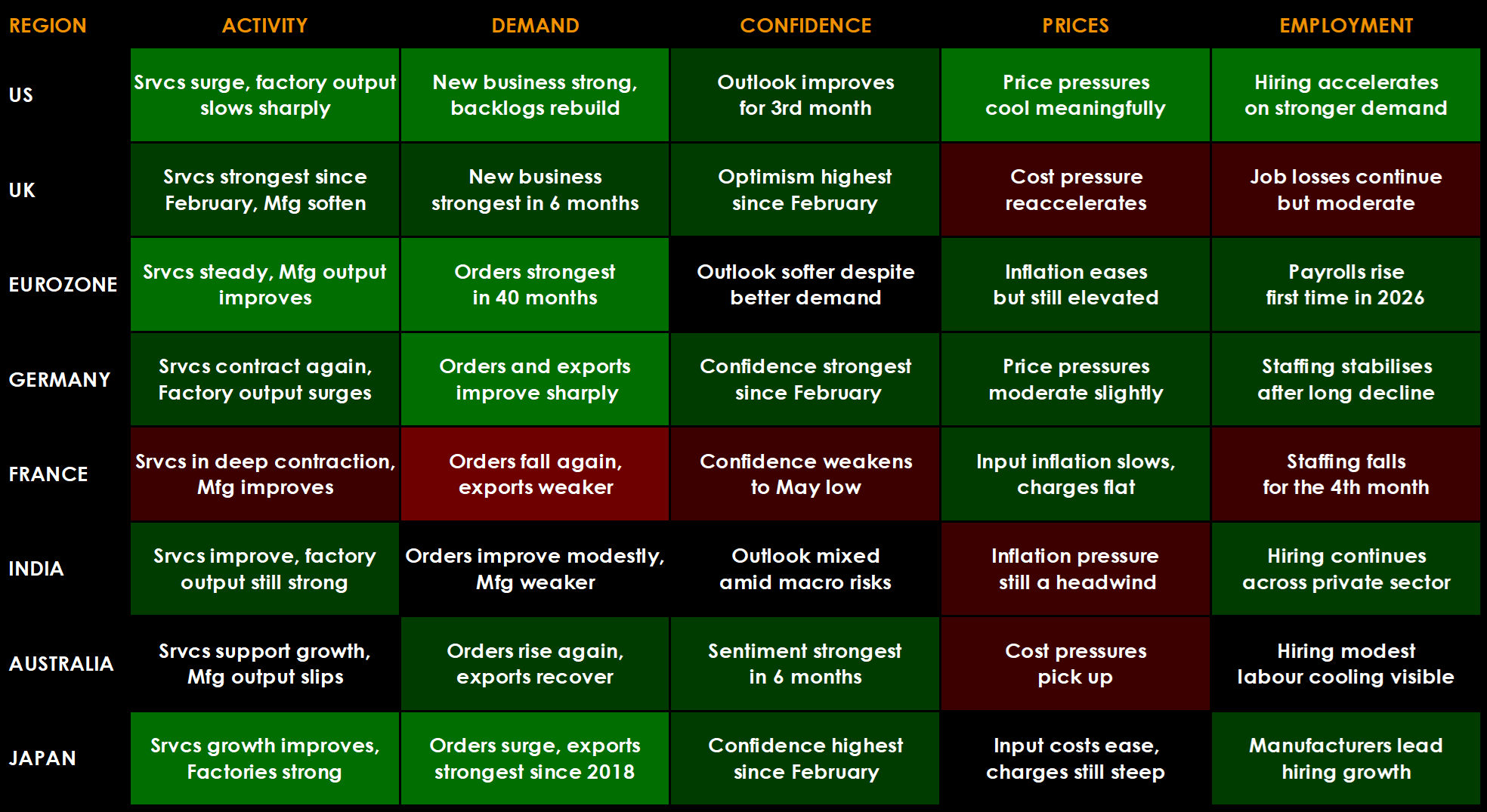
- Activity Demand and Confidence is broadly healthy with just France that continues to be in a slump.
- Some indications of easing price pressures but strong cost pressures persist in the UK and Australia.
- Employment changes strongest in US, UK remains soft and France very weak.
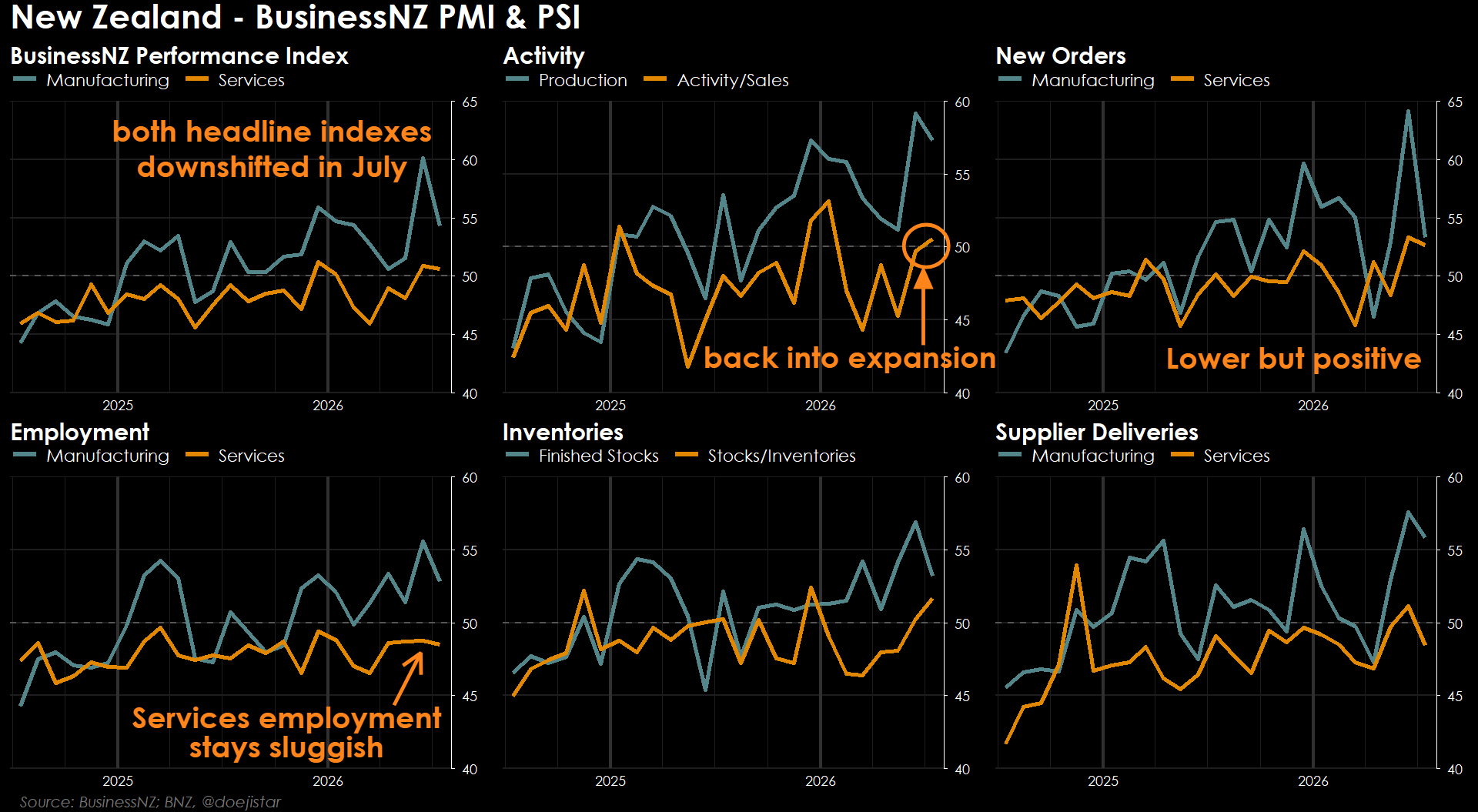
NZ PMI's eased from the prior month's surge, but the trends remain very encouraging for an economy that is still attempting to muster a durable rebound. The bright spot was Services Activity/Sales moving into net positive territory for the first time since the beginning of the year, while new orders as early indication of future business stays positive.
UK DATA
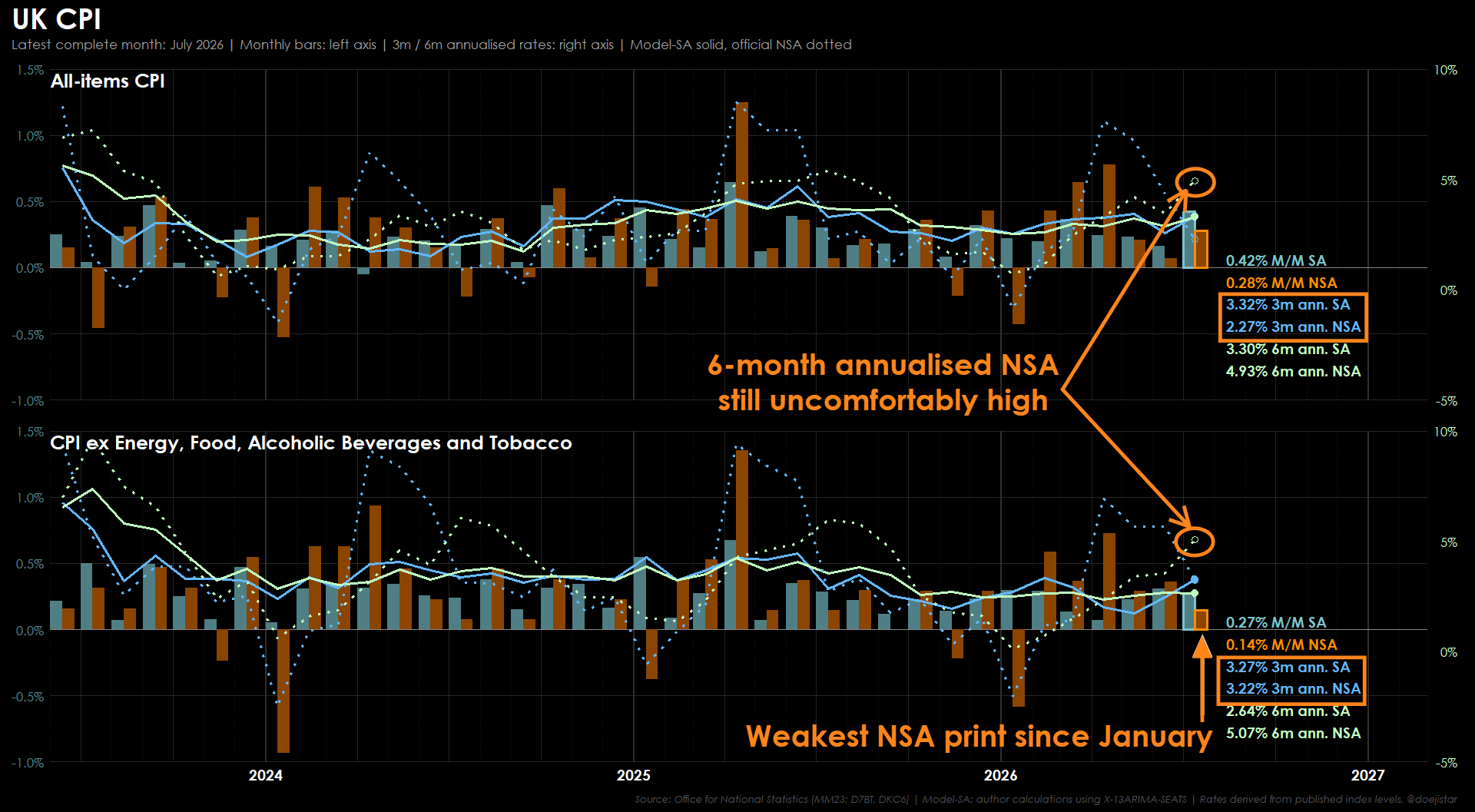
UK inflation is still running a little hot. Even though the non-seasonally adjusted core recorded the weakest monthly change since January the longer-run rates are still uncomfortably high. Nonetheless, the recent trend is encouraging but it won't be enough for the BoE just yet to be comfortable with lowering the cash rate.
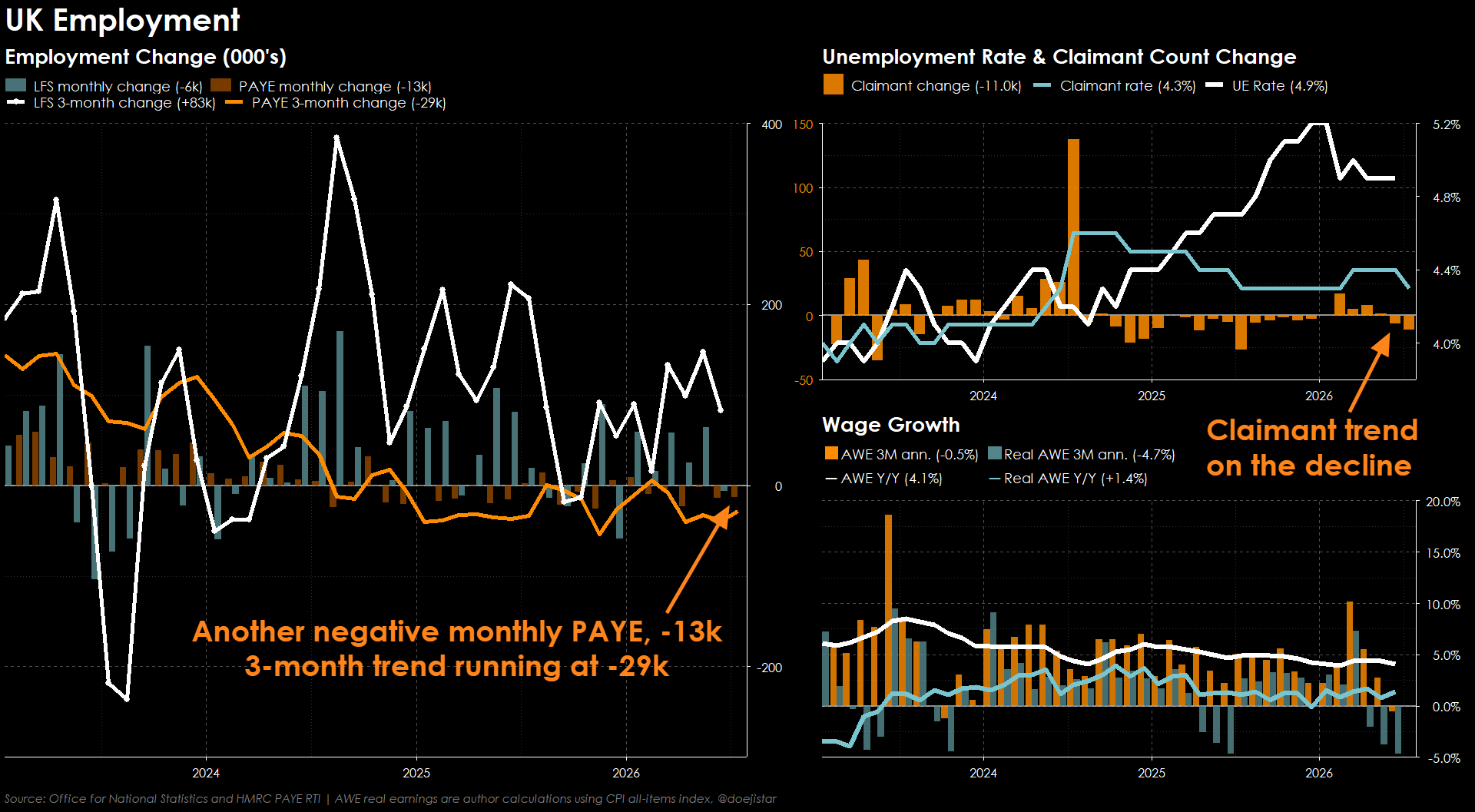
UK labour market is mixed - Low hire and low fire given the negative trend in both PAYE employment change, and also in unemployment claims.
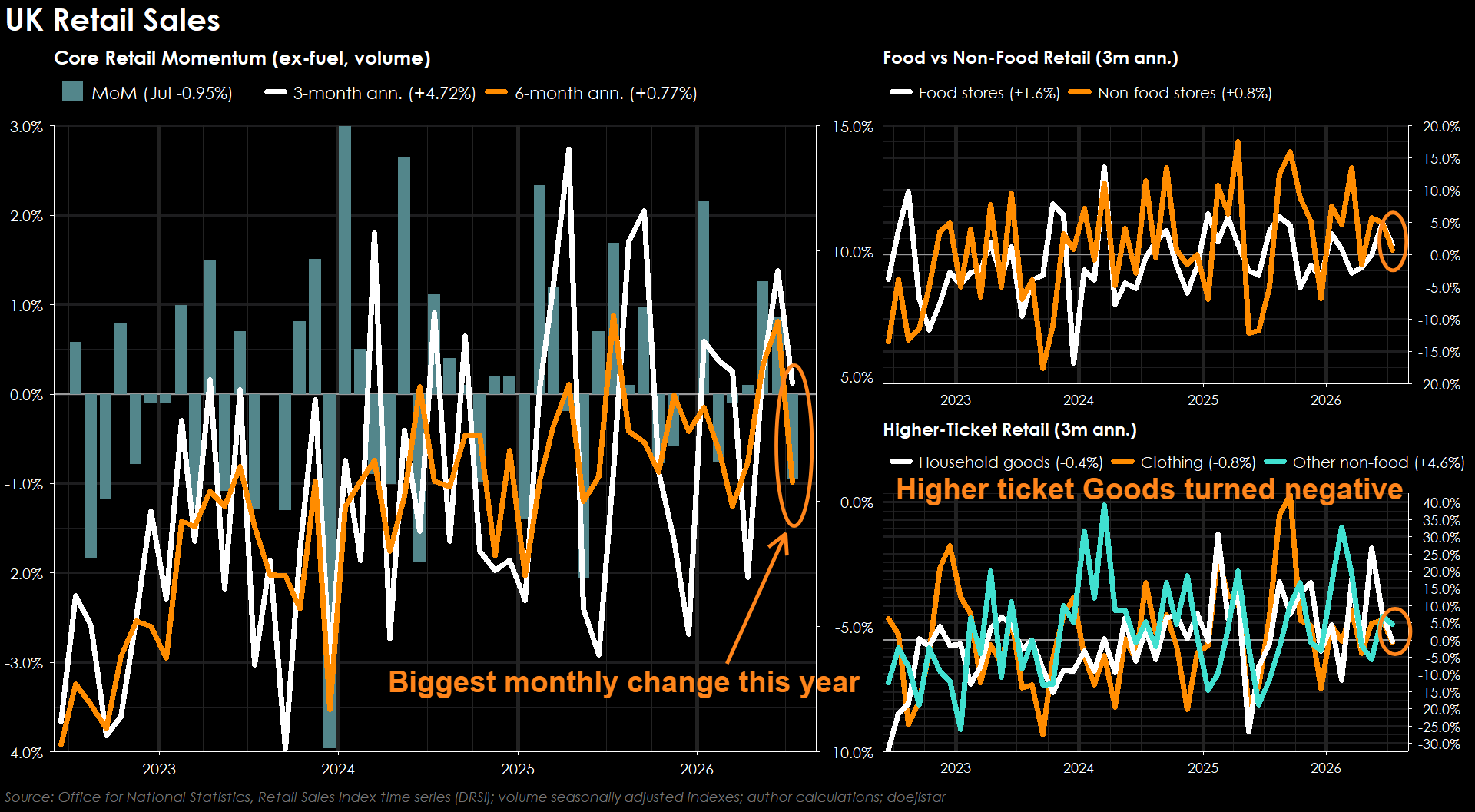
Core retail sales was weak at -0.95% with downward prior month revisions.
On balance, UK data shifted mildly in a dovish direction. CPI softer though elevated, lacklustre labour market activity, and softer retail sales. This should offer some encouragement for the doves but I don't think there is enough in the recent data for the BoE to get comfortable with normalising policy just yet, particularly with the most recent flash PMI data reporting persistence of price pressures, while the rebound in Services PMI points to a decent start to Q3.
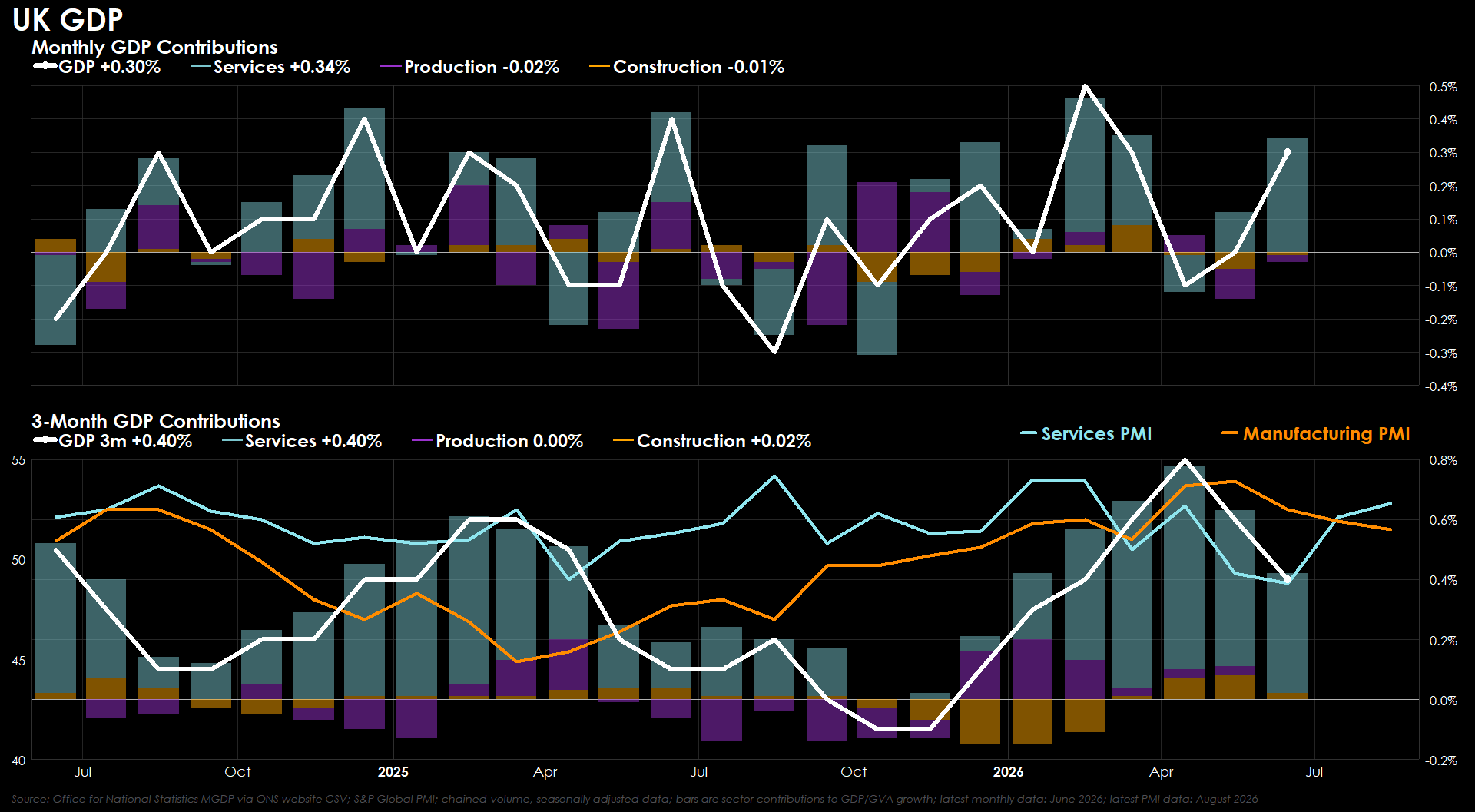
There's been strong consensus in sell-side commentary that too much is priced in on the BoE rate curve and on that point, I would probably agree with +32bps priced by year-end. But we'll need to see a little bit more for that to be an actionable take. For now, UK fundamentals is resilient.
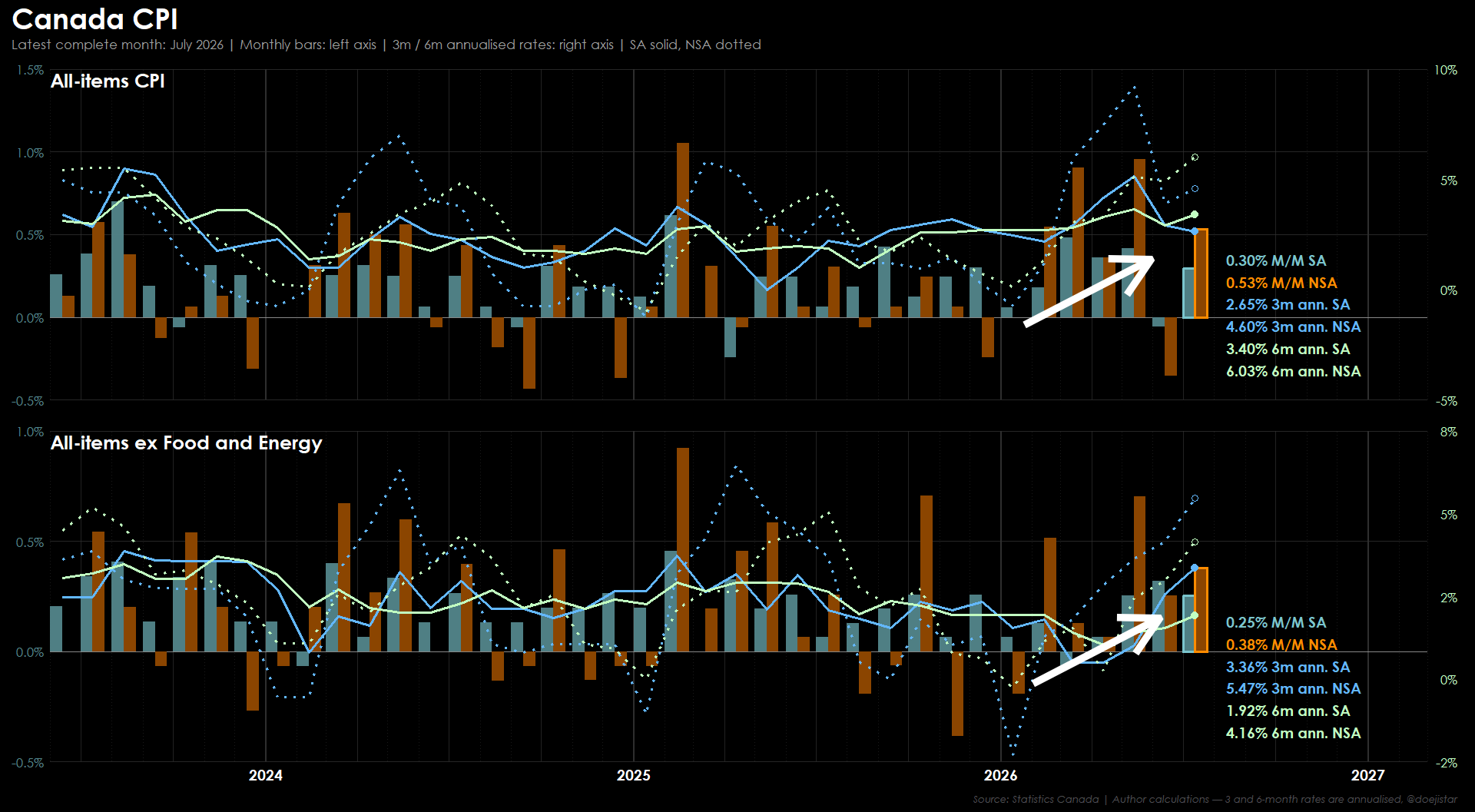
CANADA DATA
CPI was +0.5% (+0.53% unrounded) in July, above expectations for +0.4%. This is likely to be driven by a rebound in gasoline prices as well as World Cup and Summer tourism. While the outlook for oil prices remains unclear (and therefore probably staying elevated), the inflation trend is rising for Canada.
June retail sales beat expectations at +0.6% versus the +0.4% expected, but the preliminary estimate for July of -0.8% would be the largest negative monthly change in almost a year, and would take the 3-month trend into negative.
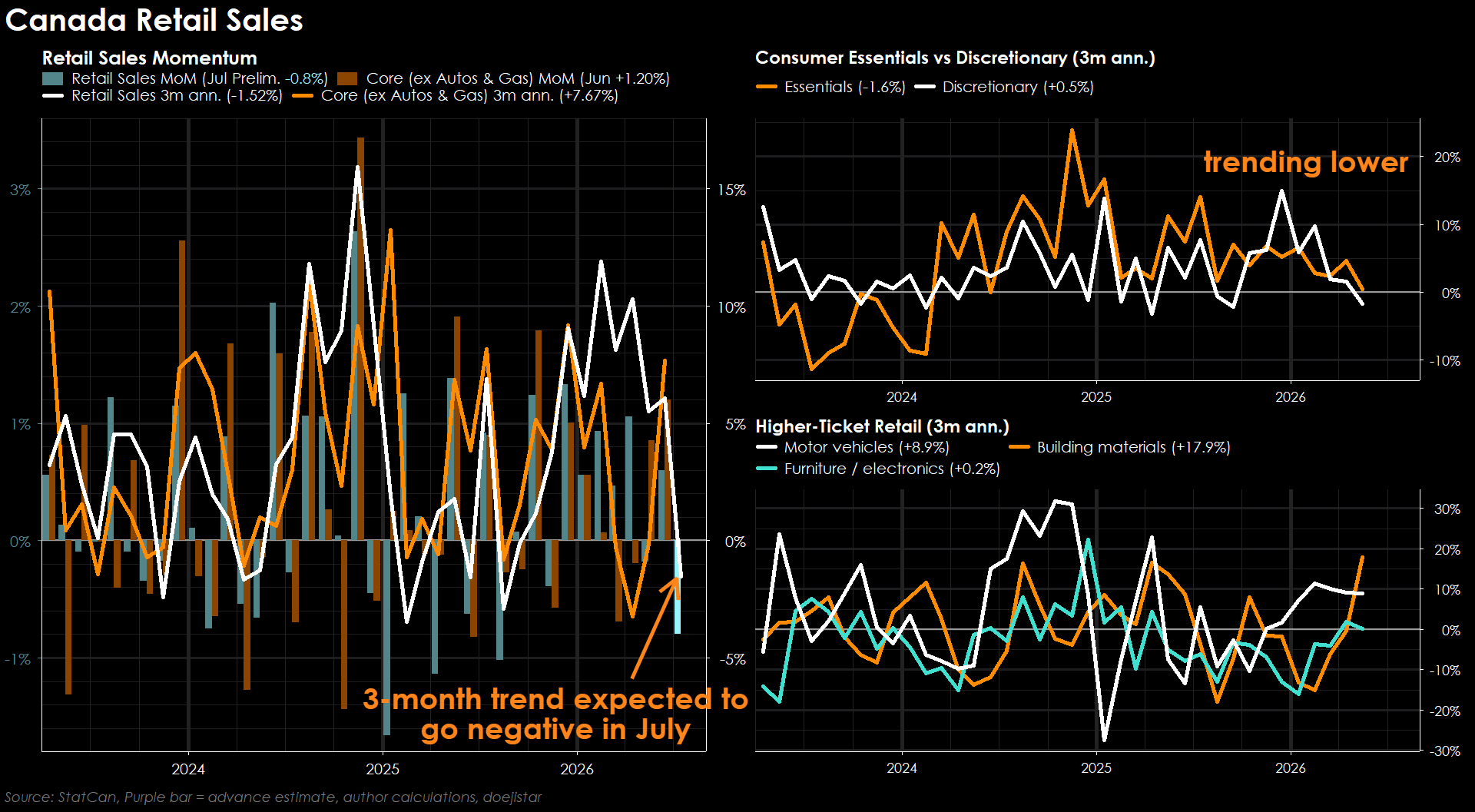
Canadian consumers appear to be feeling the pinch of inflation rising through the first half of the year, and so do businesses with the recent trend in IVEY PMI on a decelerating trend since April.
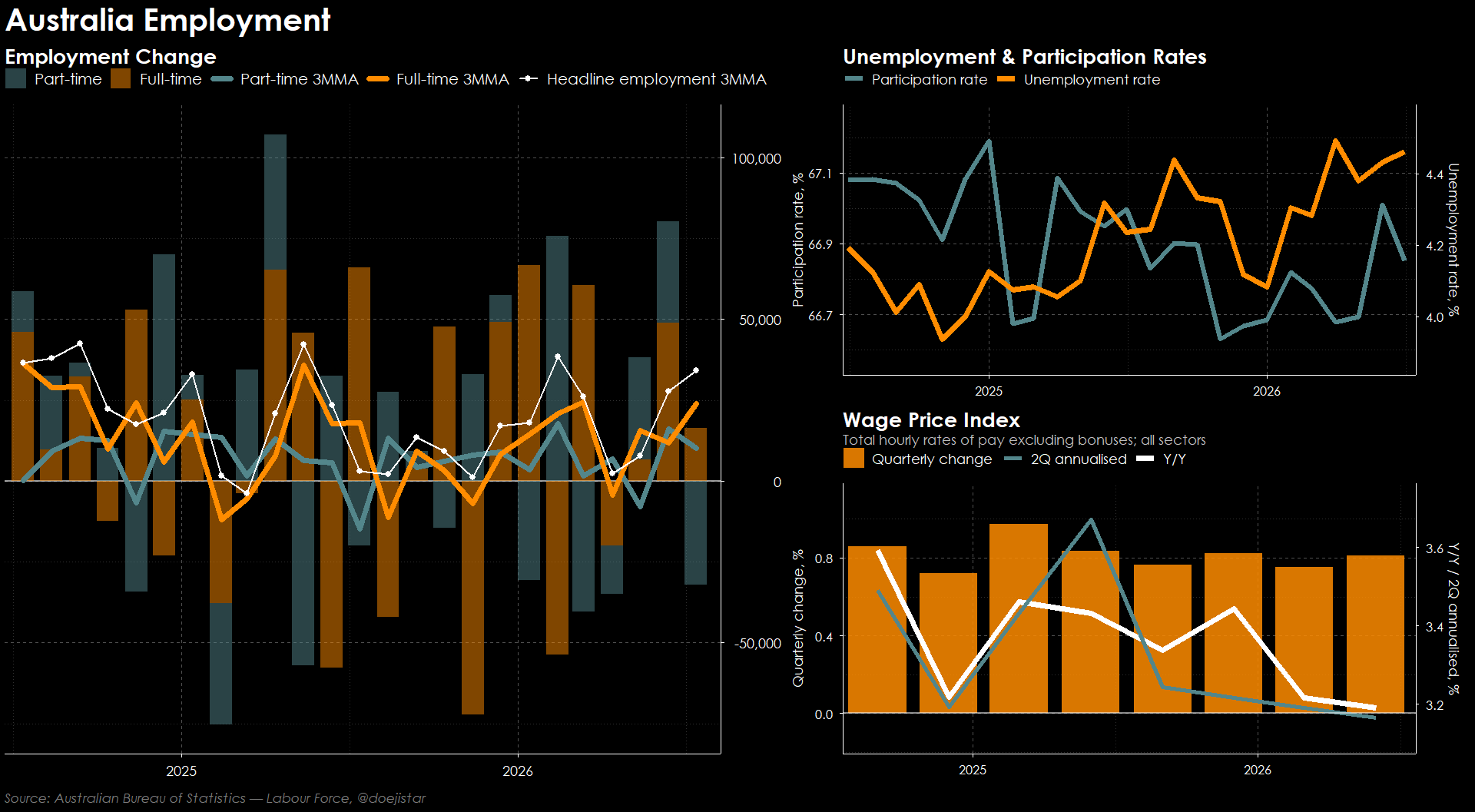
AUSTRALIA DATA
Australia employment change was -15.8k, missing expectations for +11.7k and unemployment rate unexpectedly ticking higher to 4.3%. The negative change was driven by volatile part-time employment however, and with full-time job gains maintaining its positive trend, as well as a revised up prior month, it isn't as bad as the headline numbers would suggest.
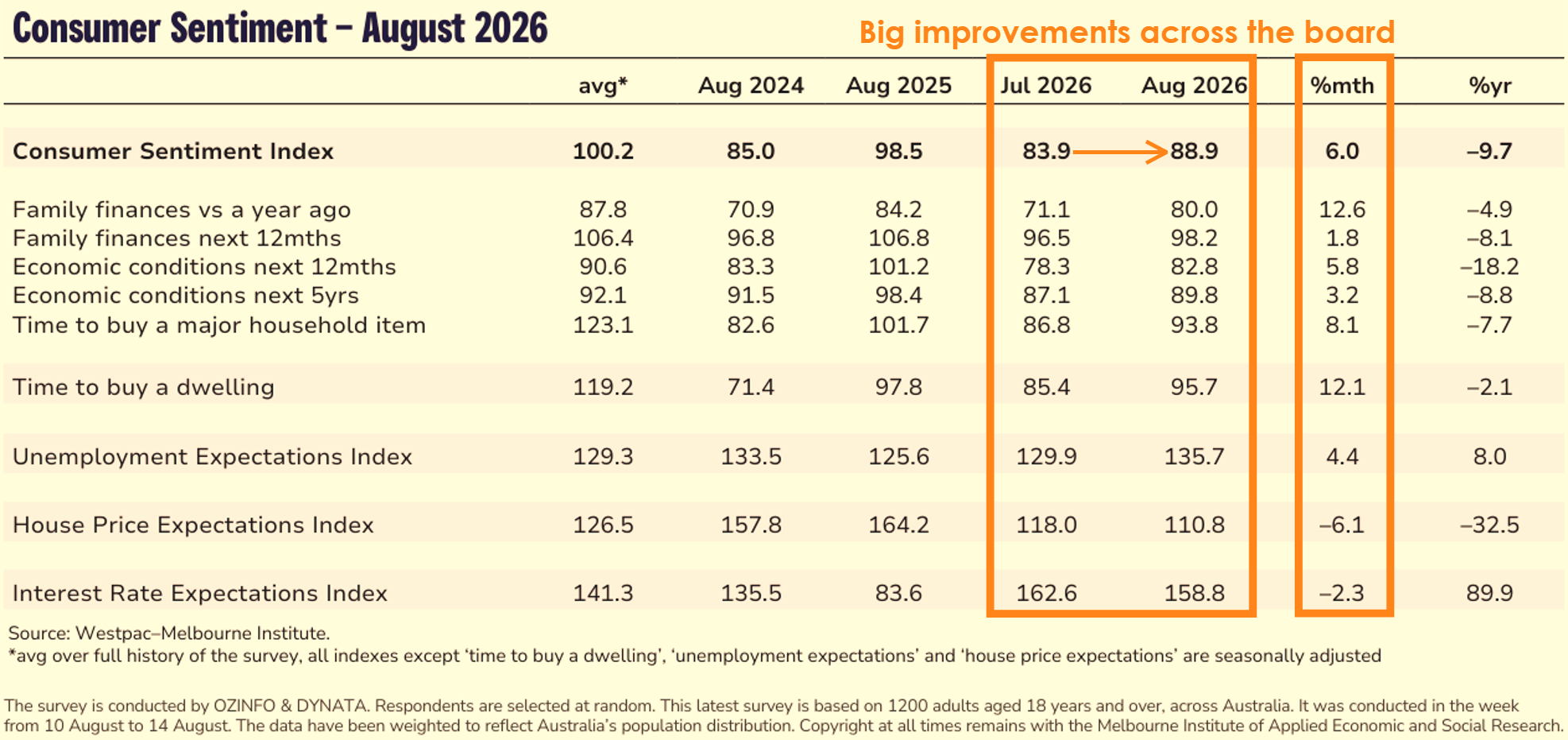
Westpac consumer sentiment showed a notable improvement in August.
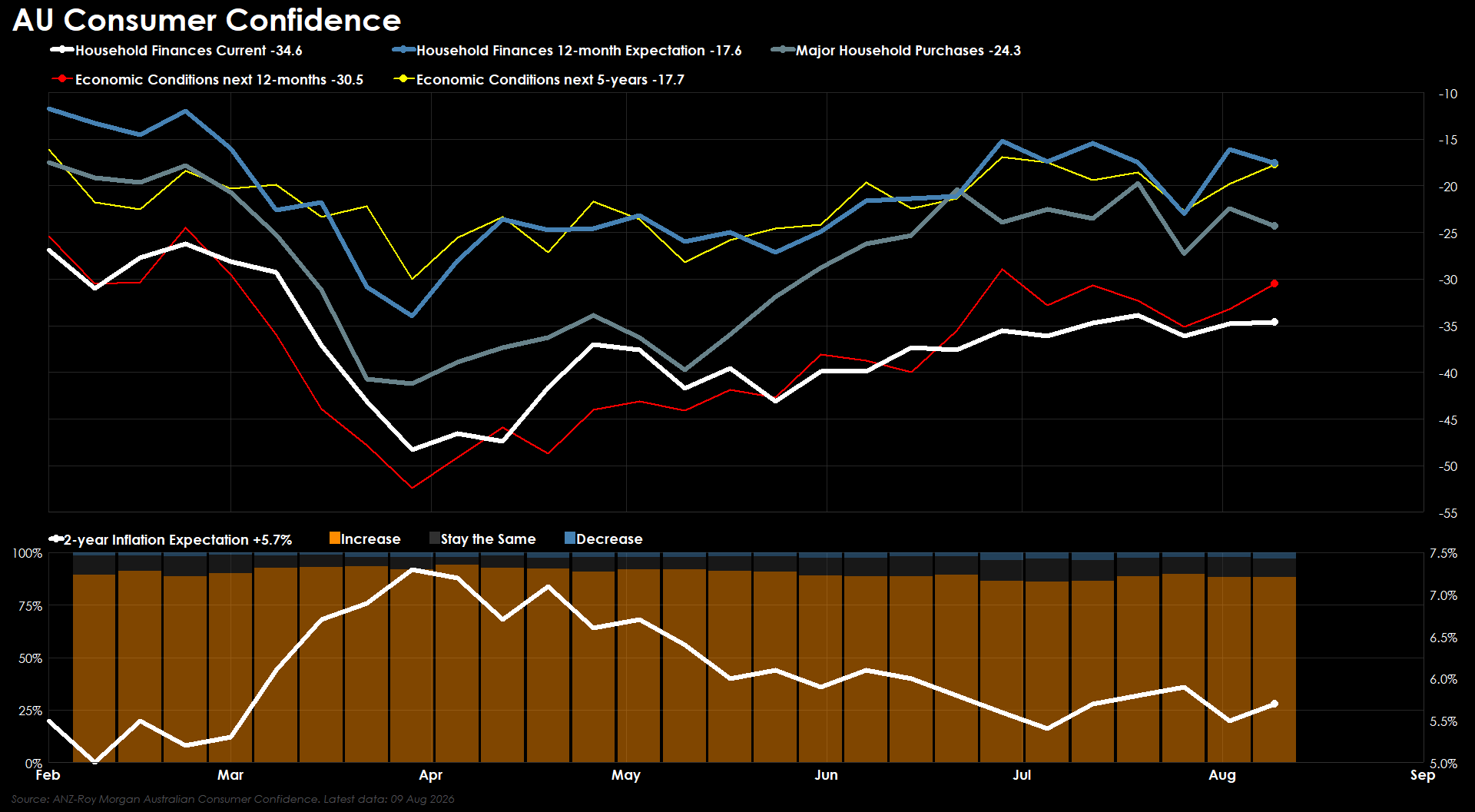
Roy Morgan survey showed consumers are a little bit more pessimistic on household finances and less pessimistic on economic conditions, while inflation expectations ticked up slightly in the latest reporting week. On the whole, not much change to the sideways trend exhibited over the past month or so.
If you've enjoyed reading this, sign up below if you haven't already. Also consider being a premium member - more info on the website.