Wk31 MacroTechnicals - 'More' of the Same
Risk view stays bearish: tighter liquidity conditions ongoing AI concerns, weak equity leadership, vol expansion,

I've held a bearish risk view since May for a number of reasons I've discussed over the many prior notes since. Let's start by revisiting a few of the main ones.
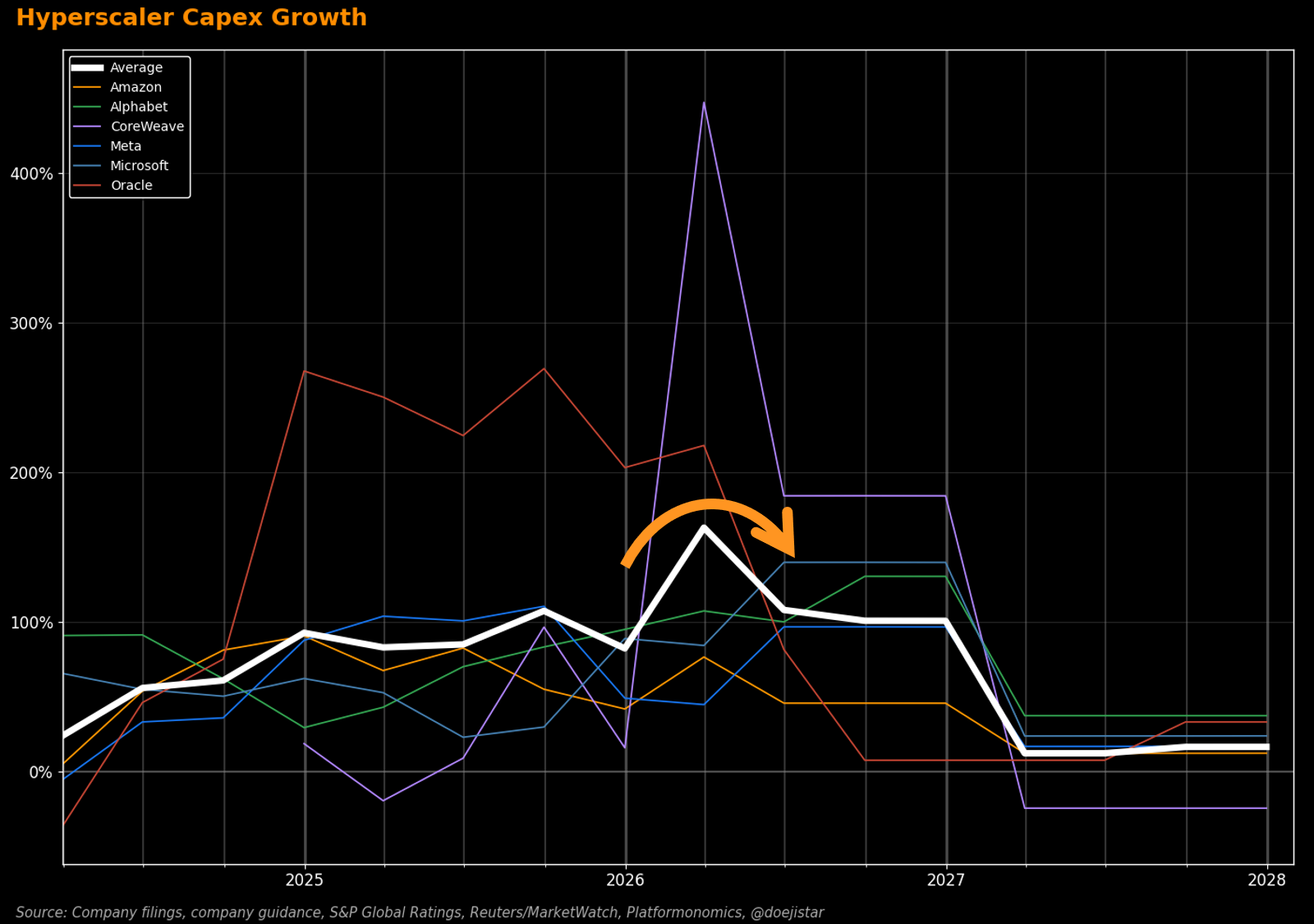
Peak Capex Growth
'Concerns' has proved a dominant narrative once again as the larger than expected Capex reported by Alphabet induced a negative earnings reaction, even though they reported strong better-than-expected results in all areas. But the crux of the matter is that we are at the mature stages of this Capex bubble, one where the market has come to expect a lot, and it's up to the company earnings to prove it.
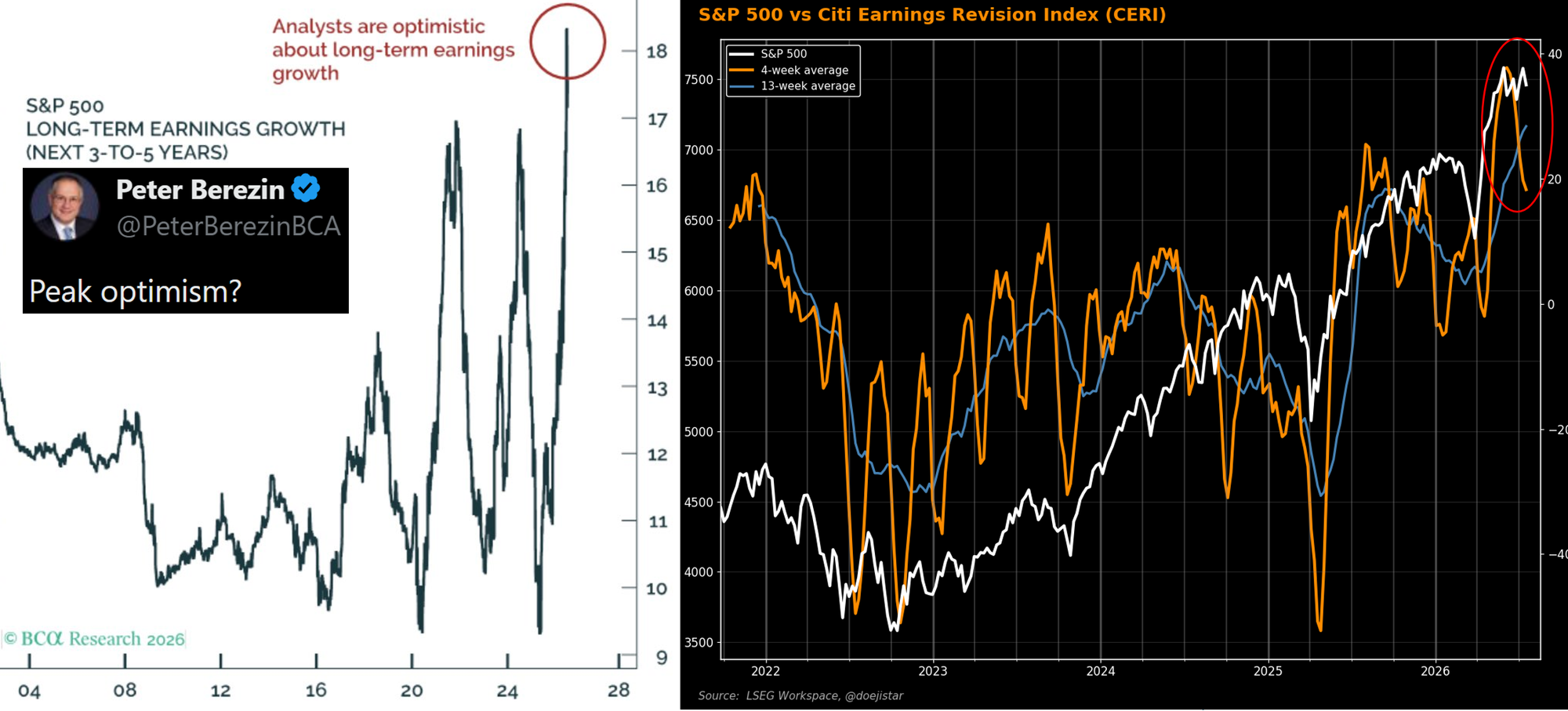
Peak Earnings Expectations
Til recently, the market had been excited about the extraordinary returns resulting from the surge in capex by hyperscalers. But the sudden burst of alternative open-weight models strong enough to compete with frontier models, and the meteoric rise of China's chipmaker CXMT are just some of the developments that have further compounded ongoing 'concerns'. And it makes perfect sense - fierce competition is rapidly rising, that erodes supernormal profit margins, and that make the continuance of earnings expectations getting strong increasingly difficult to justify. I think many of us expected this, but I think many more were surprised by the speed of which it is happening.
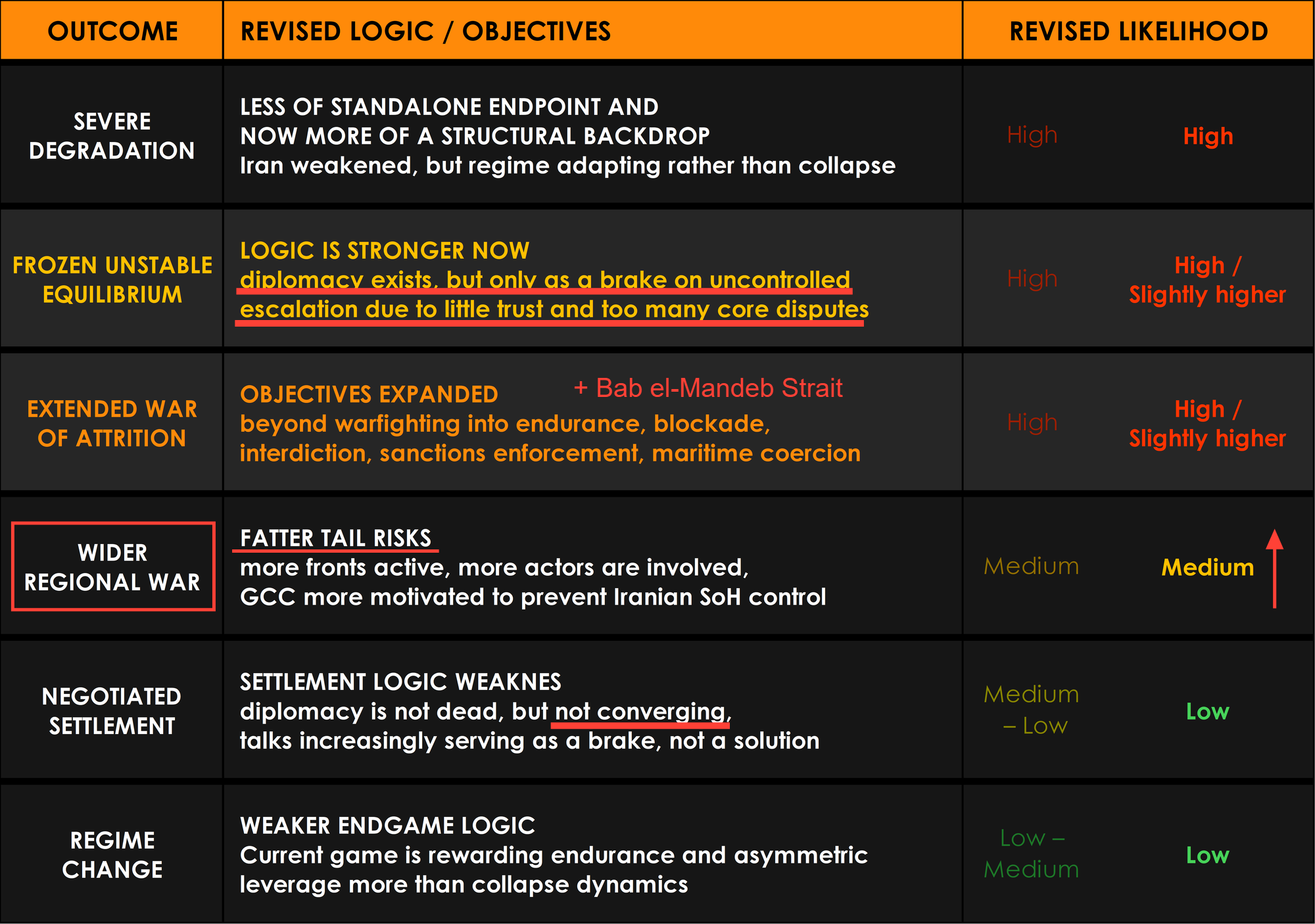
Extended War of Attrition
Middle Eastern conflict continue to play out according to our scenarios gamed out in March, the analysis of which showed an extremely narrow pathway to a durable resolution, while also recognising that the war would escalate into a wider regional conflict. That is certainly proving the case with the conflict zone covering both chokepoints. I've remarked the table below from late April.
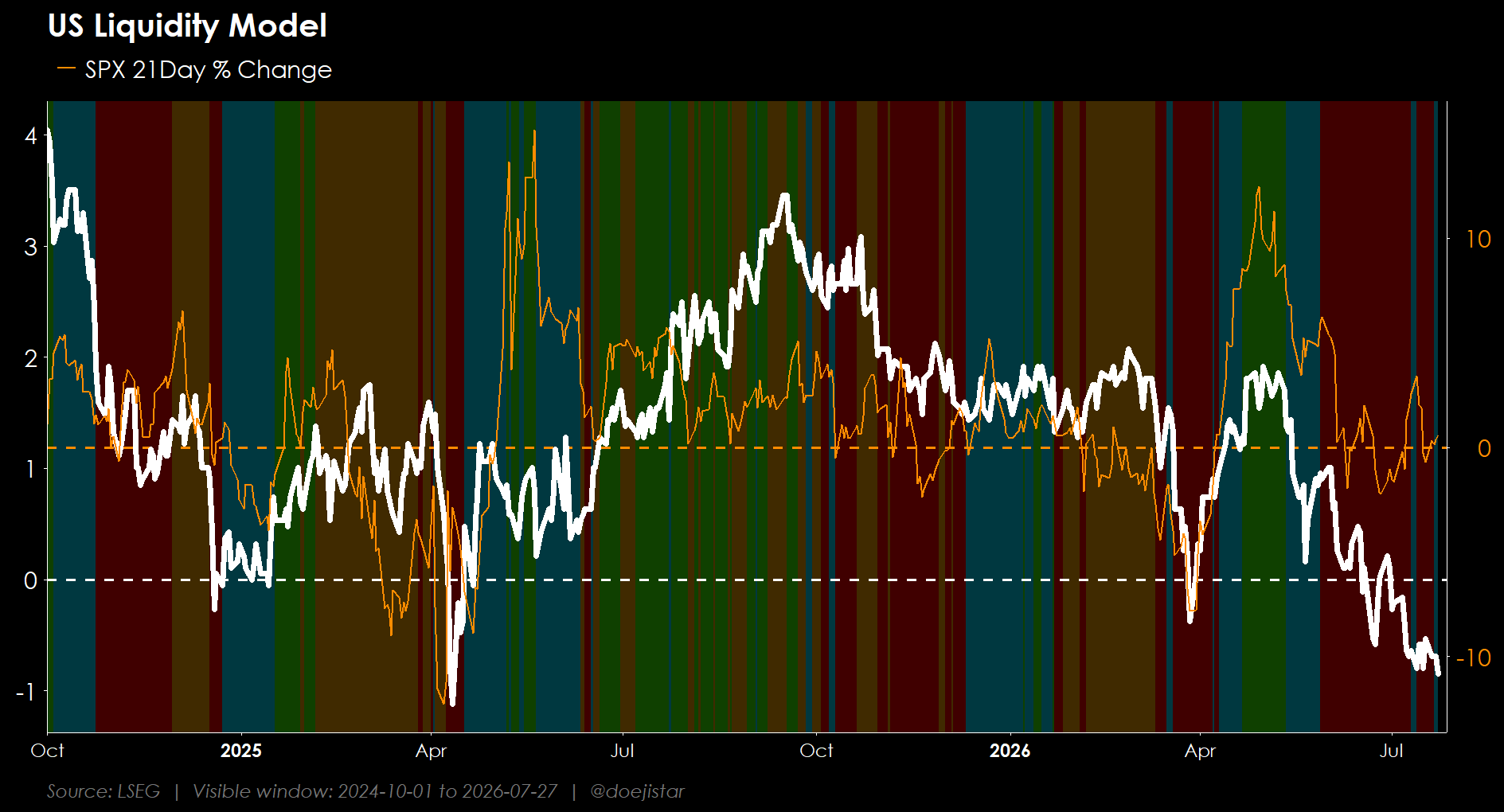
Increasingly Challenging Macro
I've long argued that real rates will continue to trend higher because the strong US fundamentals is likely to sustain inflation pressures created by the Iran war. That there is simply no demand destruction to suppress inflation, in fact we have ample evidence that demand is strong. As we'll dive into in further detail using our frameworks, the macro backdrop has become the most challenging since Trump's Liberation-day tariffs, and the Fed hiking cycle that led to a bear market in 2022/23 before that.
TLDR: Not much has changed. Just 'more' of the same.