Wk16 MacroTechnicals - 'Stag'-gering Denial
Markets are trading relief but macro backdrop grows more fragile. We reflect on recent developments against our going views and cover why we are biased toward trades that respect the possibility of markets underpricing stagflation risks.
This week, we examine the widening gap between an increasingly fragile macro backdrop and a market that still appears willing to trade relief. It outlines the key geopolitical, inflation, growth, and technical developments shaping the week ahead, with a focus on why we think geopolitical tensions will stay high enough, and long enough to reinforce rising supply-side risk and softer demand signals to combine into a more stagflationary setting.
Macro
IRAN CONFLICT
Talks ended without agreement with both delegations leaving Islamabad. Iran blamed the US of 'excessive and unreasonable' conditions for blocking progress saying they had 'put forward constructive proposals', that they see little return for further talks and in 'no hurry' to return to negotiations until the US adopts a more realistic position. The continued deadlock comes as little surprise to me.
Since Iran has previously expressed their willingness to make concessions on their nuclear ambitions, I think Iran's hardened position on this issue is merely a bargaining chip they hope to use to press for its other demands which, is where I think the deadlock really exists. For instance, if we assume Iran would give up their nuclear ambitions in quid pro quo for the unfreezing of assets, that still leaves 2 points of contention demanded by the US that Iran is unlikely to agree to.
First, we know the US wants Iran to give up support for their regional proxies, but Iran’s many statements on the matter show they clearly value them, once saying they see 'all resistance fronts as a unified entity'. They are too significant a strategic asset that no country/person in their position would easily give up, so it's very difficult to see Iran agreeing to cut off their proxies.
Second, the US wants to ensure Iran does not have any control over the Strait of Hormuz (SoH) while Iran clearly understands the leverage the SoH affords it and appears increasingly determined to preserve, if not expand, that influence as insurance for its place in any future settlement.
In both cases, the US is demanding concessions not at the margins, but at the very core of what Iran appears to value most - the instruments through which it projects power, preserves relevance, and reminds the world that its 'cards' cannot be ignored without consequence. But as it turns out, Trump may have the better cards...
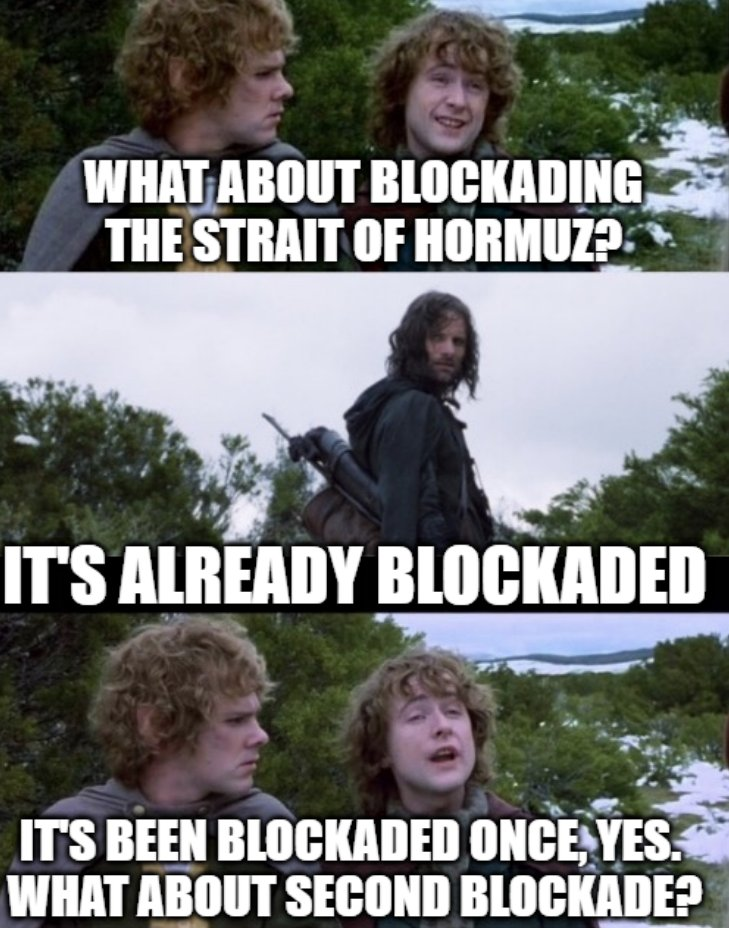
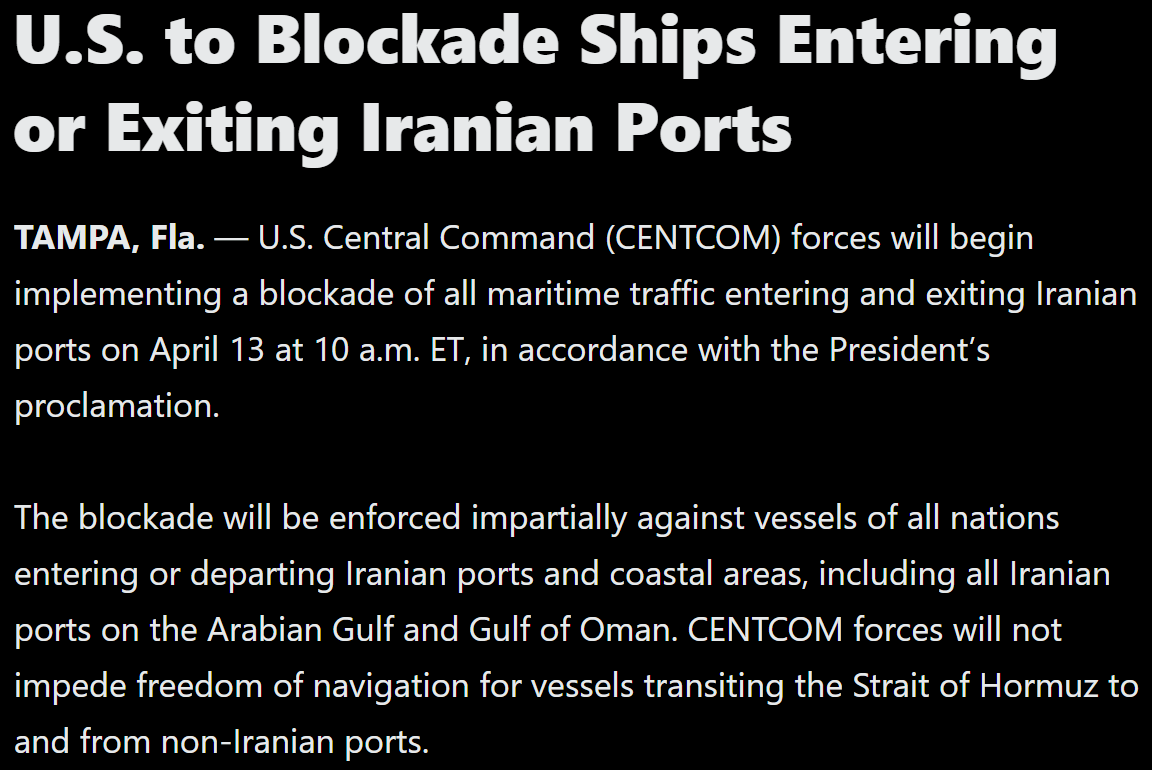
While Iran continues to prevent transit of all other vessels, Trump moved to blockade the SoH in response to the breakdown in talks, preventing Iranian and Iranian-approved vessels from transiting the SoH.
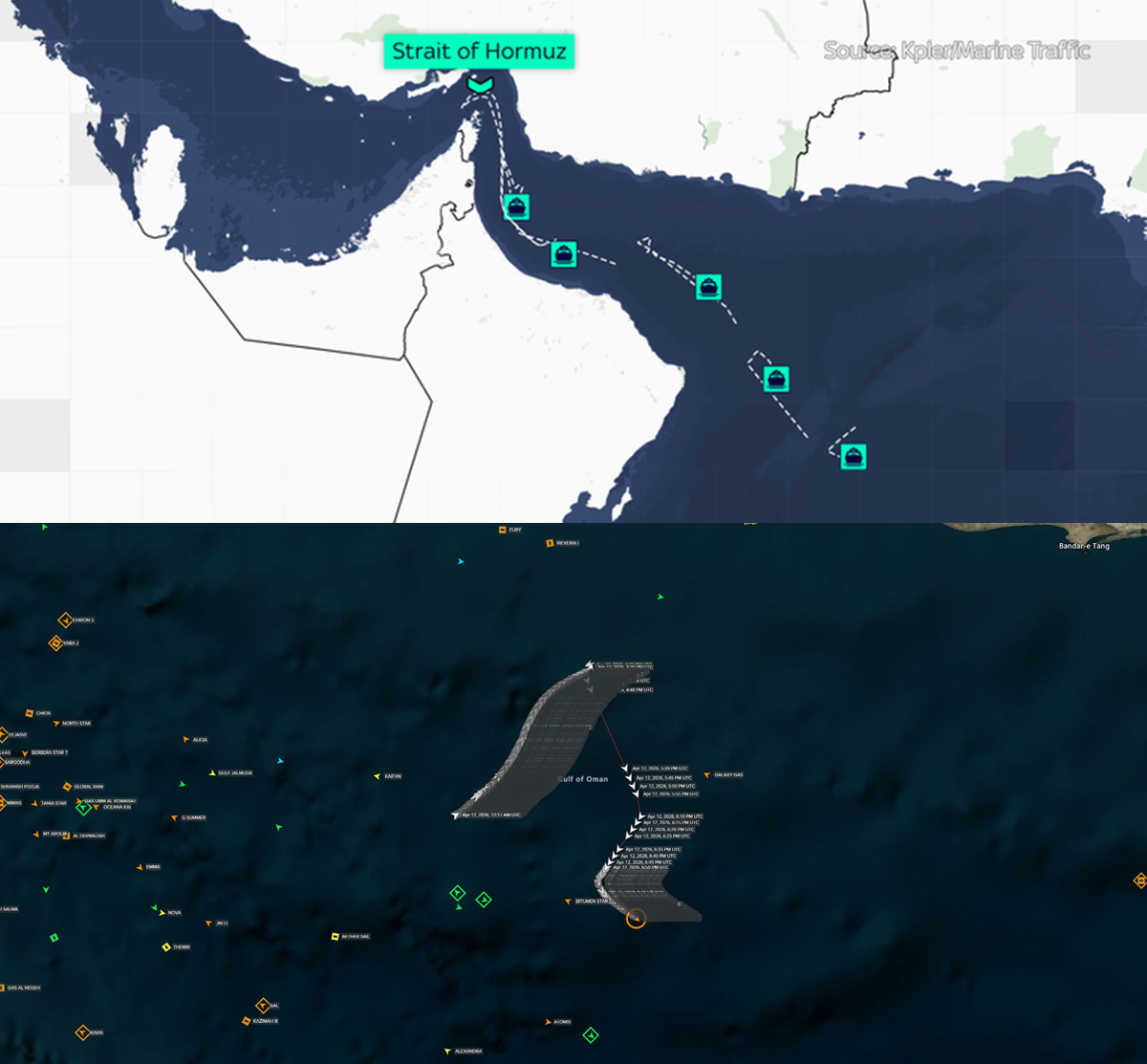
Latest reports show several Oil tankers without any links to Iran turning around, as well as a Chinese VLCC-class tanker following the announcement the US will interdict on any vessels entering the SoH. SoH traffic is set to tighten even further with already just a few vessels reported transiting the Strait over the past week.
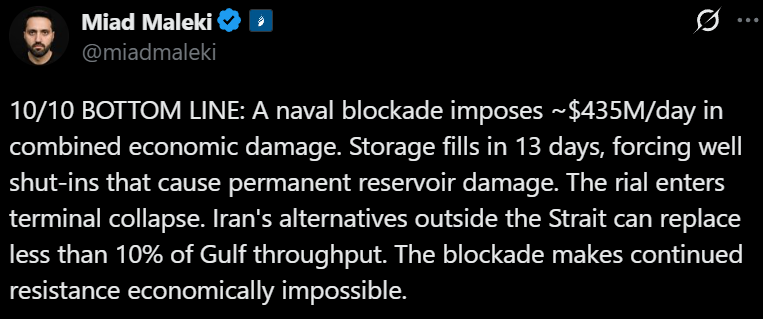
Not only would the impact of this blockade hit Asia further, Iran would bear the heaviest burden on their already crippling economy. So the SoH is not just leverage over others; it is also one of Iran’s main economic arteries. At the same time, it is also critical to several other GCC states, namely Qatar, Iraq, Kuwait, and Bahrain, and to a somewhat lesser extent Saudi Arabia and the UAE, which at least have partial workarounds. Returning to our gamed-out scenarios, the failed attempt at a 'Negotiated Settlement' materially raises the probability of a shift toward 'Severe Degradation' through a blockade of Iran’s main economic artery.
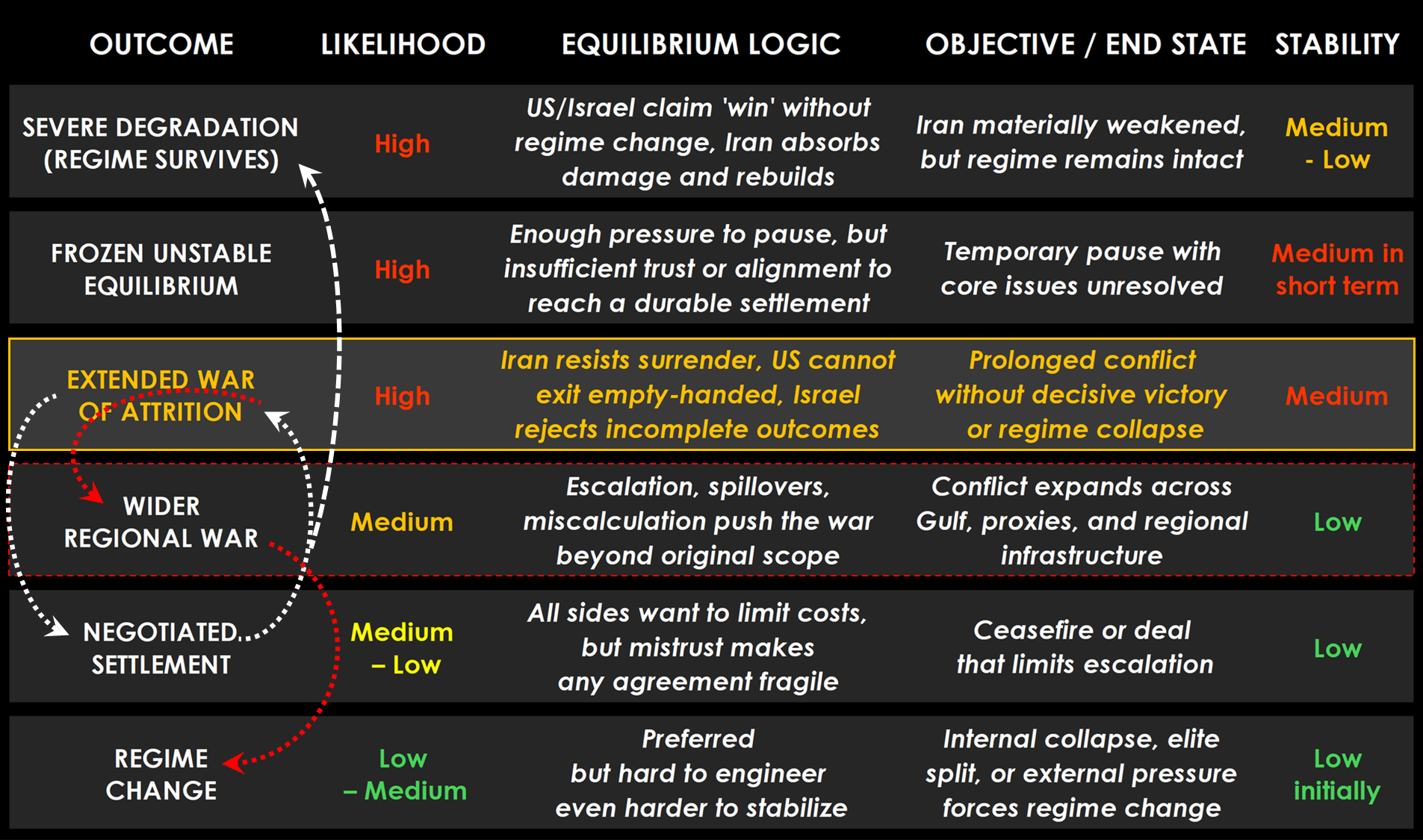
However, with GGC states having clearly changed their tone, behaviour, and posture since the start of the war while remaining caught in the crossfire, they now align with Israel in seeking a 'lasting resolution' over an 'incomplete outcome'.
"The entire world has witnessed the danger that Iran poses to the region and the world, to its missile and UAV capabilities, as well as to the Shiite recruitment and incitement mechanisms in all countries in the region and the world. If this regime is not overthrown as Saddam's regime was overthrown - what is the point of the war? The clerics in Iran will return to developing the nuclear program that they have been working on for 20 years, and will continue to develop the missile capabilities. So why the war? Why the loss of lives and resources?" He attacked Prime Minister Netanyahu, saying: "It seems, Netanyahu, that you did not fight and did not conquer anything - but only harmed the people of Israel and shocked the global economy, and nothing more." - Source in the Saudi Royal Family
This is the reason we see 'Extended Attrition' continuing to be our base case as the conflict is unable to completely resolve itself through anything short of regime change due to the deadlock between each party's incentives, while the US maintains reluctance to launch a full-scale military campaign due to the likely severity of losses that may still not amount to a clear win, even if it succeeds in completely toppling the IRGC.
The bottom-line is that the path toward imminent resolution of the conflict still appears narrow, and therefore likely to reinforce a macro outlook that is dominated by supply stresses and elevated oil prices over the medium term.
From here, we examine the incoming data to assess whether the macro backdrop is becoming more stagflationary, before turning to the technical picture across major asset classes and the favoured trading biases for the week ahead.