Wk43 MacroTechnicals - Dude, Where’s My Correlation?
Rogue correlations, AI credit check, and Energy market pressure continues

This week, I take a deeper look at shifting market correlations, the credit jitters shaking AI stocks, and how what oil and geopolitics shapes my overall analysis and core views ahead.
Correlations
A significant part of my edge is understanding how markets are behaving, and this is where correlation studies can be particularly helpful with trading views and ideas. This is especially so in our current market environment that has serveral conflicting narratives and drivers, a lot which come and go from time to time thus making markets difficult to understand and predict for any tradeable period.
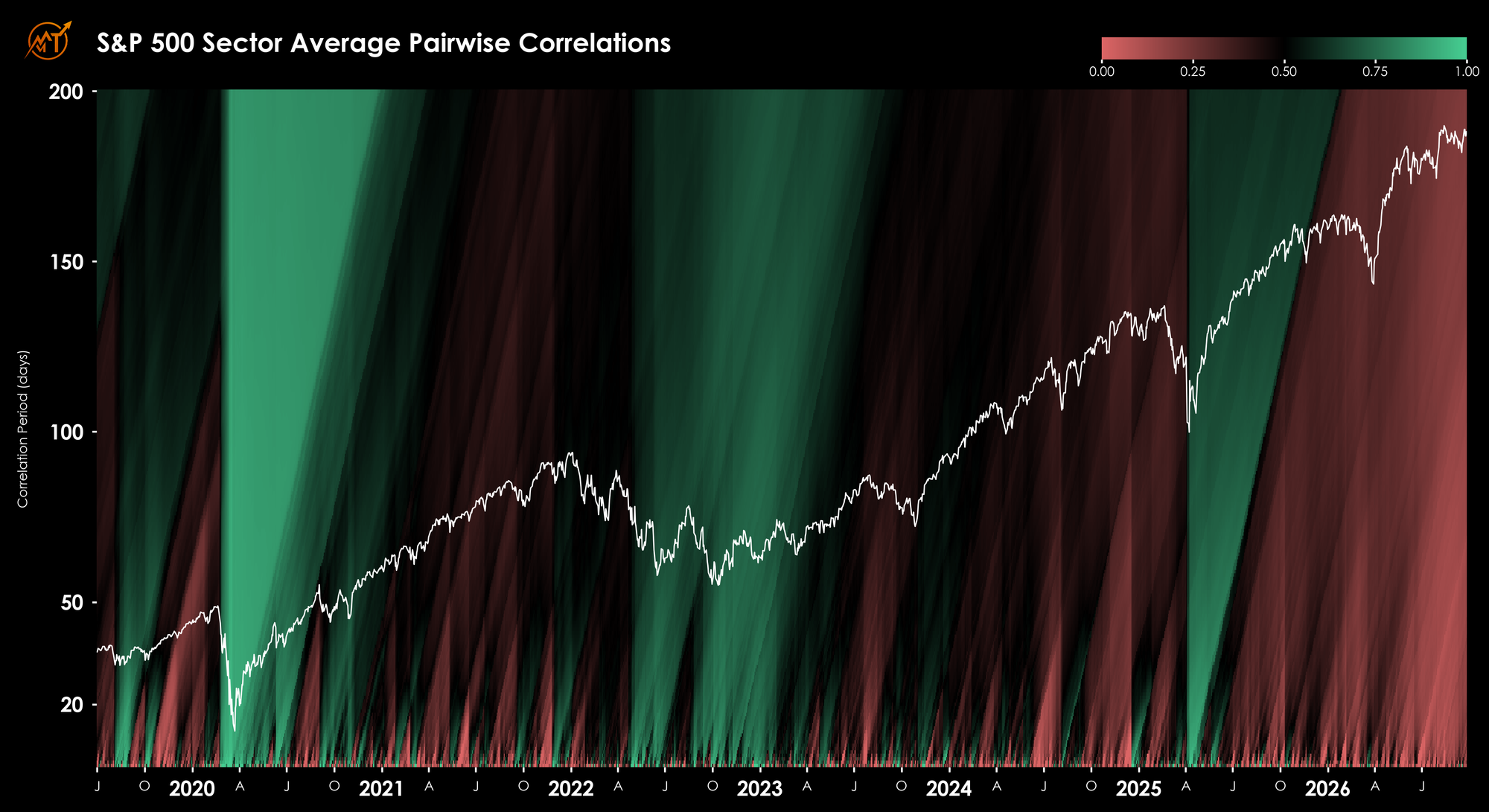
Let's start with this fascinating chart. It shows how closely S&P 500’s sectors are moving together across different correlation windows, and the red area spanning the current year shows how extremely fragmented US equiities have become. We've known this to be true for a good while now but it's a stunning visual.
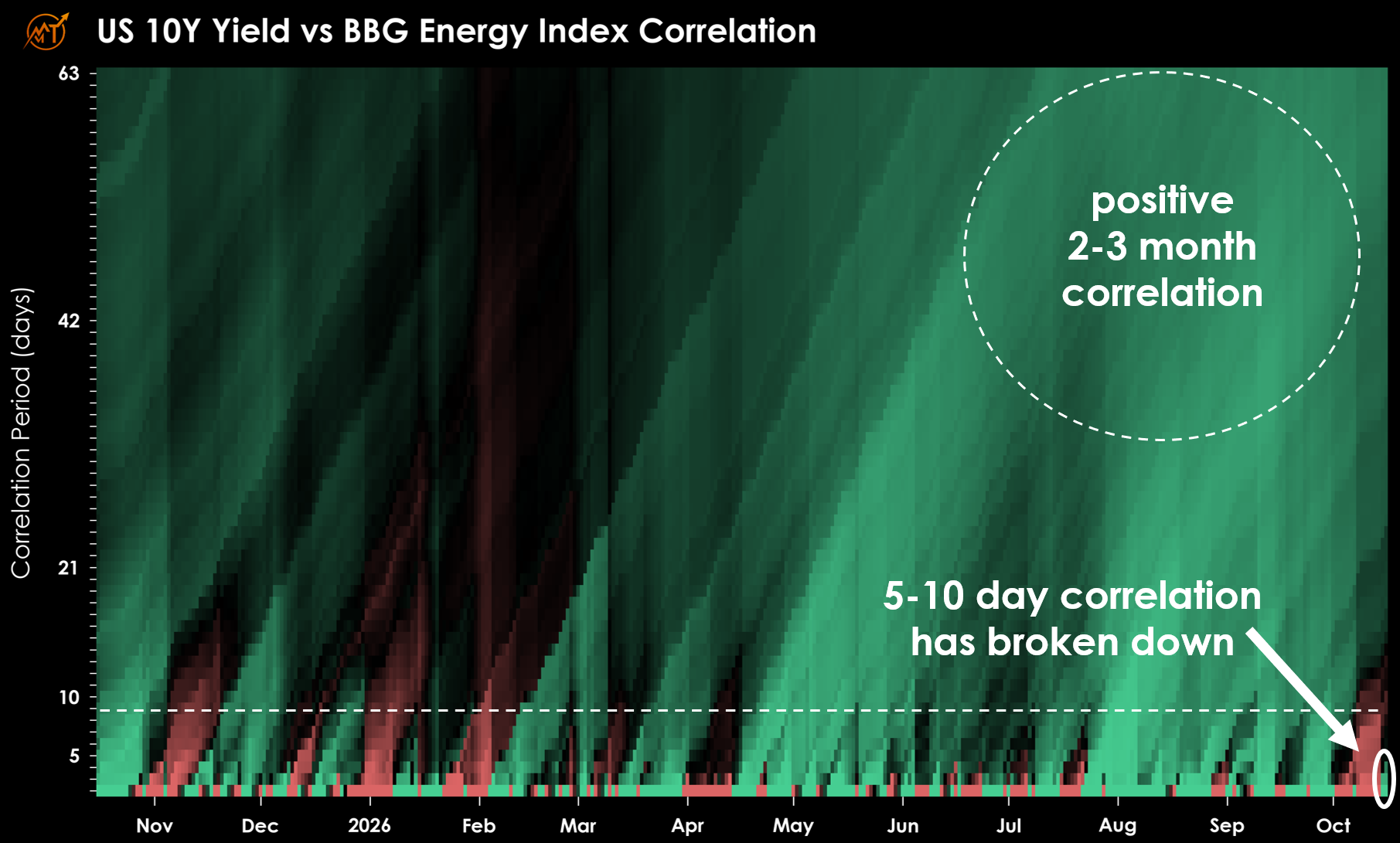
Between asset classes is where we've seen unusual shifts - 10year yield vs Energy for example has recently been the most negative since February. These negative correlations have tended not to persist beyond a couple of weeks, and we've interestingly seen a shift back just this past week.
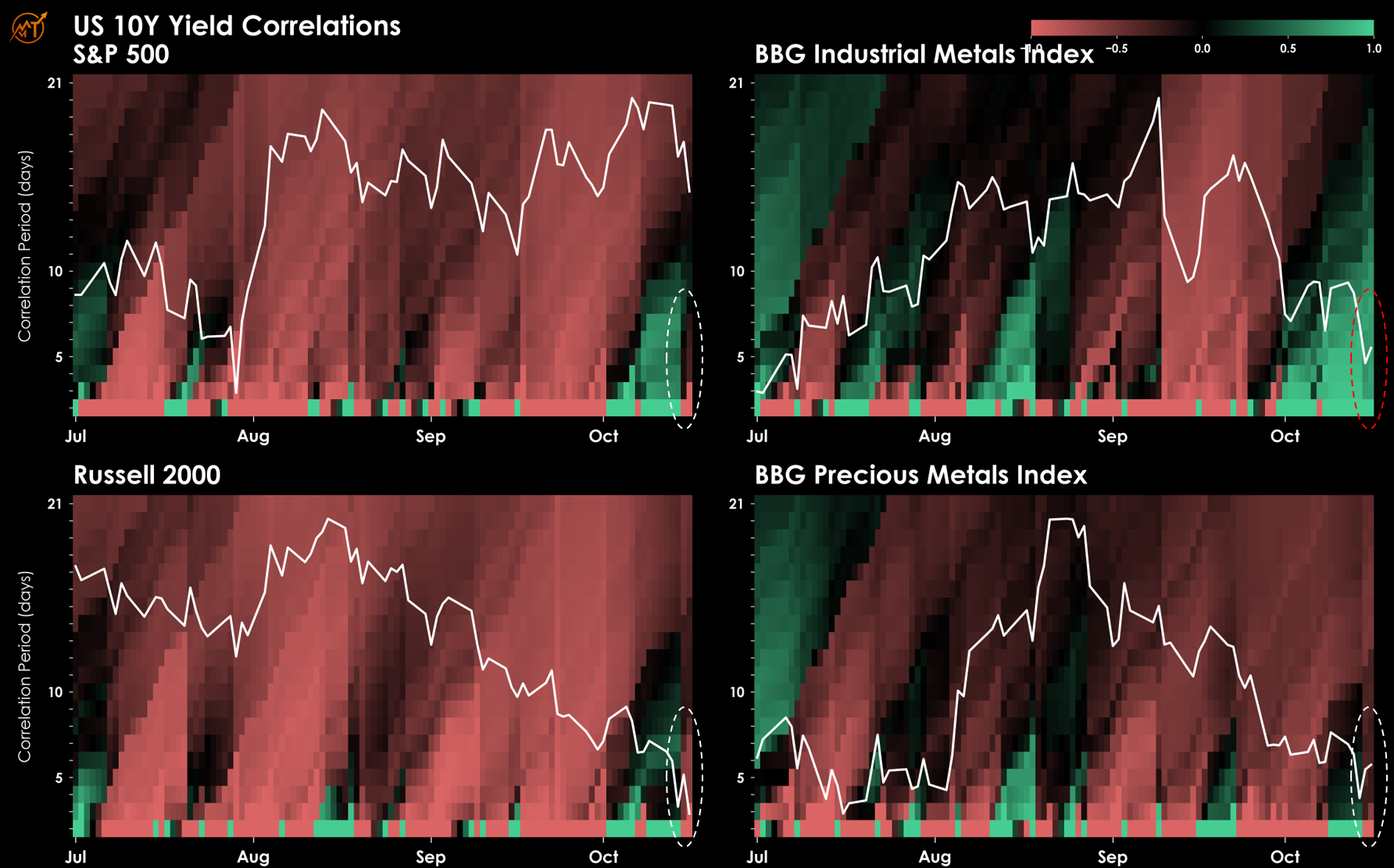
Last week's correlation flip to 10year yield is also evident in equities and precious metals thought not so much for industrial metals.
Dollar correlations are all over the place. The below shows 10-day rolling correlation with 10-day history (most recent in the centre and 10-days ago being the outer square).
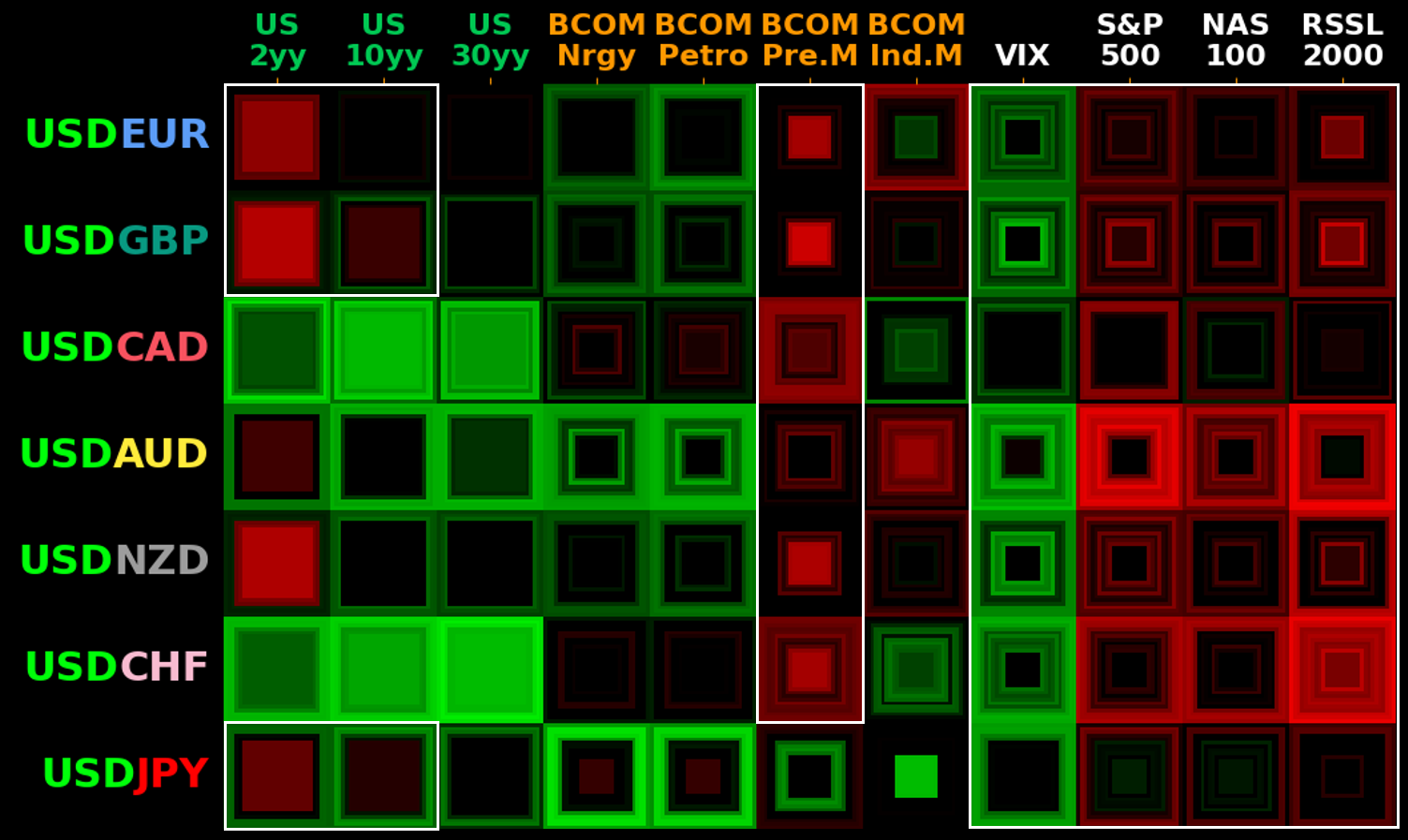
- USD correlation to precious metals flipped negative.
- USDEUR USDGBP USDJPY correlations to yields flipped negative.
- Usual USD correlations to VIX and equities has weakened.
- USDCAD and USDCHF retains its positive correlation to yields.
One could probably conclude from those observations that USD has lost some of its safe-haven appeal particularly vs EUR GBP JPY but also retains some carry appeal against CAD and CHF. What I think is missing from this however is bigger picture context of a strengthening US exceptionalism story ever since mid 2025 post Trump's initial tariff onslaught on the world.
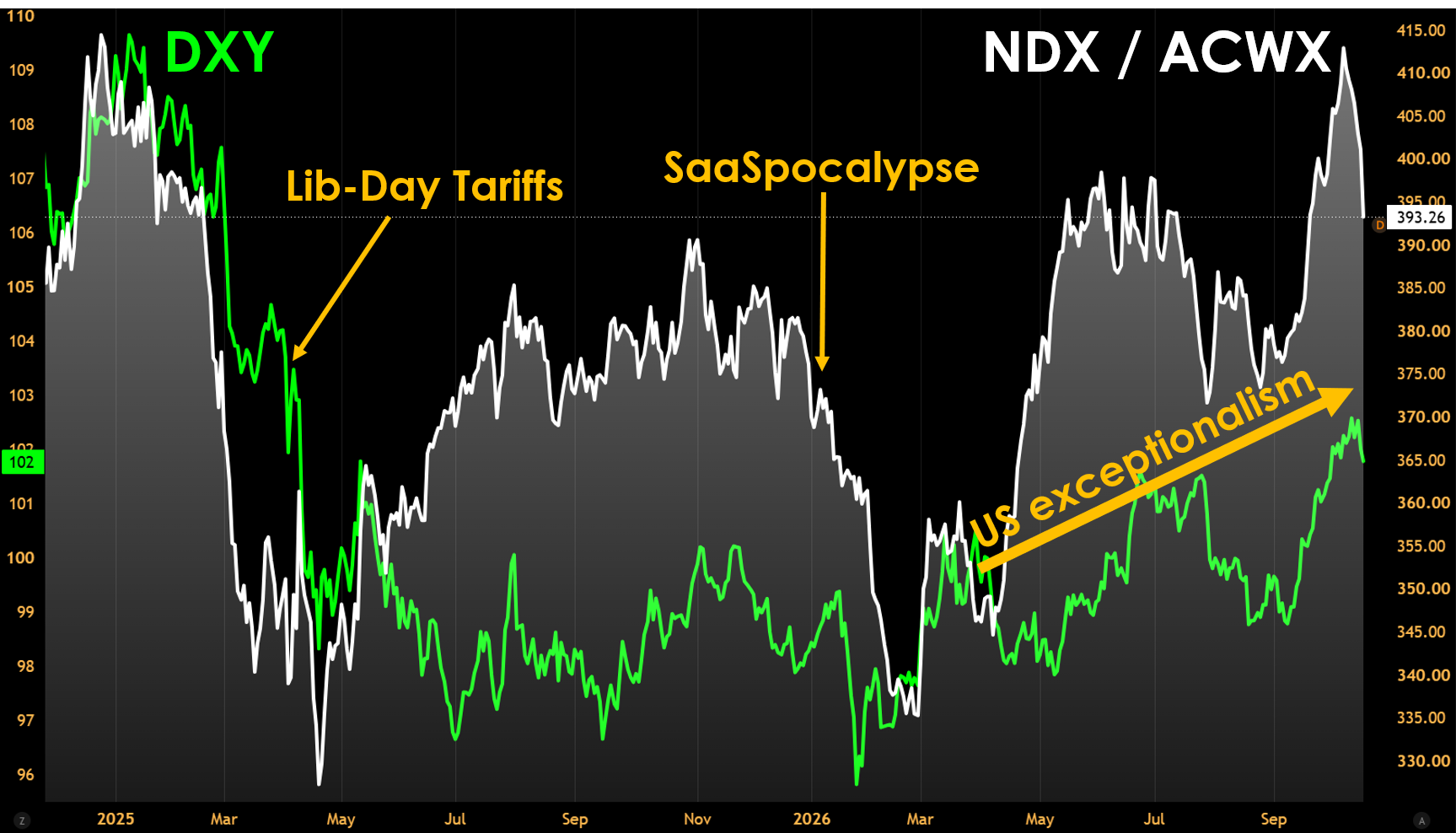
Global capital flows have increasingly favoured US assets and the US dollar had become increasingly more attractive as the year progressed - in essence, the context has become one of positioning, and I think that's an important variable to recent moves. And if so, that would imply that we aren't far from seeing the usual market correlations return, particularly if the sharp selling in US tech assets subsides - which brings us to our next topic of discussion...