Wk10 MacroTechnicals - Ballistic Volatility
A long and stretched risk-on cycle now meets fresh war and inflation risks with accelerants in place.

"In volatility lies opportunity; in panic lies ruin."
- Unknown
A major Middle East escalation now collides with a somewhat fragile MacroTechnical backdrop. With markets likely to be headline-driven this week, we will be deviating from the usual format to focus solely on the potential impacts of war on policy and markets.
IRAN WAR
On Saturday, February 28 at 06:15 (all times in UTC), the US and Israel commenced operation Epic Fury with airstrikes on Iran's capital and other nuclear/military sites. Trump soon made a speech at 07:30 to formally announce that "major combat operations" were underway to eliminate Iran’s nuclear and missile programs, destroy its navy and missile industry, and counter "imminent threats" from the "world's number one state sponsor of terror".
"To the great, proud people of Iran... the hour of your freedom is at hand. Stay sheltered... This will be probably your only chance for generations".
A brief chronology of major events:
- Israel launched preemptive/coordinated airstrikes on Iranian nuclear, missile, military, and leadership targets in and around Tehran and other cities. U.S. joins with massive strikes (including B-2 stealth bombers dropping 2,000-pound bombs on ballistic missile facilities). Strikes kill Supreme Leader Ayatollah Ali Khamenei (now operates under a three-member interim council).
- Iran Retaliated with a barrage of ballistic missiles and drones targeting Israel, U.S. military bases plus allied sites across the Gulf in Qatar, Bahrain, Abu Dhabi, Dubai ports and towers, Kuwait, Iraq, Jordan, and Saudi Arabia. Iran closes the Strait of Hormuz to shipping and hits multiple vessels. OPEC+ decides to hike output.
- Trump states operations are "ahead of schedule", warns of "a force that has never been seen before" if Iran escalates further. Reports 9 Iranian Navy ships "destroyed and sunk" and Iranian naval headquarters "largely destroyed". Also noted possible talks with new Iranian leadership but emphasises strikes to continue "throughout the week or as long as necessary" for "peace throughout the Middle East".
- US and Israel conducted new waves of strikes. Israel targets the heart of Tehran for air superiority, hitting IRGC headquarters, intelligence centers, air force commands, and missile bases. US focuses on ballistic missile sites and navy.
- Iran launched intensified waves with additional missile/drone barrages across the region and claimed its capabilities had not been materially degraded, with commanders quickly replaced.
- Trump said operation “could take four weeks or less" due to the country’s size.
INFLATION EMBERS
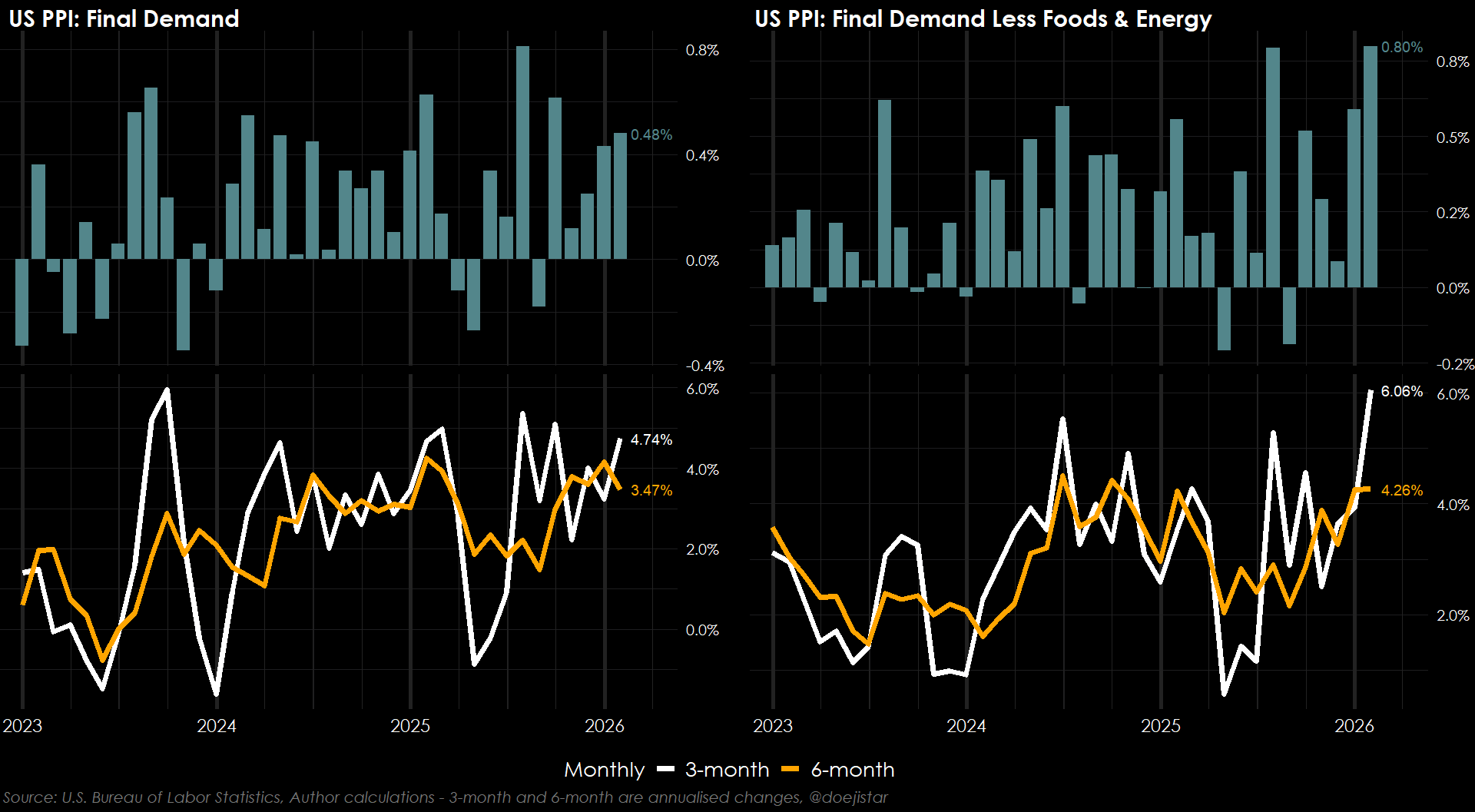
PPI was 0.5%, hotter than 0.3% expected while core was 0.8% versus 0.3% expected. Trend is accelerating.
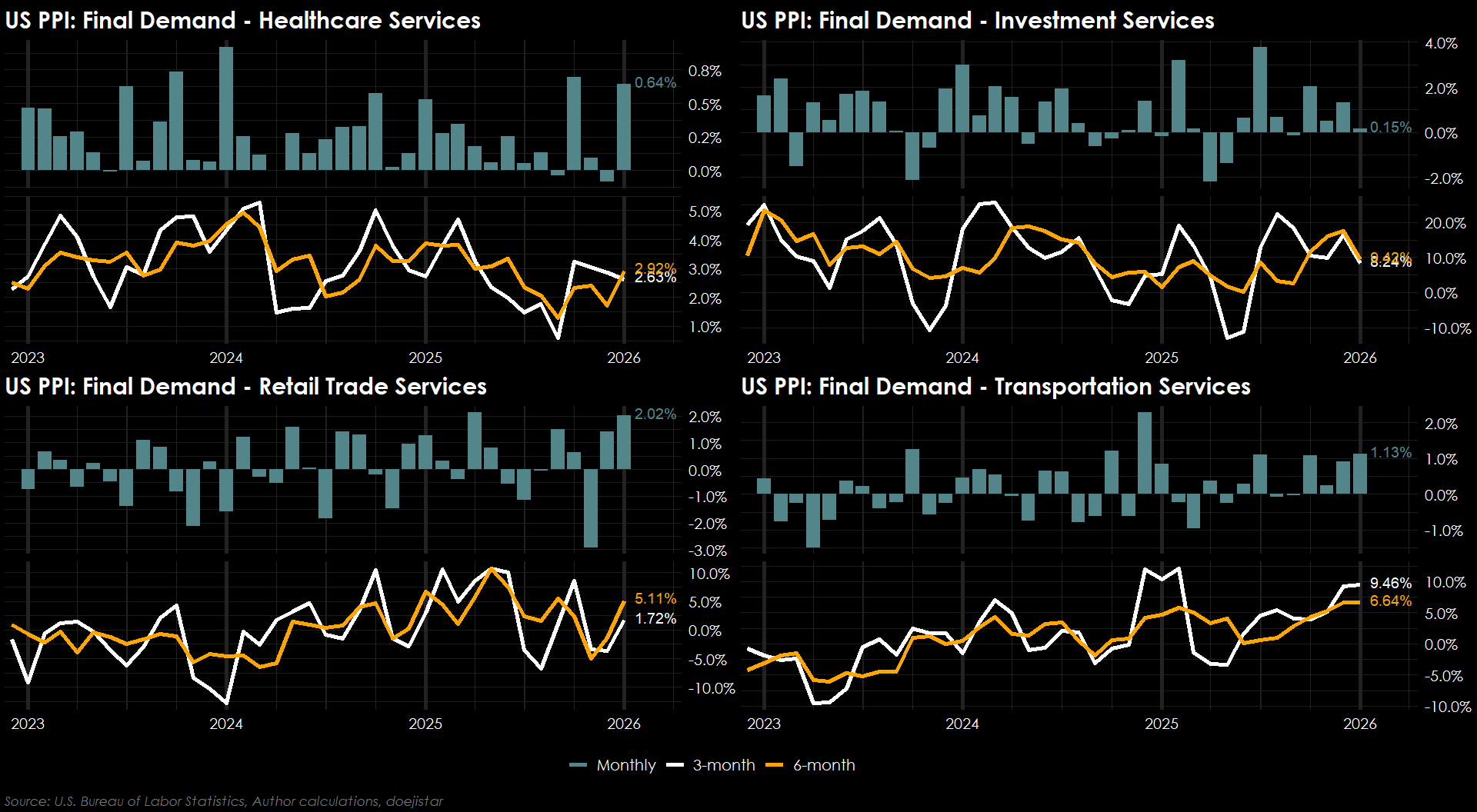
Strong PPI readings were driven by higher services costs passed on to consumers and higher profit margins for wholesalers and retailers.
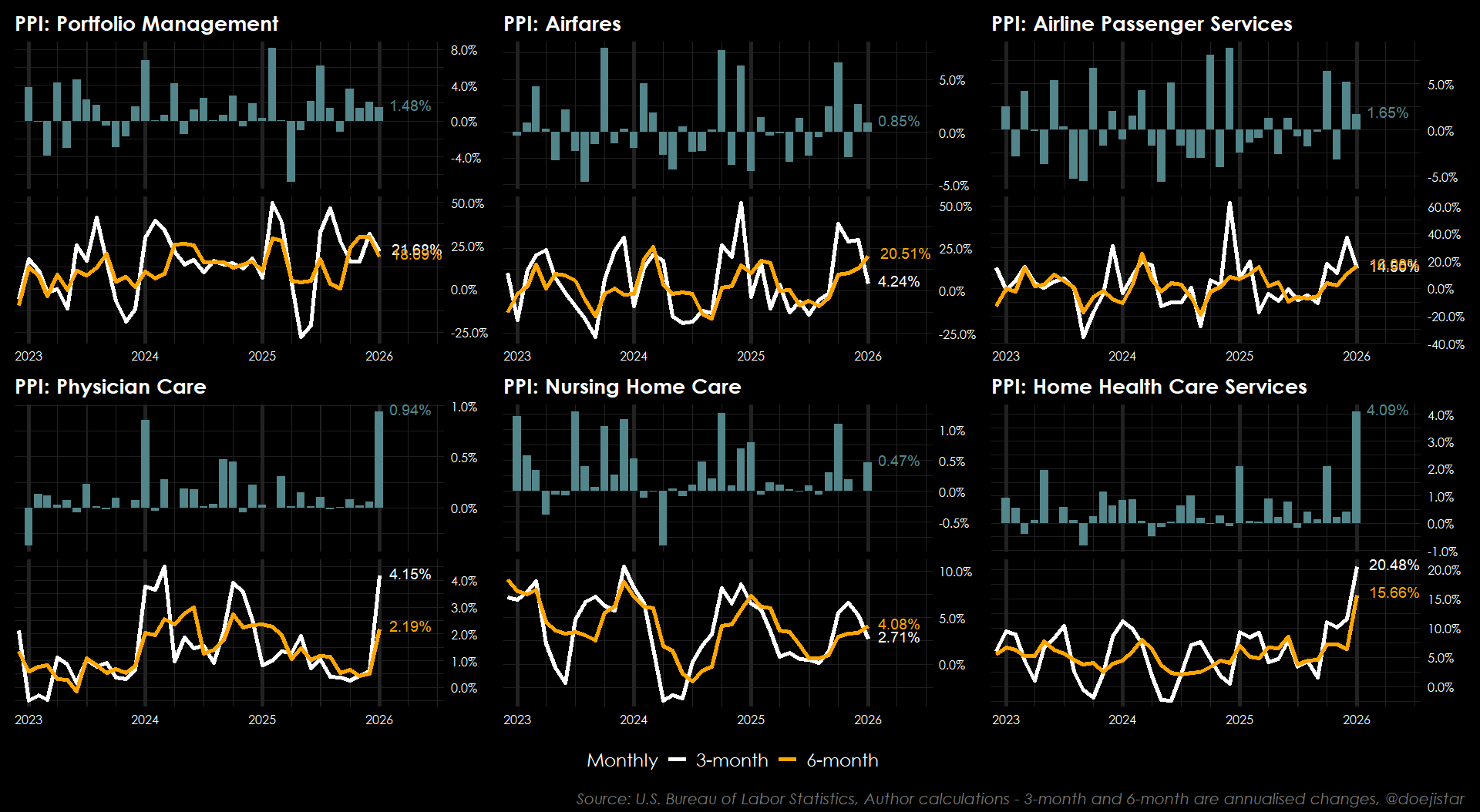
Components that feed into PCE also showed strong increases for January.
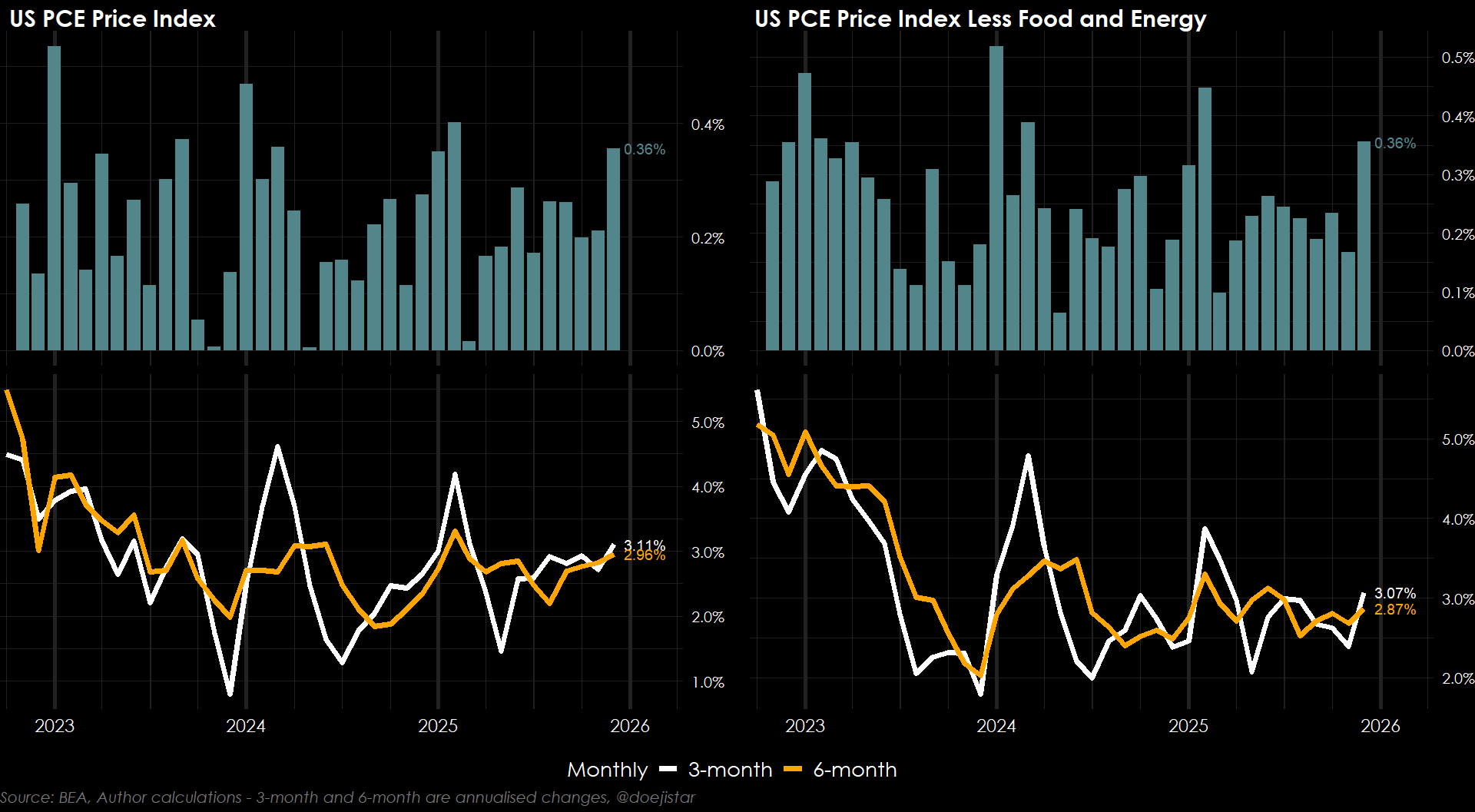
PCE has already begun to pick up.
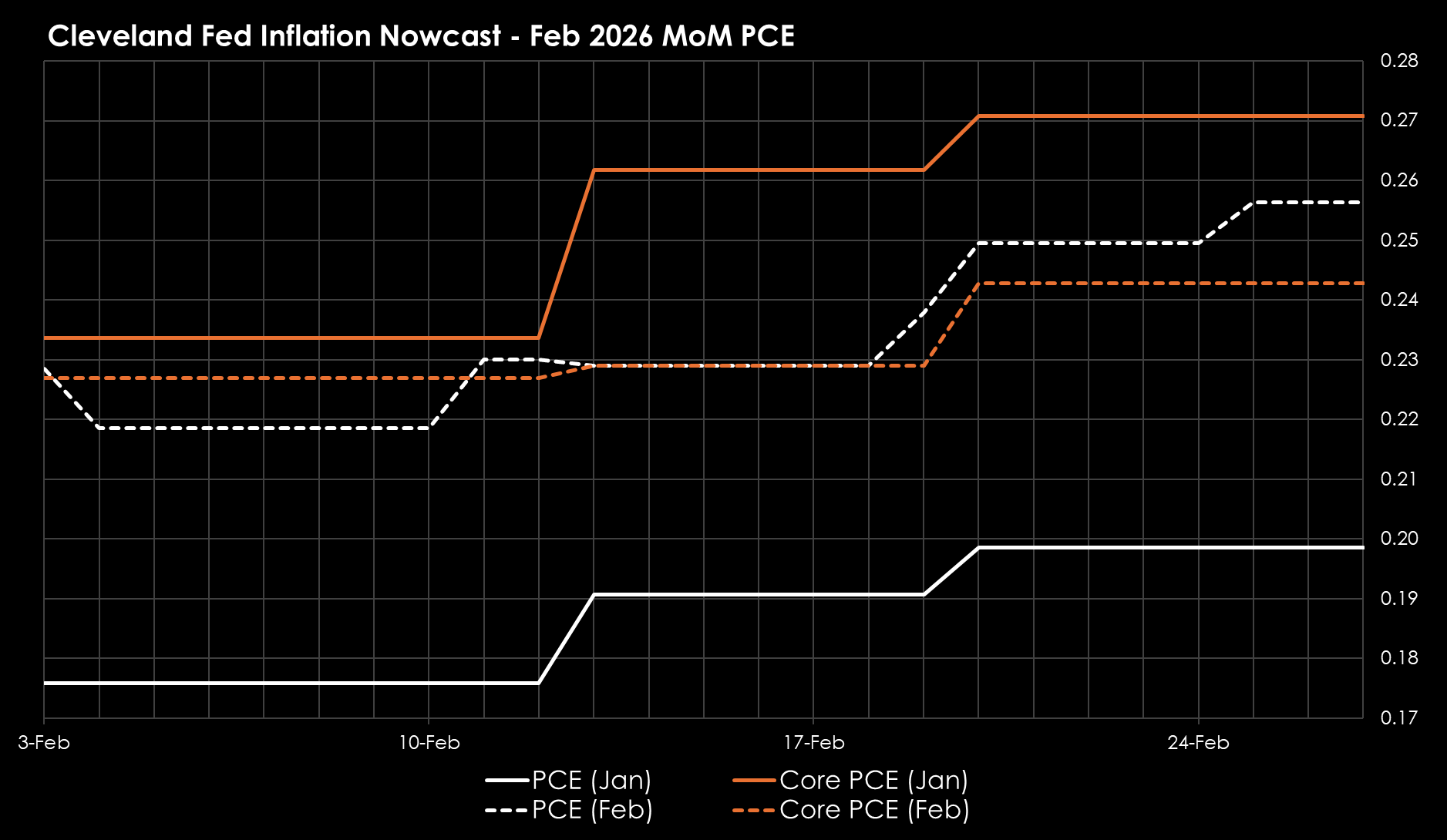
January and February PCE nowcast has already been trending higher over the past month.
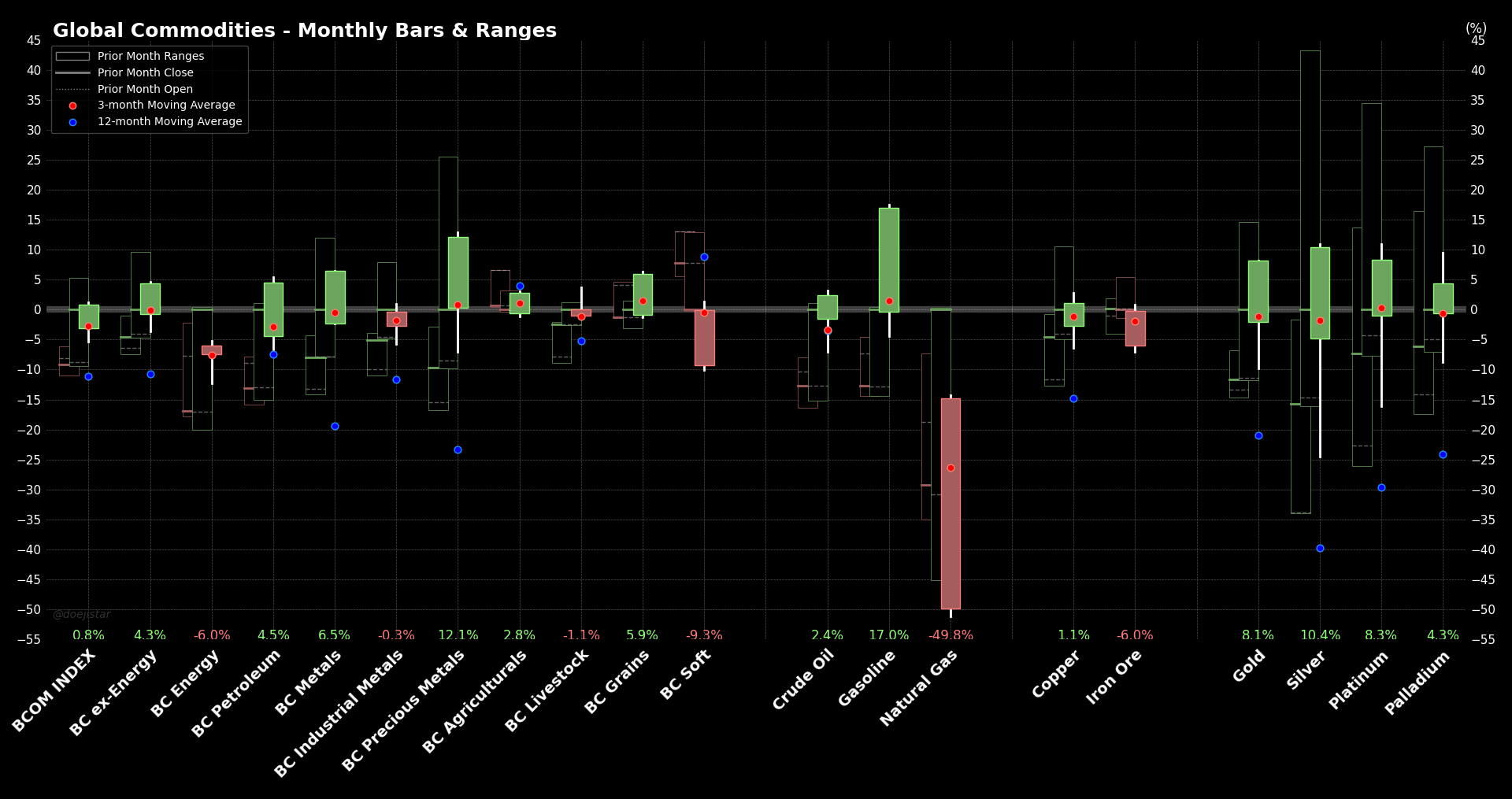
Commodity prices (apart from precious metals) stayed relatively contained over the last few months, but rising geopolitical tensions and a potentially drawn-out campaign is likely to bring fresh upside risks to inflation via higher energy and trade-related costs, that will further impact other commodity groups such as Agriculturals and Grains.
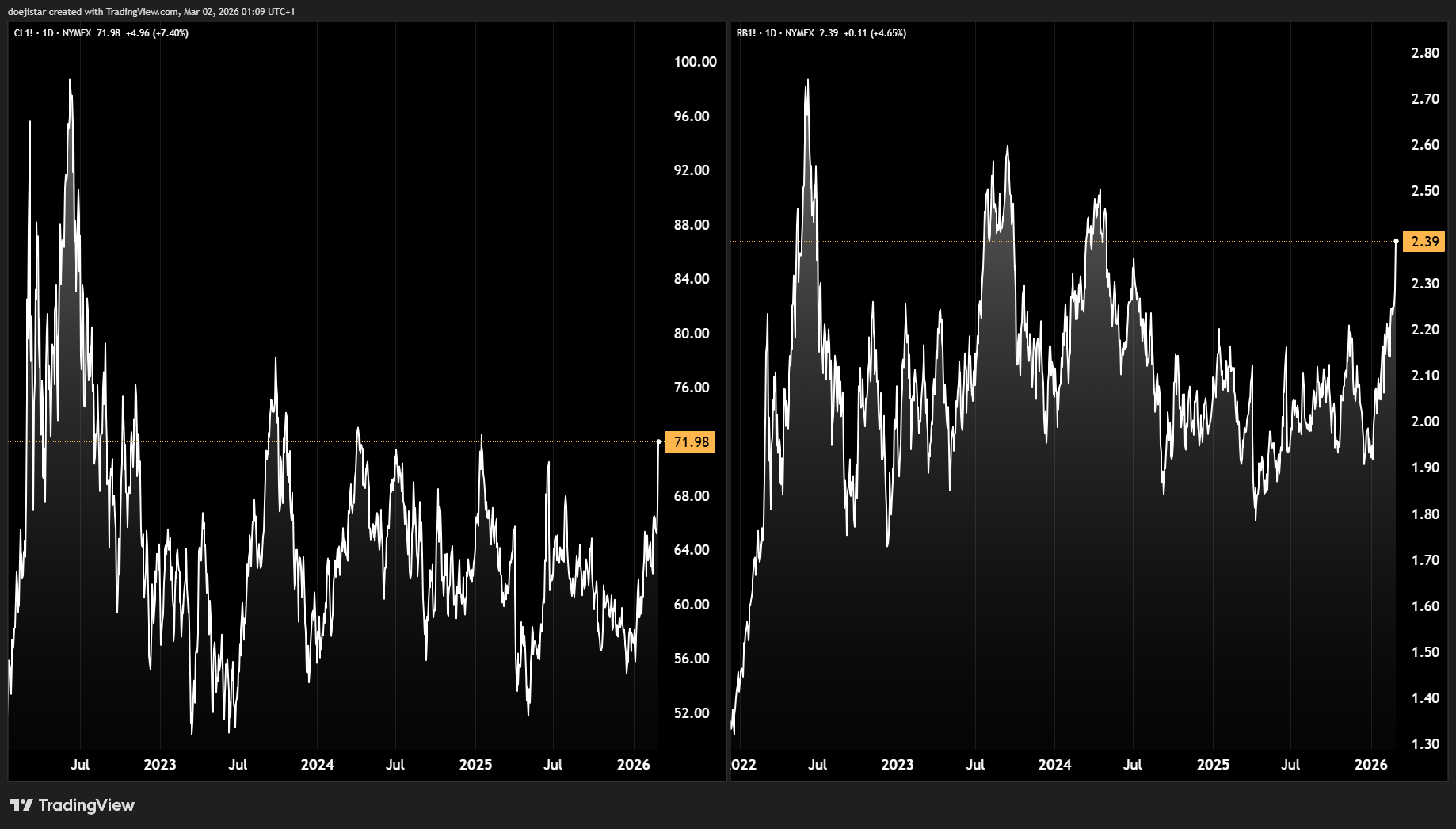
Crude and Gasoline prices are already at the top-end of its recent 3-year range and it's quite possible that the prices could jump higher and stay more elevated compared to last summer's Israel-Iran conflict due to a longer military campaign. And the longer it goes on, the more stagflationary the economic risks and the more problematic it is for the Fed that is trying to preserve a soft-landing. That said, it's impossible to know how long this goes on for and we will need to stay alert to how much fight is left in the IRGC.
TINDERBOX
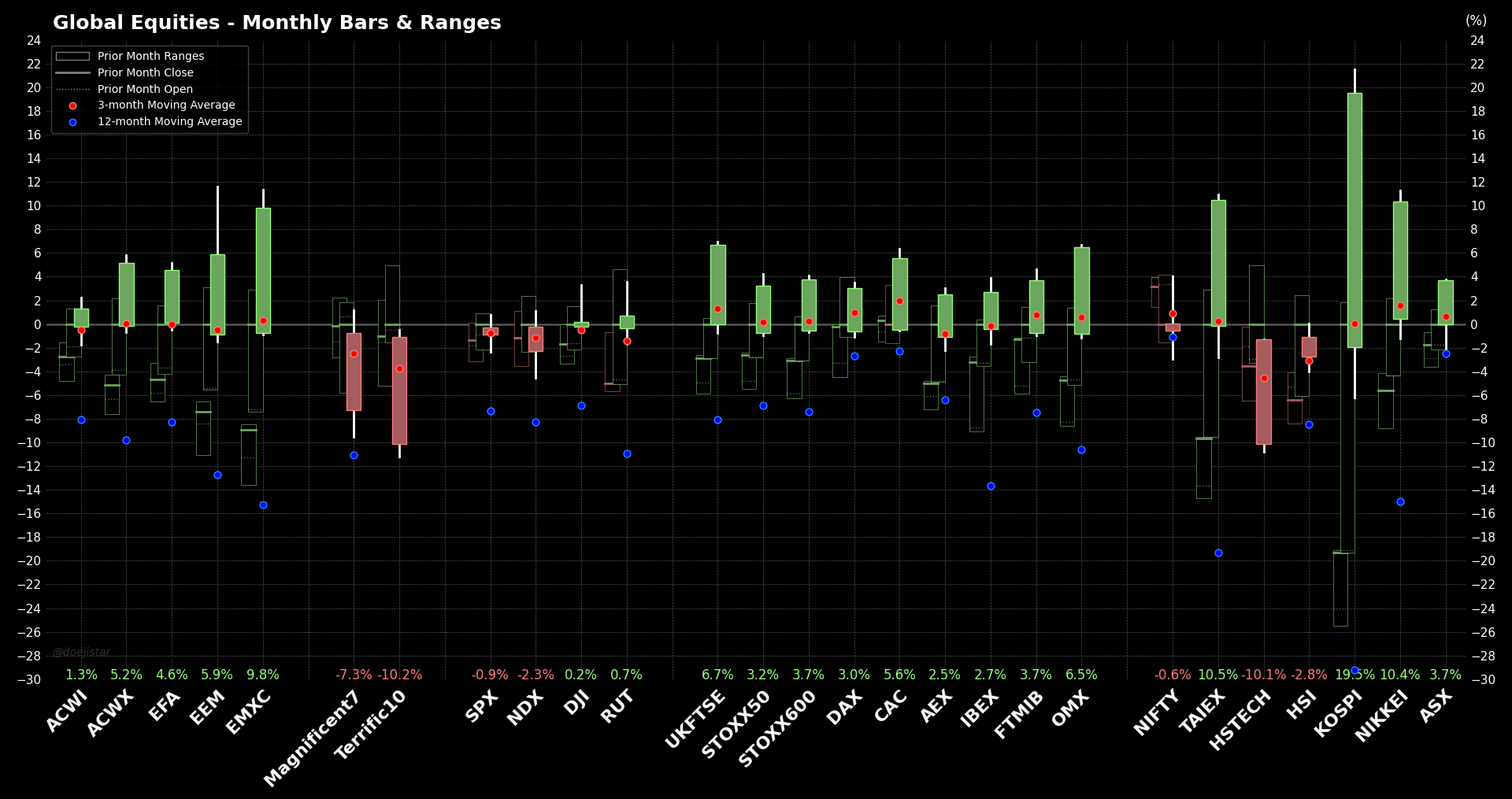
Risk appetite has been strong for yet another month with investors diversifying away from the top US companies into other parts of the world. Emerging ex-China has been the top performing regional index for several straight months.
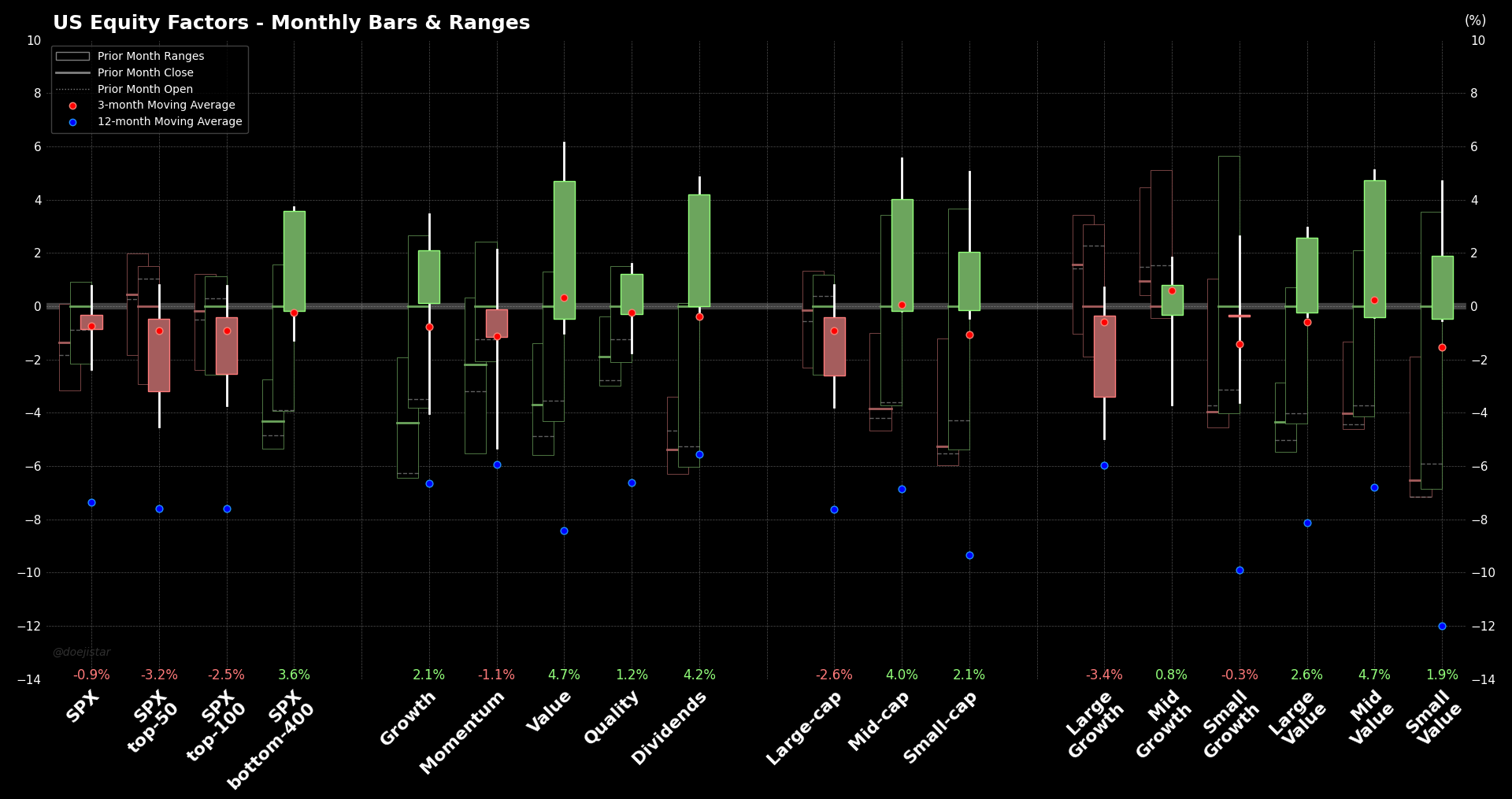
We're also seeing strong risk appetite in US markets for factors outside of large-caps. The bottom-400 of the S&P500 has massively outperformed the top-100.

Consistent with the performance of global equities over the last couple of quarters, BofA's Global Fund Manager Survey shows investor sentiment being at the highest since June of 2021. If this is any indication of the market positioning, we could be entering a period of profit-taking and deleveraging over the coming weeks in response to multi-week campaign.
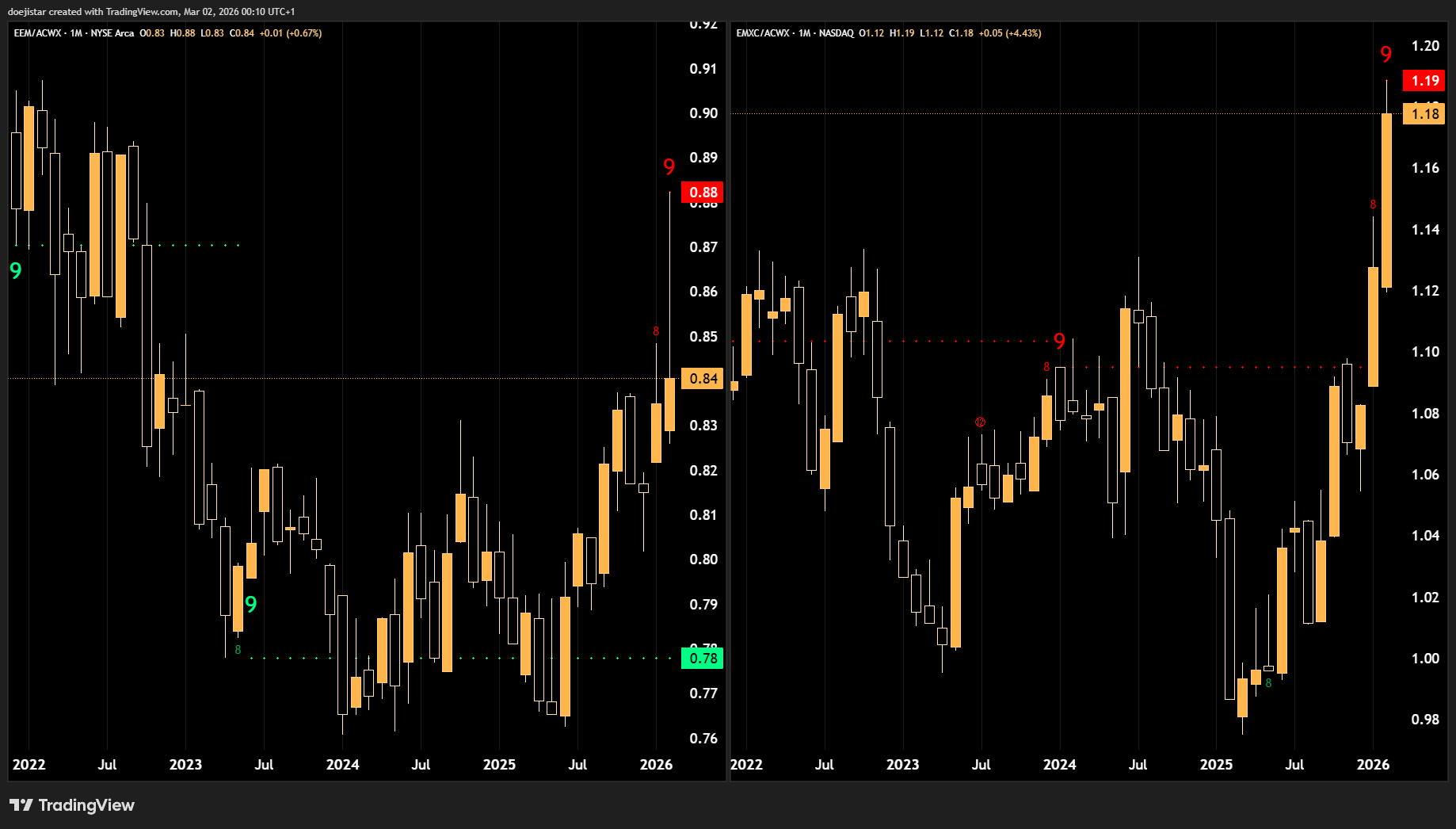
Interestingly, relative performance charts of EEM and EMXC versus ACWX (all-countries-excluding-US index) closed the February month with monthly 9 sell setups.
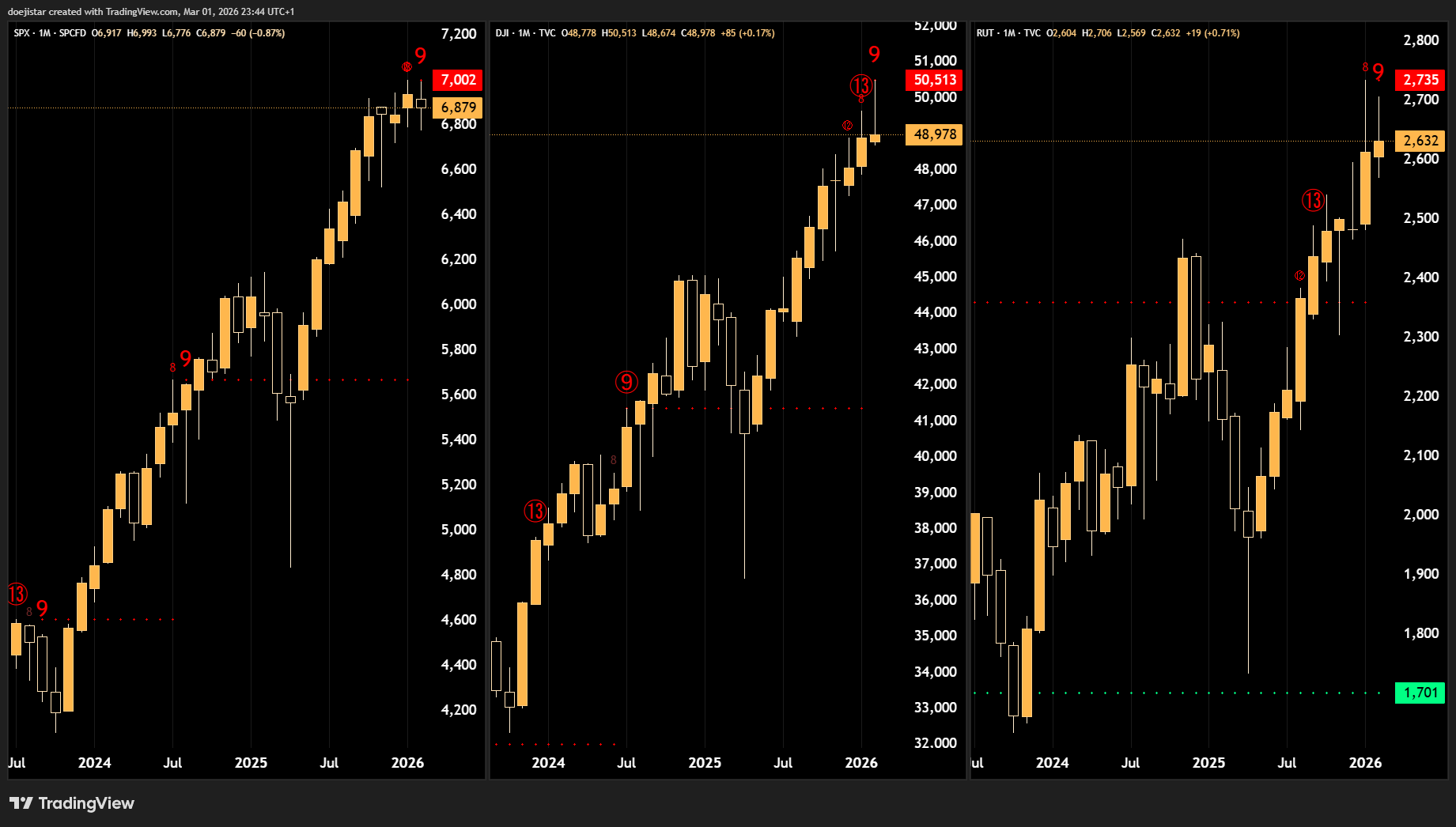
Interestingly, the S&P500, Dow, and the Russell are all displaying a monthly 9 sell setup with weak monthly closes.
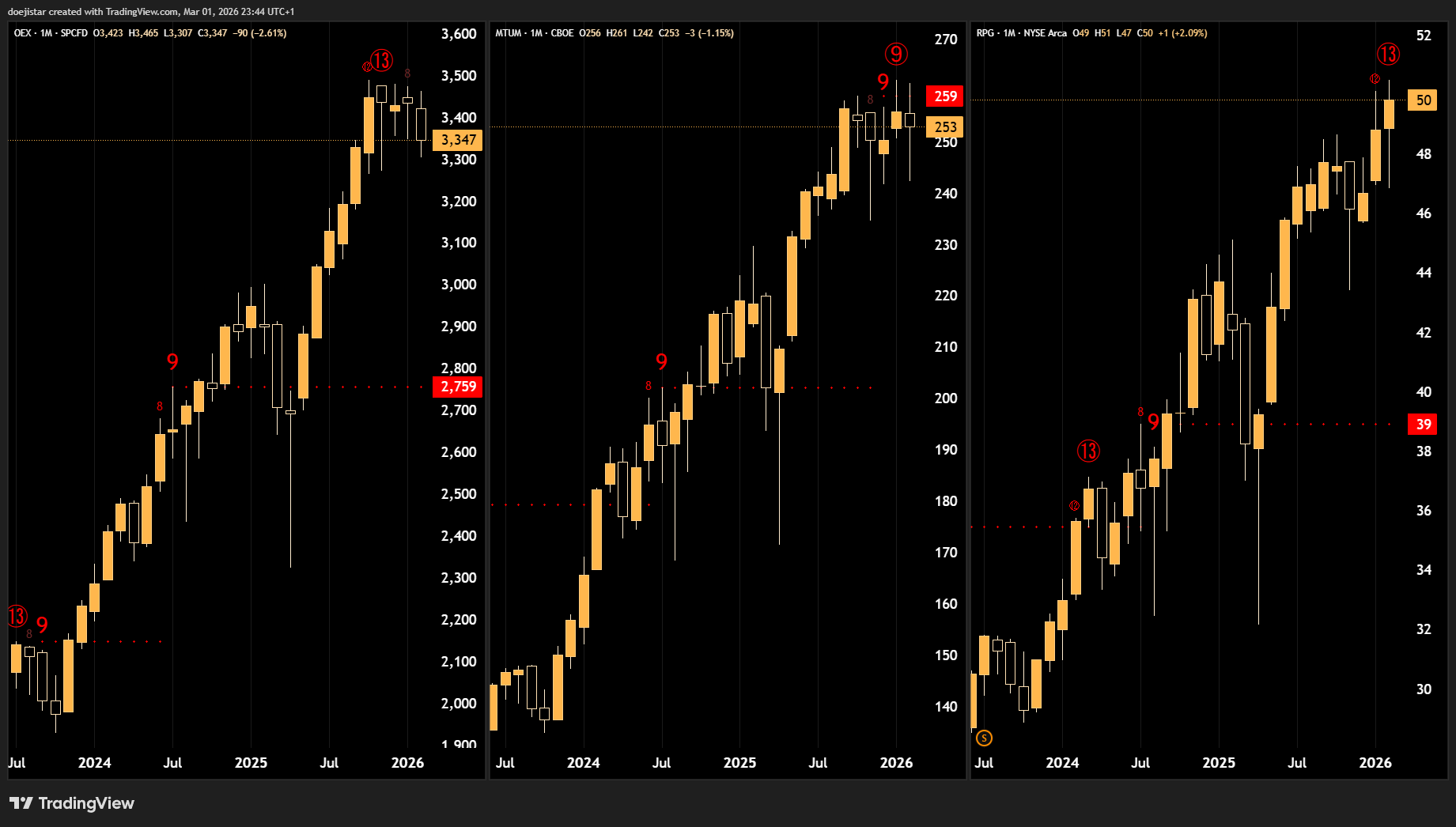
Largest 100 US stocks (OEX) have been stalling since October and though monthly performances have been resilient, the price action is beginning to show initial confirmation of a breakdown. Momentum index (MTUM) has printed a series of 9's and Real Pure Growth index (RPG) has printed a 13 sell countdown.
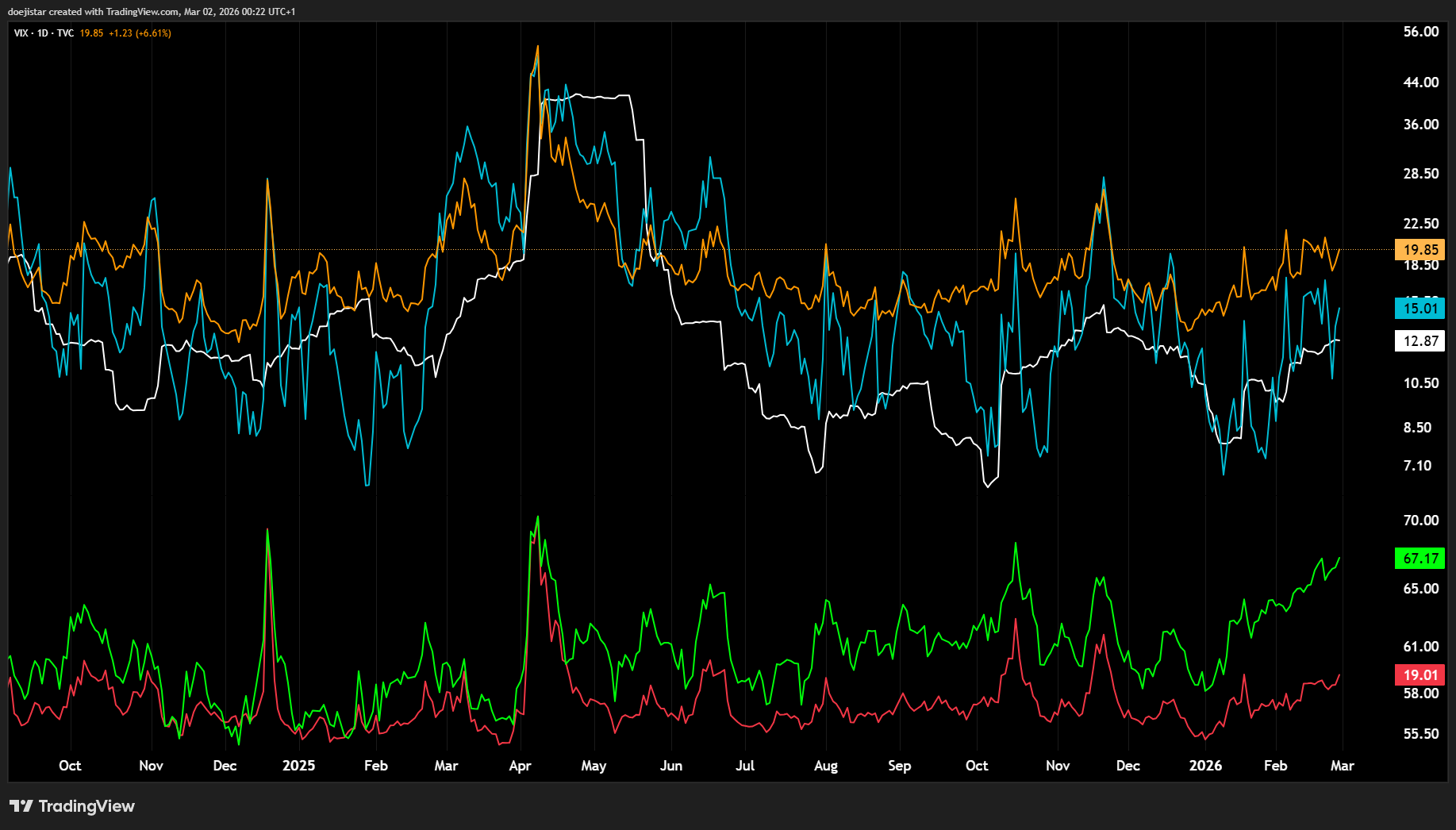
Despite a very risk-on global equities profile, SPX realised volatility (white) has slowly been creeping up and markets have become more fearful - VIX became more elevated in recent months to hover near the 20 mark, and put option premiums (lower panel) have been ramping up to their highest levels since late last year.
This week's open interest for SPX options is very put heavy and the negative gamma regime looks set to continue, but unlike before where the market has stayed stay relatively pinned/range-bound, the risk of deleveraging could be considered to be much higher.
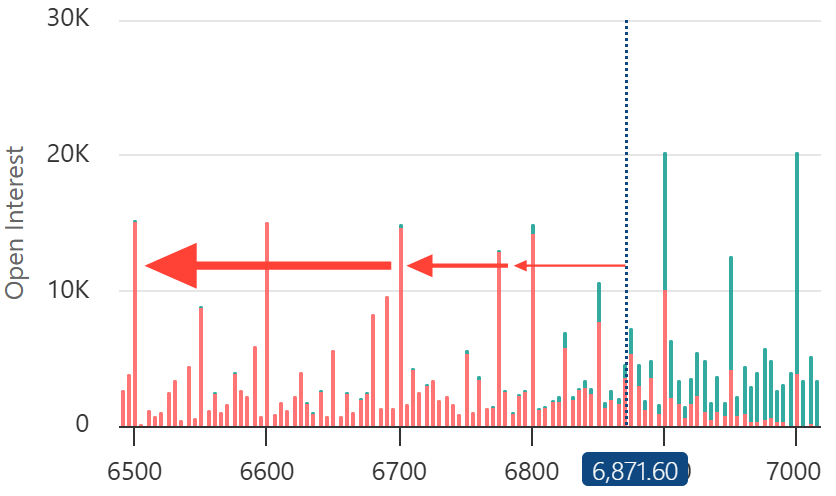
Given a good chance that SPX gaps below the 6800 handle to start the week, we could see a move towards 6500 with a big block of puts at 6800 and 6775 acting as an accelerant to kick off the reflexive selling and deleveraging.
POKER-STACK TRADING
I've thought a little bit on whether I wanted to mention my own method I use for trading these types of market conditions. I was hesitant however... since this method may not suit a good majority of readers who do not have the time to give the market long periods of attention. But I do think there is merit in knowing about thinking differently about how you can manage risk. I will come back to that point later after attempting to explain the method.